-
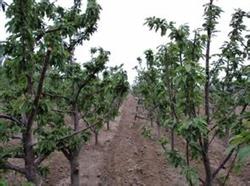
Identification and Control Methods for Common Cherry Diseases and Pests
Many of the diseases and pests affecting cherries are the same as those of other stone fruit trees, so their control methods can be used for reference. The main diseases harming cherries are shot hole disease, crown and root collar rot, and gummosis. Crown and root collar rot mostly occurs on trees in their first fruiting stage, causing the crown and root collar to decay. Control methods: mainly avoid piling soil around the root collar for long periods, and control underground pests that gnaw and wound the bark. At the same time, check frequently; when diseased plants are found, scrape and treat them promptly, and after scraping, disinfect with Bordeaux mixture or lime sulfur mixture. For severe crown and root collar rot, the aboveground growth can also be restored through spring bridge grafting. The main pests harming cherries include the red-necked longhorn beetle, the golden-line jewel beetle, the small clearwing moth, the spherical scale insect, and the phalera caterpillar. The small clearwing moth has one generation per year, and its larvae cause damage within the cortex of large branches. Control measures mainly include spraying during the peak emergence period of adults, whitewashing the branches and trunk to prevent egg laying, and promptly spraying or digging out larvae when their frass is found in the field.
-
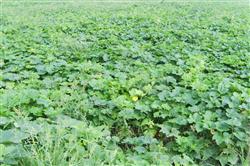
Detailed Explanation of Common Pest and Disease Control Methods for Winter Melon
Cultivation Method of Ground-Trailing Winter Melon The cultivation method of ground-trailing winter melon is: the plants grow by trailing on the ground, with relatively wide spacing between plants and rows, generally about 300 plants per mu. Management is relatively extensive, and the stems and vines are basically left to grow freely or the side vines are removed before fruiting, then allowed to grow at will after fruiting. Its advantages are less labor required and relatively low cost. The disadvantages are poor melon shape, and...
-
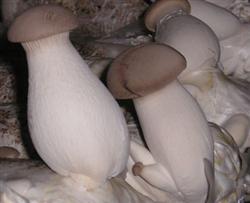
Analysis of Common Problems in King Oyster Mushroom Cultivation
King oyster mushroom is one of the edible mushroom species developed in China in recent years. Its production cycle is short, results come quickly, and its economic benefits are relatively high, so its planting area has continued to expand. However, problems often arise in king oyster mushroom production, causing huge losses to mushroom farmers, so attention must be paid to them. 1. Contamination of mushroom bags causes...
-
What are the reasons for avoiding watering during the flowering period of common beans?
Some vegetable growers planted common beans this year. Because the soil in the greenhouse had not been watered for more than 10 days and was rather dry, they watered once during the flowering period of the common beans to ensure the water supply for the beans. As a result, a large number of common bean flowers and newly grown tender pods dropped, which made the farmers very troubled. So when the soil is rather dry during the flowering period of common beans, how should...
-
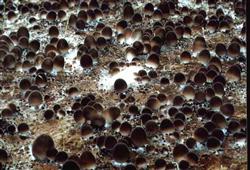
What are the common problems in the process of straw mushroom cultivation
1. Appearance of clustered mushrooms: Too large a seeding rate and uneven seeding will lead to clustered mushrooms. Therefore, the seeding rate should be controlled at 0.2-0.3 kg/sq m. The seeding method can be layer seeding, mixed seeding or broadcast seeding; it is best not to use hole seeding. 2. Aging of spawn: If aged spawn is used, although mycelial germination and colonization are normal, and the yield of the first flush is also good. But the yield of the second and third flushes is significantly reduced, and the overall yield decreases. Therefore, when purchasing spawn, you must pay attention.
-
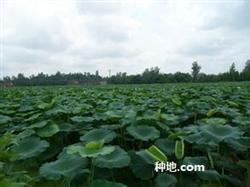
Identification and Control Methods for Common Lotus Root Diseases
What are the common lotus root diseases and how to control them? Asking for advice. Common lotus root diseases are: 1. Lotus root brown spot disease: a common leaf disease of lotus root, producing light brown lesions on the leaves, causing localized drying of the diseased leaves. Control methods: rational close planting to ensure ventilation and light penetration in the lotus field; appropriately increase the application of phosphorus and potassium fertilizers to enhance...
-
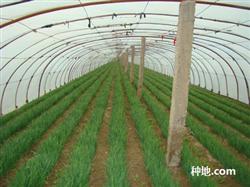
How to weed after planting Chinese chives? Introduction to common methods
How to harvest Chinese chives grown in a greenhouse? What should be noted? When Chinese chives grow to 5-6 leaves, growth is already relatively full, the leaves are wide and long, the pseudostem is both thick and round, and the nutrients transported to the underground part are also relatively abundant, so harvesting can be carried out at this time. Generally, it takes about 30 days from covering to the first cut. When cutting Chinese chives, choose a sunny day and early...
-
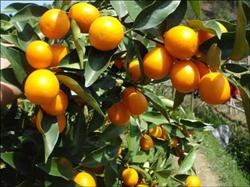
What are the commonly used types of organic fertilizer in fruit tree production?
Organic fertilizers, also known as farmyard manure, commonly used in fruit tree production include compost, pen manure, stable manure, green manure, cake fertilizer, river mud, poultry manure, human feces and urine, and miscellaneous soil manure. Most organic fertilizers need to be decomposed by microorganisms before they can be absorbed by the plant's root system, so they are also called "slow-release fertilizers" and can be applied as a base fertilizer...
-
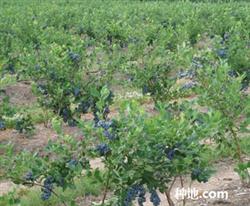
What are the common pests and diseases in blueberry cultivation?
What are the common pests and diseases in blueberry cultivation? The main pests and diseases of blueberries include "stem-boring longhorn beetles", the larvae of "scarab beetles", white grubs, as well as common pest and disease conditions such as "leaf chlorosis", "leaf blight", "mummy berry disease", and "leaf-eating nettle caterpillars". With good control, they can be avoided. Control principles...
-
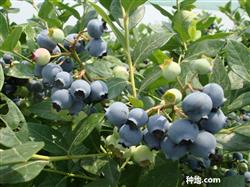
What are the common pests in blueberry cultivation?
What pests are there in blueberry cultivation? Please note that all blueberry pests have one or several natural enemies, and ants are the most important natural enemy among them. Ants feed on the eggs or pupae of the flower snout beetle, plum curculio, cranberry fruitworm, and blueberry gall midge, thereby controlling their population numbers. Ladybugs are natural enemies of blueberry scale insects. Small yellow wasps...
条件筛选