-

A Detailed Guide to Common Pests and Diseases of Rose and Their Control Methods
The rose has a beautiful appearance, comes in a thousand forms, is richly fragrant, and blooms in all four seasons. In particular, it has a great many varieties and is easy to propagate and cultivate. It is praised by people as the "Queen of Flowers" and is one of the ten most famous flowers of our country. However, rose pests and diseases often cause poor growth and even death, seriously affecting its ornamental value.
-
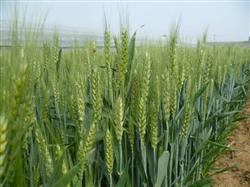
Common pests and diseases during the wheat grain-filling stage and their control methods
What pests and diseases should be watched for during the wheat grain-filling stage? Please explain. During the Start of Summer period, winter wheat in the north generally enters the flowering and grain-filling stages and has a relatively high demand for water. Because field humidity is high, pests and diseases such as wheat aphids and stripe rust have further developed and spread, so recently winter wheat areas in the north still need to...
-
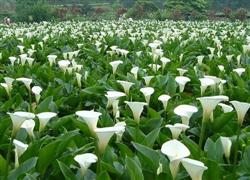
What are the common pests and diseases of colored calla lilies?
The common diseases of colored calla lilies mainly include bacterial diseases, fungal diseases and pest damage, which are introduced separately below. Bacterial disease Erwinia: Erwinia disease, also known as soft rot, is caused by the pv. carotovora pathovar of Pectobacterium carotovorum subsp. carotovorum. Infected leaves and stems turn dark green, with necrotic spots and rotting spots...
-

What are the common pests and diseases of colored calla lilies?
The common diseases of colored calla lilies mainly include bacterial diseases, fungal diseases and pest infestations, which are introduced separately below. Bacterial diseases Erwinia: Erwinia disease, also known as soft rot, is caused by Pectobacterium carotovorum subsp. carotovorum. Infected leaves and stems turn dark green, with necrotic spots and rot spots...
-
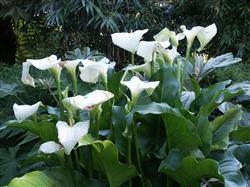
Detailed Guide to Common Pest and Disease Control Methods for Calla Lily
I. Diseases 1. Calla lily soft rot: Soft rot and detachment occur on the plant near the soil surface, causing leaves to wilt upward and the fleshy tuber to develop a soft rot downward, with roots also rotting, and the whole plant suddenly wilting and dying. When leaf edges are affected, they become soft and wet-rotted. When flower stalks are affected, the flowers turn brown, and the stalks become soft-rotted and drop off...
-
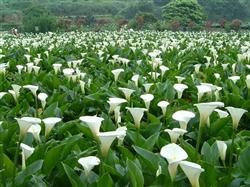
Detailed Guide to Common Disease and Pest Control Methods for Calla Lily
The main pests harming calla lily are: the two-spotted spider mite, namely the cotton spider mite and the cotton red spider. The female two-spotted spider mite has an oval dorsal surface, while the male has a diamond-shaped dorsal surface. In spring and summer, their color is yellow and yellow-green, with a black patch on each side. By late summer, individuals turn orange in body color, and the number of females...
-
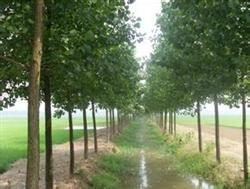
What types of common poplar diseases occur in spring?
Poplar canker mainly occurs during the process of seedling transplanting. The disease begins in late March, peaks from mid-April to late May, basically stops in early June, and slightly develops after October. This disease can infect the trunk, root collar and large branches, but mainly damages the middle and lower parts of the trunk. In the early stage of the disease, near the lenticels on the trunk...
-
How to Propagate Hydrangeas? A Detailed Guide to Common Propagation Methods
Hydrangea, also known as eight-immortal flower, comes in various colors such as red, pink, blue, and white. The eight-immortal flower is a beautiful indoor ornamental flower, a small shrub of the Saxifragaceae family and the Hydrangea genus, with a plant height of 30 cm to 120 cm. The leaves are opposite, ovate, with serrated leaf margins. The corymb is terminal, forming a spherical shape
-

What are the leeches commonly found in rice paddies most afraid of?
Summary: There are lots of leeches in rice paddies, and what should you do if you get bitten? Leeches are extremely common in daily life, especially when fishing or washing clothes in rivers, and they are also very common in the south during rice transplanting. If you are not careful, one will latch onto your body and suck your blood...
-
How to Mix Nutrient Solution for Hydroponic Plants? A Detailed Guide to Several Common Formulas
Hydroponic plants have many advantages compared with soil-grown plants. Hydroponic plants are of good quality. Since the nutrient solution for flowers is formulated according to the growth needs of the flowers, the flowers produced are large and numerous, with a strong fragrance, vivid colors, and a long blooming period. Hydroponic plants save nutrients, water, and labor.
条件筛选