-

Control Methods for Red Spider Mite Infestation on Codonopsis pilosula
Belongs to the class Arachnida, order Acarina, family Tetranychidae. Adults and nymphs gather in groups on the undersides of leaves to suck sap, and spin silk webbing, damaging leaves and tender shoots, causing leaves to turn yellow and eventually drop off; after flowers and fruits are damaged, they become shrunken and withered, spreading rapidly with severe damage, being most serious during dry autumn weather. Control methods: clear the garden in winter, pick up all dead branches and fallen leaves, and burn them in a centralized manner; after clearing the garden, spray 1-2°Bé (1-2 Baume degrees) lime sulfur mixture; in spring spray 0.2-0.3°Bé (0.2-0.3 Baume degrees) lime sulfur
-
What are the pest and disease control methods for Codonopsis pilosula?
Codonopsis pilosula is a commonly used traditional Chinese medicine. It is widely cultivated in northern China, and its roots are used medicinally. It has functions such as tonifying qi and nourishing blood, harmonizing the spleen and stomach, and promoting fluid production and clearing the lungs. It is mainly used to treat various qi deficiency conditions such as shortness of breath and weakness, thirst due to fluid damage, weakness of the spleen and stomach, loss of appetite, loose and watery stools, cough and asthma due to lung deficiency, weakness after febrile disease, and prolapse of the anus due to qi deficiency. It has a very wide range of uses. The pest and disease control methods are introduced as follows: 1. Root rot often begins to occur during the high-temperature and high-humidity period from May to June in summer. It mainly occurs in Codonopsis pilosula plants that have been growing for more than 2 years. In the early stage of the disease, the lateral roots near the ground
-
Codonopsis stems and leaves can be used as livestock and poultry feed
Codonopsis is a precious Chinese medicinal herb; its dried root is used as medicine and has the effects of tonifying qi and nourishing blood, harmonizing the spleen and stomach, promoting fluid production and clearing the lungs. Its stems and leaves were often discarded in the past. However, in recent years, research has found that Codonopsis stems and leaves contain volatile oil, various amino acids, macro- and trace elements, alkaloids, starch, and more. Farmers at the Sifangpa medicinal herb farm in our county dry and grind the stems and leaves, then add them to feed at a ratio of 20-30% to feed pigs, with a clear weight-gain effect. Feeding them to poultry not only increases the egg-laying rate, egg production, and average egg weight, according to chemical
-
-

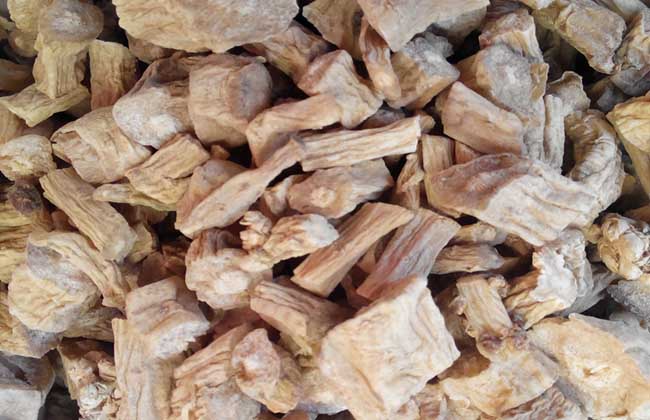
How to do field management for Codonopsis pilosula? Detailed explanation of the technical key points
Key technical points for field management of Codonopsis pilosula
-
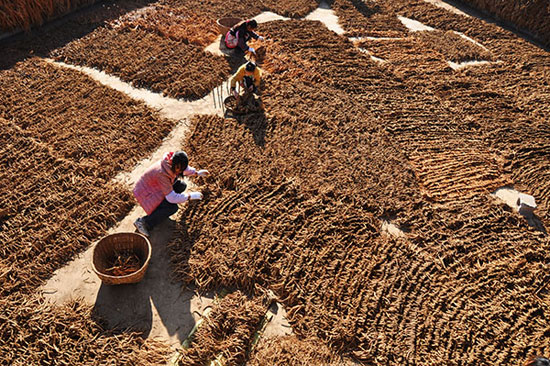
Busy drying Codonopsis pilosula in Weining, Guizhou: a bumper harvest of medicinal herbs helps farmers increase income
Drying Codonopsis pilosula in Weining, Guizhou: a bumper harvest of medicinal herbs brings wealth
-
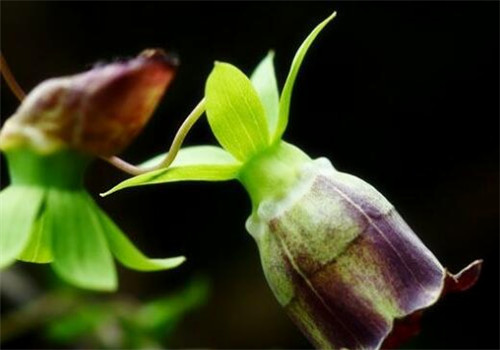
Growing Environment, Benefits and Planting Methods of the Climbing Vine Codonopsis lanceolata
Codonopsis lanceolata is a perennial twining vine, with a corolla that is blue-green or pale yellow and a conical capsule. So, where does the climbing vine Codonopsis lanceolata grow? What benefits and effects does it have? How is it planted? Where does the climbing vine Codonopsis lanceolata grow? Codonopsis lanceolata prefers a cool climate, and during the growing period, when it encounters high temperatures
-
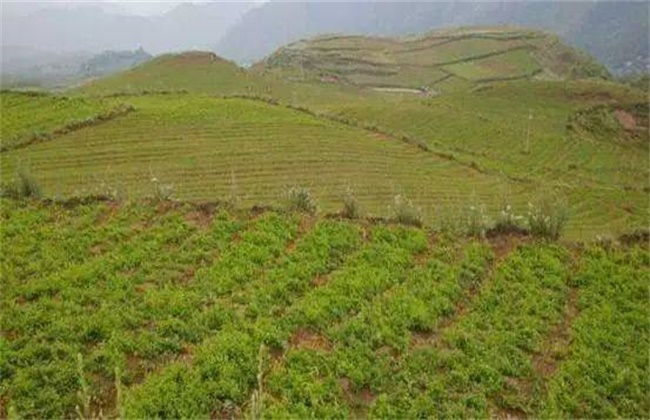
Detailed guide to Codonopsis pilosula seedling-raising techniques, easily grow robust seedlings
Codonopsis pilosula seedling-raising techniques
-
-
条件筛选