Detailed Explanation of Codonopsis Planting Methods and Key Technical Points
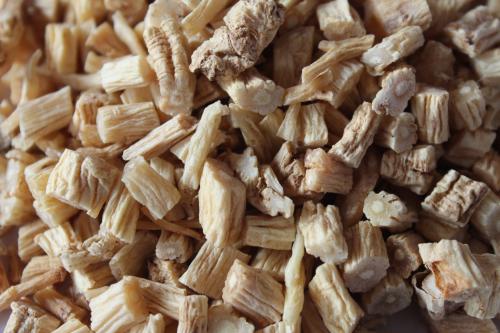
Codonopsis is a medicinal herb included in the "Chinese Pharmacopoeia." The medicinal source is the dried root of plants in the Campanulaceae family, such as Codonopsis pilosula, Codonopsis pilosula var. modesta, or Codonopsis tangshen. Codonopsis is sweet in taste and neutral in nature. It tonifies the middle and boosts qi, quenches thirst, strengthens the spleen and benefits the lungs, nourishes the blood and promotes fluid production. It is used for spleen and lung qi deficiency, poor appetite and fatigue, cough with asthmatic breathing, qi and blood deficiency, sallow complexion, palpitations and shortness of breath, thirst from fluid damage, and internal heat with wasting-thirst.
Planting Methods
1. Plant Characteristics
Codonopsis is a perennial twining herbaceous plant. Young stems have white hairs, leaves are opposite or alternate, and the corolla is bell-shaped and yellow-green. The fruit has persistent calyx at the edges, and the fruit contains multiple brown oval seeds. The root is long and conical, with branched roots below, and the outer bark is yellow-gray or white. The flowering period is August-September, and the fruiting period is September-October.
2. Growth Habits
Codonopsis is a deep-rooted plant that originally grew wild on high mountain shady slopes or semi-shady slopes. During the seedling stage, it fears direct strong sunlight and needs shade; mature plants prefer sunlight, fear waterlogging, are cold-resistant, and can overwinter in the field. It can be planted in both northern and southern China. It is suitable for growing in loose, fertile sandy soil, and low-lying, wet, saline-alkali land is not suitable for planting.
3. Propagation Methods
Codonopsis is propagated by direct sowing and seedling transplanting, in spring and summer from March to June, and in autumn and winter from October to December.
① Direct sowing. Before sowing, apply sufficient base fertilizer and phosphate fertilizer to the field, plow deeply and harrow finely to make beds 120 cm wide, open shallow furrows 1.5-3 cm deep at a row spacing of 20 cm, mix the seeds with an equal amount of fine sand, sow in rows, cover with 1 cm of fine soil, press firm and water, and cover with a thin layer of grass, gradually removing it when the seedlings are 6 cm tall. When the seedlings are 12 cm tall, thin them to a plant spacing of 9 cm.
② Seedling transplanting. Before sowing, apply sufficient base fertilizer, plow deeply, prepare the land into beds, and water; mix the seeds with an equal portion of fine sand, evenly scatter them on the bed surface, then cover with 1 cm of fine soil, and keep the soil moist regularly. In addition, seedlings can be raised intercropped with wheat, garlic, and other plants. Generally, seedlings emerge after half a month. During the seedling period, if the seedlings are too vigorous, part of them can be cut off on sunny days; if the seedlings are weak, some human manure and oil-based fertilizer can be applied appropriately. In dry weather, water frequently with small amounts. After one year of growth, they can be transplanted in April in spring or October in autumn. On the prepared bed surface, open furrows 15-19 cm deep at a plant spacing of 12-15 cm, place the Codonopsis seedlings diagonally in the furrows, cover with 3 cm of soil, press firm and water.
4. Field Management
Regardless of direct sowing or seedling transplanting, when the plants are 6-10 cm tall, loosen the soil and weed twice a month, and shallow hoeing is advisable to prevent root damage. In the early growth stage, topdress 1-2 times, applying 1500 kg of barnyard manure per mu, plus 20 kg of compound fertilizer. When the seedlings are 15 cm tall, set up trellises along the rows so that the stems and vines can twine around them, facilitating ventilation and light penetration. If no trellis is set up, during high temperature and rainy periods, appropriately cut off part of the Codonopsis vines on sunny days to prevent smothering and rotting of the vines that would affect yield. Codonopsis is best watered frequently with small amounts to keep the soil surface moist. During the rainy season, pay attention to drainage to prevent root rot from waterlogging.
5. Disease Control
① Rust disease mostly occurs from May to July. Affected leaves are slightly raised, and later burst to release orange-yellow summer spores. For control, spray with 97% diniconazole at 400 times dilution.
② Root rot often occurs in the rainy summer season. After onset, slight rotting starts from the top of the root and gradually the whole root rots. At the initial stage, spray or drench with 50% thiram wettable powder at 1000 times dilution. In addition, aphids and mole crickets may also occur. During their occurrence, for the former spray 80% dichlorvos at 1500 times dilution once a week for 3 consecutive times; for the latter spray 90% trichlorfon at 800 times dilution for poisoning control.
6. Harvesting and Processing
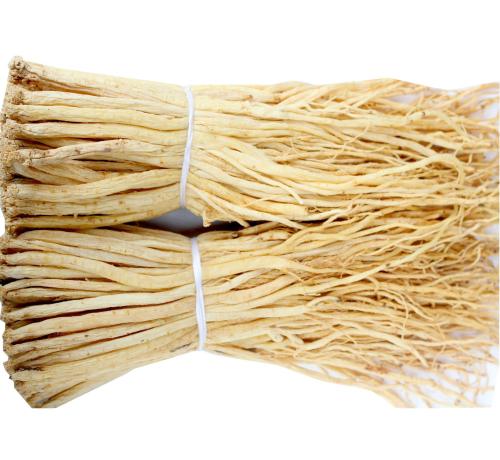
Direct-sown and transplanted plants can be harvested after 1-2 years of growth. Dig out the roots in late autumn or early spring, and remove all soil, stems, and leaves. Dry in the sun until half-dry, rub once by hand, then continue sun-drying. When 90% dry, bundle into small bundles according to size to obtain the finished product. From August to September, the fruits mature successively. When the seeds turn dark brown, harvest in batches, cut off the stems and vines, dry them in the sun, thresh out the seeds, and store in a dry place for later use.