What is the market price of Codonopsis pilosula per jin?
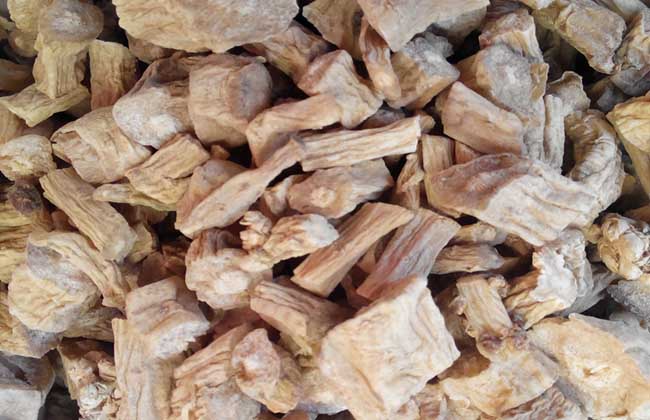
Codonopsis pilosula is a herbal medicine listed in the Chinese Pharmacopoeia. Its source is the dried root of plants in the Campanulaceae family, such as Codonopsis pilosula, Codonopsis pilosula var. modesta, or Codonopsis tangshen. It is a common traditional Chinese medicinal herb with the effects of tonifying the middle and benefiting qi, quenching thirst, strengthening the spleen and benefiting the lungs, and nourishing the blood and promoting fluid production. It treats general deficiency syndromes and can be used as a substitute for ginseng. Compared with ginseng, its price is also very cheap. Let us now take a look at the market price of Codonopsis pilosula.
The market price of Codonopsis pilosula
The market price of Codonopsis pilosula ranges from 20 yuan/kg to 25 yuan/kg, but the grade and place of origin of Codonopsis pilosula have a very large impact on its price. For example, the price of Wen Codonopsis is several times that of ordinary Codonopsis.
Grade classification of Codonopsis pilosula
1. Dongdang: ① First grade: more than 20 cm long, diameter below the reed head more than 1 cm, no hairy fibrous roots. ② Second grade: less than 20 cm long, diameter below the reed head more than 0.5 cm.
2. Ludang: ① First grade: diameter below the reed head more than 1 cm, no oily strips. ② Second grade: diameter below the reed head more than 0.8 cm, no oily strips. ③ Third grade: diameter below the reed head more than 0.4 cm, oily strips not exceeding 10%.
3. Xidang: ① First grade: diameter below the reed head more than 1.5 cm, no oily strips. ② Second grade: diameter below the reed head more than 1 cm, no oily strips. ③ Third grade: diameter below the reed head more than 0.6 cm, oily strips not exceeding 15%.
4. Tiaodang: ① First grade: diameter below the reed head more than 1.2 cm, no oily strips. ② Second grade: diameter below the reed head more than 0.8 cm, no oily strips. ③ Third grade: diameter below the reed head more than 0.5 cm, oily strips not exceeding 10%, no Codonopsis seedlings.
Identification methods for Codonopsis pilosula
1. Xi Codonopsis: The root of Xi Codonopsis is cylindrical, with a relatively thin tail, 10-20 cm long and 5-13 mm in diameter. The reed head is mostly in a “lion's head” shape. The surface is grayish yellow or light brown, with obvious longitudinal grooves. Near the root head there are tight transverse wrinkles, which gradually become sparse and account for about half of the whole. The lenticels are obvious. At the places where branch roots have fallen off, dark brown gelatinous material is often seen, formed by the drying of exuded internal milky juice. The texture is slightly hard and brittle, easy to break. The fracture shows a white bark, with cracks, and a light yellow wood. It has a special aroma and a sweet, strong taste. It is a high-quality product among Codonopsis.
2. Dongdang: Dongdang is shaped like Xidang, but the root head is large and obvious, and the bark is coarse and the body is spongy. When chewed, it tastes bland and sweet with little oil, and some have a muttony odor.
3. Ludang: The root of Ludang is cylindrical, single, 8-22 cm long or longer, about 7-12 mm in diameter. The root head is not obviously in a “lion's head” shape. The surface is light grayish brown, with transverse wrinkles near the reed head, longitudinal grooves in the middle, and protruding root scars of various sizes. The texture is harder than Xidang, and the bark and flesh are connected (few cracks in the fracture). The odor is slight and the taste is sweet.
4. Single-branch Codonopsis: The root of single-branch Codonopsis is cylindrical, rarely branched, 15-35 cm long and 5-25 mm in diameter. The root head is in a “lion's head” shape. The surface is grayish yellow, with obvious longitudinal grooves. The better-quality ones have relatively sparse transverse wrinkles at the top. At the places where branch roots have fallen off, there is black gelatinous material formed by exuded milky juice. The texture is relatively solid and easy to break, with few cracks in the fracture, and the wood is yellow. The odor is fragrant and the taste is sweet.
5. Xufu Codonopsis: Xufu Codonopsis is also called Bai Dang. It is mostly wild, shaped like a large Platycodon root, with a smooth body and no transverse wrinkles. The whole root has deep longitudinal groove lines. The texture is hard and brittle, and the taste is sweet and bland with a raw odor. It is an inferior product among Codonopsis.