-
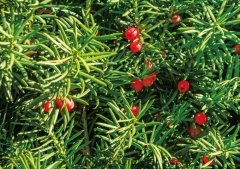
The origin story of the yew, its anticancer substances, and an introduction to breeding and cultivation methods
The yew is a relict plant; relict means remaining, referring to organisms that already existed in ancient times and still have surviving populations today. From the fossil record of the yew, it can be traced back to 200 million years ago in the Jurassic Period, contemporary with the dinosaurs, distributed across Eurasia. Tai
-
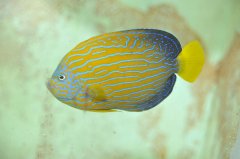
Breakthrough in Artificial Breeding of Blue-banded Angelfish Fry, Creating Value While Balancing Ecology
Brilliant colors and dazzling postures, with schools of fish swimming gracefully underwater, are extraordinarily therapeutic, and have also made the ornamental aquarium industry a star industry under trends such as the stay-at-home economy and physical and mental stress relief; according to the Food and Agriculture Organization of the United Nations (FAO)
-
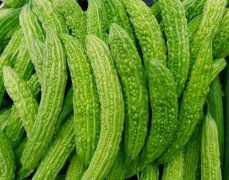
Breeding Process and Characteristics of the Early-Maturing Bitter Gourd Variety Puhang Bitter Gourd No. 1
Bitter gourd is one of the important vegetable types in the region south of the Yangtze River in China, with a long history of cultivation. Its ascorbic acid content stands out among cucurbits, being 14 times that of cucumber, 5 times that of winter melon, and 7 times that of tomato. Sometimes bitter gourd yields are low. Let us now learn about Puhang bitter gourd
-

Introduction to Extremely Heat-Tolerant Cauliflower Varieties and Analysis of Taiwan's Breeding Advantages
Taiwan mangoes and orchids are marketed worldwide, but many people do not know that cauliflower seeds are also a shining light of the island that has made its name known around the world. Cauliflower is one of the few advantageous items in the country with a complete industrial chain in seed production and breeding. Private seed companies are particularly strong, having been ahead of research institutions from very early on.
-
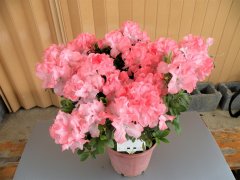
Breeding Process and Cultivation Characteristics of New Azalea Cultivars Taoyuan No. 1 and Taoyuan No. 2
The main azalea cultivars currently available on the market fall into 5 major groups: Hirado azalea, Western azalea, Kurume azalea, Satsuki azalea, and Taiwan native azalea. Due to differences in the regional environments where each group was bred and in their parentage, each azalea group has different characteristics.
-
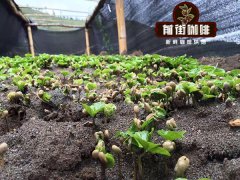
Qianjie Coffee Plantation Summary of Breeding Steps: Seedling Raising, Field Planting and Shading
Before raising coffee seedlings, it should be noted that, under normal circumstances, green coffee beans do not have the conditions to germinate. Therefore, only by using fresh coffee cherries or the current year's parchment beans can coffee seedlings possibly be raised. Use clean river sand for raising coffee seedlings to ensure good
-

What is the difference between elephant grass and sweet elephant grass?
When raising livestock, green fodder such as elephant grass and sweet elephant grass is used, so what is the difference between elephant grass and sweet elephant grass? 1. The difference between elephant grass and sweet elephant grass. Sweet elephant grass was developed from elephant grass and is a type of green fodder more suitable for livestock to eat.
-
How Do Black Devil Snails Reproduce? A Detailed Guide to Their Breeding Method
The black devil snail, also known as the military cap snail, closely resembles the abalone snail in form, except that its shell is jet black and its tail end protrudes a little more. So, how do black devil snails reproduce? 1. How do black devil snails reproduce? Black devil snails reproduce by laying eggs. They are dioecious, meaning males and females are separate, and they mate to fertilize. Shortly after mating, they lay eggs. In freshwater they only lay eggs without hatching; they can only hatch in "brackish water."
-
How Do Hamsters Reproduce? A Detailed Explanation of the Breeding Method and the Whole Process
How do hamsters reproduce? Hamsters have very short lifespans, averaging around 2 years. Generally, hamsters have reproductive capacity from 40 days old, but female hamsters suitable for breeding need to be 3-4 months old. Please also do not breed hamsters after they are 1 year old. When a male and a female are kept together, they will show mating behavior before long, but not every mating results in pregnancy. When the male is in heat, his testicles enlarge, and when the female is ready to mate, she raises her tail and stays still; after the male sniffs the female's rear, mating begins. <p style="text-align: center;"></p> <p style="text-indent:2em;">1. Long-term cohabitation method</p> <p style="text-indent:2em;">Also called the frequent breeding method. This method is relatively simple in management and can reduce the chance of disease transmission. One male is housed together with 1 female. Within a few hours after the female gives birth, she can mate and conceive again. Under normal circumstances, each female can produce 1 litter per month. This makes full use of the hamster's breeding capacity (especially the female's postpartum estrus). Because the female bears the heavy burden of being pregnant while nursing, attention should be paid to strengthening nutrition.</p> <p style="text-align: center;"></p> <p style="text-indent:2em;">2. Regular cohabitation method</p> <p style="text-indent:2em;">Also called the non-frequent breeding method. One male and 6 females are organized into one breeding unit. Each week, 1 female is placed into the male's cage, that is, the male is made to cohabit with 1 female on a weekly schedule, and at the same time the pregnant female is removed and placed in a separate cage for giving birth, nursing, and weaning, and so on. Each female's production cycle is 42 days, longer than in the long-term cohabitation method. But it facilitates planned supply and production, and the nursing pups receive sufficient nutrition, so the pups develop well; at weaning, the average body weight is 1-2 g heavier than with the previous method. At this time, the reproductive capacity of the breeding hamsters should be checked frequently, and breeding hamsters with low conception capacity should be culled promptly and new breeding stock added.</p>
-
How to Grow Pennywort in Water? Cultivation Methods and Precautions
I'm sure everyone is quite familiar with the pennywort plant by now. It is a very easy-to-grow green plant that can be kept as a small bonsai for ornamental viewing. Pennywort has long been regarded as a symbol of wealth, so many people place this "little fresh" plant
条件筛选