-

How to manage shiitake mushrooms in autumn and winter? A full breakdown of practical tips
How to skillfully manage shiitake mushrooms in autumn and winter? What should be noted? Is there any netizen who can help guide? As autumn and winter arrive, Zhongdi Network has compiled the key management points for shiitake mushrooms in autumn and winter, listed below for netizens' reference. Point one, increase the day-night temperature difference: in late autumn and early winter, daytime temperatures are high and nighttime temperatures are low...
-
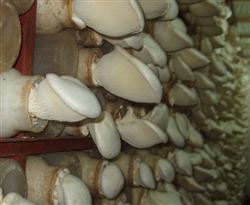
What are the environmental requirements for cultivating white king oyster mushrooms in autumn and winter?
What are the environmental requirements for cultivating white king oyster mushrooms in autumn and winter? The requirements for the greenhouse when cultivating white king oyster mushrooms in autumn and winter are as follows: A solar greenhouse or an idle house can both serve as fruiting facilities for white king oyster mushrooms, and they share one thing in common, namely that both must be able to meet the fruiting temperature requirement of above 8°C during the low-temperature period. Taking a mushroom shed as an example...
-
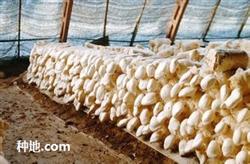
What are the precautions for fruiting of Pleurotus nebrodensis in autumn and winter
What should be noted when Pleurotus nebrodensis fruits in autumn and winter? The construction of the fruiting facility should be based on the occurrence and development characteristics of the Pleurotus nebrodensis fruiting bodies, and the first consideration is the heating and insulation performance of the facility in the low-temperature season. A solar greenhouse or an idle house can both serve as a fruiting facility, and they have one thing in common, namely...
-
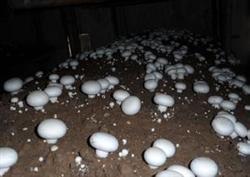
Detailed Explanation of Key Management Points for Button Mushroom (Agaricus bisporus) Autumn-Winter Mushroom Shed
Preventing spawn degeneration can increase yield, reduce the occurrence and development of pests and diseases, and decrease pesticide use, which is the foundation for producing organic button mushrooms. 1. The environmental temperature for culturing spawn must not exceed 28°C, and properly cultured spawn should not be stored at room temperature for more than half a month. 2. Effectively master the medium's...
-
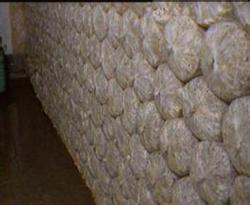
What should be noted for oyster mushroom cultivation in autumn?
1. Temperature difference stimulation: During the stage when oyster mushroom fruiting bodies begin to form, providing a daily temperature difference stimulation of 7°C to 10°C can promote earlier fruiting and more uniform fruiting body development. Method: Cover with film during the day to keep warm, and on sunny evenings or mornings uncover the film to expose the beds, increasing the temperature difference by cooling down, combined with watering at high temperatures to induce fruiting. 2. High temperature stimulation...
-
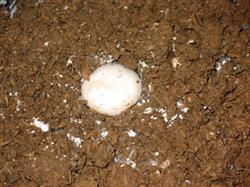
Water management is very important for autumn cultivation of button mushrooms
Casing soil is a technical measure unique to button mushroom production. Before casing, pay attention to the following aspects: (1) The surface of the compost should remain dry; if the surface is too wet, ventilate. (2) Check for contaminating microorganisms and pests; once found, measures must be taken. (3) The compost surface should be given a "..."
-
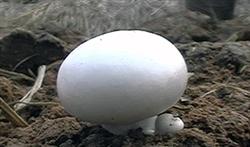
Autumn Fruiting Management Methods and Technical Key Points for Button Mushrooms
Button mushrooms (Agaricus bisporus) are a medium-to-low temperature type of mushroom. Their fresh mushrooms have a protein content of 35%-38%, and their nutritional value is 4-12 times that of vegetables and fruits. They enjoy the reputation of "health food" and "king of vegetarian foods," and are highly favored by domestic and international markets. When button mushrooms are cultivated in the Beijing area, September-November and April-May of the following year are the fruiting periods. Double...
-

Two rare mushroom varieties suitable for summer and autumn cultivation
1. EC55 long-root mushroom (Oudemansiella radicata). Its fruiting body is tall and upright, beautiful and attractive, shaped like an open sun umbrella, with a cap (pileus) 8-15 cm wide, light coffee-colored, and a stalk (stipe) 20-55 cm tall, 1-2 cm thick, white to light brown, with white flesh, fine and delicate texture, crisp and tasty stalk, and delicious flavor. It has high nutritional and medicinal value, rich in protein, amino acids, carbohydrates, vitamins and various mineral elements. Regular consumption can strengthen the body and boost human immunity, and for patients with high blood pressure
-
Detailed Explanation of Key Production Techniques for Autumn Edible Fungi
It is currently the high-temperature season, but autumn is just around the corner. There will still be a period of high-temperature weather in autumn. In autumn, on one hand, we must manage the spring-planted shiitake mushroom bags well; on the other hand, we must make good preparations for autumn planting production. I. Management of Spring-Planted Shiitake Mushroom Bags. There will still be a fairly long period of high-temperature weather in autumn. The main management goal is to prevent high temperatures from burning the mushroom bags and affecting later fruiting. 1. Temperature management. Temperature is an important factor affecting the growth and development of shiitake mushroom bags, so management must closely follow the main line of lowering temperature.
-
Pest Control Methods for Edible Mushrooms in Autumn and Winter
Recently there have been many inquiries about pest problems in autumn-cultivated edible mushrooms. Field research has found that pest damage in edible mushrooms was relatively severe this autumn. Some mushroom sheds had almost become "pest sheds," and the pest damage triggered massive contamination by weed molds and serious diseases, causing heavy losses for mushroom growers. Today, based on the research findings, we have invited experts to explain the "prevention" and "treatment" of pests in autumn and winter to fellow mushroom growers, in order to reduce their losses. Types of pest outbreaks and their identification: 1. Mushroom gnats and mushroom flies: Autumn cultivation generally uses fermented substrate, such as oyster mushrooms, shaggy mane mushrooms, and button mushrooms. The smaller mushroom gnats, oyster mushroom eye gnats, mushroom eye gnats, spinous eye gnats, heterogeneous eye gnats, dung flies, phorid flies, fruit flies, and other adults lay eggs near the substrate. The adults and eggs themselves do not cause direct harm; when the temperature is between 16°C and 30°C, the eggs hatch into larvae in about 4 days. The larvae feed on mycelium or fruiting bodies, causing damage for about 7 to 18 days before pupating. The pupal stage generally lasts about 2 to 8 days, after which they emerge as adults. After emergence, adults can mate again on the same day or the next day, and can lay eggs on the day of mating. Generally, each mushroom gnat lays more than 10 eggs, with the maximum reaching 270 eggs. Mushroom gnat adults are relatively large, with most species having a body length of more than 3.5 mm, and the largest can exceed 6 mm. Larvae generally have a body length of about 5 mm, with the largest exceeding 16 mm. Mushroom flies are smaller in size, with the largest phorid fly adults having a body length of only about 1.5 mm, and larvae between 2 mm and 3 mm. However, fruit fly adults and their larvae can reach about 5 mm in body length, similar to mushroom gnats.
条件筛选