What should be noted for oyster mushroom cultivation in autumn?
1. Temperature difference stimulation: During the stage when oyster mushroom fruiting bodies begin to form, providing a daily temperature difference stimulation of 7°C to 10°C can promote earlier fruiting and more uniform fruiting body development. Method: Cover with film during the day to keep warm, and on sunny evenings or mornings uncover the film to expose the beds, increasing the temperature difference by cooling down, combined with watering at high temperatures to induce fruiting. 2. High temperature stimulation...
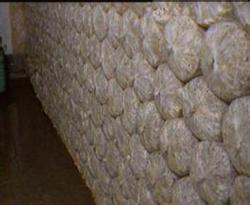 After the Start of Autumn, oyster mushroom cultivation enters a critical period. Because cottonseed hull prices this year have dropped significantly compared with the previous two years, many mushroom farmers who had been using corncobs and other materials to produce oyster mushrooms have started using cottonseed hulls again as the main ingredient of the substrate. Some farmers have already begun inoculating and running the spawn, while others are making third-generation spawn and preparing to inoculate a month later. At present, both the relative air humidity and the ground moisture are relatively high, and there are many issues to pay attention to when cultivating oyster mushrooms.
Two points to note when selecting cottonseed hulls
The reason mushroom farmers like to use cottonseed hulls as the main raw material for cultivating edible fungi is that cottonseed hulls contain comprehensive nutrients, have strong water absorption, and have good air permeability, making spawn running and fruiting convenient. Research shows that the soluble carbohydrate content in cottonseed hulls is about 22%, the total nitrogen content is about 0.67%, and the carbon-to-nitrogen ratio is 70:1, making them a high-quality raw material for cultivating most edible fungi. At the same time, cottonseed hull particles are moderate in size, requiring no further crushing, pre-wetting, or similar operations; they are simple and convenient to use and can greatly reduce labor. When selecting cottonseed hulls, mushroom farmers should note two points:
First, when selecting cottonseed hulls, pay attention to adding supplements to make up for nutrition. Due to improvements in delinting equipment, the fuzz on cottonseed hulls has become less and shorter, resulting in reduced water absorption capacity and poorer air permeability; cottonseed oil production equipment causes less breakage to cottonseed hulls, reducing the nutrients contained in them. Therefore, mushroom farmers must add certain supplements, such as soybean cake and wheat bran, to supplement nutrition.
Second, select fresh cottonseed hulls. Because cottonseed hull prices remained high in the previous two years, there is quite a lot of old cottonseed hull on the market. If it is old cottonseed hull, it must undergo high-temperature sterilization and become cooked material before it can be used to cultivate oyster mushrooms. But now most mushroom farmers begin inoculating and cultivating oyster mushrooms only after September, and for convenience of operation, they mostly use raw material cultivation directly. Therefore, a special reminder to fellow mushroom farmers here: when buying cottonseed hulls, it is best to choose fresh cottonseed hulls that have not become moldy.
Strictly control the material-to-water ratio when making third-generation spawn
Because plastic bags have good moisture-retention performance, the material-to-water ratio must be strictly controlled when mixing materials for third-generation spawn. If the water content of the substrate is too low, the mycelium grows slowly and weakly; if the water content of the substrate is too high, air permeability becomes poor and mycelial growth is hindered.
Generally speaking, autumn temperatures are high, so a material-to-water ratio of 1:1.1 to 1:1.2 is appropriate. It can also be determined by sensory observation: before bagging, when the substrate is held in the hand, water seeps out between the fingers but does not drip, and it can form a ball in the hand and scatter when dropped to the ground. Cottonseed hulls with long fuzz can have a little more water added, while those with short fuzz should have a little less. When bagging, mix the material while filling the bags, turning the material pile at any time to prevent uneven dryness and moisture from affecting mycelial growth.
Do a good job in managing third-generation spawn during the spawn-running period
The spawn-running period of third-generation spawn requires avoidance of light and dryness, and attention should be paid to ventilation and air exchange in the spawn-running room; in this way, after about a month the mycelium can grow throughout the substrate. Because the spawn-running time of third-generation spawn is long, if management is improper, problems such as slow mycelial growth, contamination by competing microorganisms, and pest damage can easily occur, leading to failure of spawn running. Therefore, management during the spawn-running period of third-generation spawn must be strengthened.
First, inspect the spawn bags at the proper time, turn the stacks, and dissipate heat. Because the space in the spawn-running room is limited, mushroom farmers mostly stack the spawn bags in multiple layers, sometimes up to 7 layers. As the mycelium continues to grow, the temperature inside the spawn bags rises accordingly. If the stacks are not turned in time to dissipate heat, it is very easy to cause spawn burning. When turning the bags, be careful to switch the side that was originally facing up to the bottom, so that the moisture in the bags is uniform, which is favorable for spawn running. When turning the stacks, the spawn bags must be handled gently to avoid puncturing the bags and contaminating them with competing microorganisms. When turning the stacks, pay attention to checking the germination and growth of the spawn. If spotted or patchy contamination by competing microorganisms is found, promptly pick out the contaminated bags and carry out control; if contamination in a spawn bag is severe, promptly remove the spawn bag. While inspecting the spawn bags, you can use your hands to slightly loosen the bag openings at both ends so that oxygen enters the bags and mycelial growth speeds up. After the mycelium has grown for a period, if its growth rate is found to have slowed due to lack of oxygen, you can use a thumbtack to poke holes in places where the mycelium has already grown. Never poke holes in places where the mycelium has not yet grown, otherwise it will cause contamination of the spawn bag.
Second, do a good job in pest prevention. Many mushroom farmers report that during the spawn-running period of third-generation spawn, they are often threatened by pests. If the spawn bags are punctured by hard objects or damaged by rodents, mushroom gnats, mushroom flies, and similar pests enter the bags to lay eggs, and the mycelium is easily bitten and eaten by pests, affecting spawn running. Therefore, during the spawn-running period, the ground, windows, and other facilities should be sprayed once about every 7 days with pesticides such as beta-cypermethrin, Fangchongling, and Diguchong to prevent pests.
How should oyster mushrooms cultivated with cooked material be managed in the high-temperature season?
In recent years, the number of mushroom farmers using cooked material to cultivate oyster mushrooms in the high-temperature season has begun to increase, because they have seen that in August and September the market supply of oyster mushrooms is low and prices are high. So what issues should mushroom farmers pay attention to when using cooked material to cultivate oyster mushrooms?
First, during steaming and disinfection of the material, it can be fermented first and then steamed. Fermenting first and then steaming can allow the substrate to quickly reach 100°C, shorten the time needed to raise the material temperature, and avoid acidification of the substrate. At the same time, mushroom farmers can use high-temperature-resistant plastic baskets and iron baskets to hold edible fungus spawn bags rather than nylon bags, and should avoid squeezing the spawn bags together, so as to facilitate the flow of steam, rapidly raise the substrate temperature, and enhance the sterilization effect. This can also ensure the shape of the spawn bags, which is favorable for later spawn running.
Second, ventilate reasonably to lower the temperature. Open the vents at the front and top of the shed to create air convection and lower the shed temperature. Because oyster mushrooms are aerobic fungi, mycelial metabolism requires sufficient oxygen, and convection can ensure the oxygen supply. When ventilating, the plastic film at the front of the greenhouse can be lifted about 30 cm, and the top vents adjusted to the maximum, forming good convection inside the shed. As for ventilation time, when the outside air temperature is higher than the shed temperature, ventilate less during the day and mainly ventilate at night.
Third, place the spawn bags reasonably. In production, single-layer placement of spawn bags is advocated, but because shed space is limited, most mushroom farmers stack the spawn bags together, placing 3 to 4 layers. To help the spawn bags dissipate heat and prevent spawn burning, bamboo poles can be used to separate them in the middle.
Finally, shade the top of the shed to lower the temperature. Placing straw mats and non-woven fabric, etc., on the top of the shed can both prevent heat from being directly transferred into the shed and lower the shed temperature, and also provide a low-light environment for mycelial growth.