What are the precautions for fruiting of Pleurotus nebrodensis in autumn and winter
What should be noted when Pleurotus nebrodensis fruits in autumn and winter? The construction of the fruiting facility should be based on the occurrence and development characteristics of the Pleurotus nebrodensis fruiting bodies, and the first consideration is the heating and insulation performance of the facility in the low-temperature season. A solar greenhouse or an idle house can both serve as a fruiting facility, and they have one thing in common, namely...
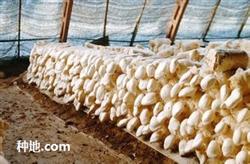
What should be noted when Pleurotus nebrodensis fruits in autumn and winter?
The construction of the fruiting facility should be based on the occurrence and development characteristics of the Pleurotus nebrodensis fruiting bodies. The first consideration is the heating and insulation performance of the facility in the low-temperature season.
A solar greenhouse or an idle house can both serve as a fruiting facility, and they have one thing in common, namely that both must be able to meet the fruiting temperature requirement of above 8°C during the low-temperature period.
Taking a mushroom shed as an example, growers often use a simple oyster mushroom shed as the fruiting facility for Pleurotus nebrodensis. The inherent deficiencies of the oyster mushroom shed in design and construction make it difficult to extend the most suitable fruiting period into the low-temperature season, often causing autumn mushrooms to be delayed until spring. This misses the winter period when the weather is cold, goods are scarce and prices are high, resulting in low mushroom-growing efficiency and low shed utilization, and leading to the result that the benefits of Pleurotus nebrodensis are inferior to those of oyster mushrooms.
A well-structured solar greenhouse should have the following characteristics: 1. It should have a good light-transmitting roof plane that can let through natural light to the maximum extent, because collecting light means collecting heat (light is converted into heat). The contradiction between too much light transmission and the relatively low light requirement of Pleurotus nebrodensis can be solved by hanging shade nets inside the shed. 2. It should have excellent insulation and heat storage structures that can minimize heat loss from the greenhouse, and at the same time it should have a relatively large heat storage body with strong heat storage capacity. 3. The specifications and dimensions of the greenhouse, such as length, width, ridge height, back wall height, front slope roof and back slope roof, as well as the scale of the greenhouse, should be appropriate. 4. It should have an auxiliary heat source so that a certain shed temperature can be maintained even when the outside air temperature is too low, extending the golden period of fruiting. For specific construction dimensions, refer to the dimensions of a high-quality vegetable shed, but the ground inside the shed should preferably be lowered by about 40 cm, and the shed height should be slightly reduced, so as to facilitate moisture retention and reduce the heated space.
Click to get more Pleurotus nebrodensis cultivation techniques
Click to get more edible fungi cultivation techniques