-

Jackie Chan Endorses Datong Daylilies, Helping a Specialty Agricultural Product Out of a Poverty-Stricken County
Nowadays celebrities rarely endorse agricultural products, but on the afternoon of the 7th, renowned film star and National Committee of the Chinese People's Political Consultative Conference (CPPCC) member Jackie Chan called at the joint group meeting of the CPPCC culture and arts sector for more literary and art workers to help impoverished households shake off poverty, helping them sell lettuce and daylilies, so that
-
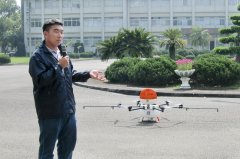
Agricultural drones have wide applications, excelling at spraying, fertilizing and disaster surveying
Nowadays drones are being used more and more widely, and they are also used in agriculture. Let's take a look together. Unmanned aerial vehicles are seen as a promising new capable assistant for the future development of agriculture. Not only has the Civil Aeronautics Administration been busy drafting regulations, under which anything above 250 grams will in future require real-name registration, but all sectors are also actively investing in developing agricultural and other uses of drones. The Agricultural Research Institute of the Council of Agriculture, Executive Yuan, has set up a drone team and is currently building experimental data; in future it is expected to establish a set of operating manuals for farmers to refer to.
-

How does agriculture chart its path in an era of high costs?
Right now, land transfer has become the hottest phrase in rural areas. According to incomplete statistics, in Gaoqing County, Shandong Province, the number of villages participating in land transfer has reached more than 500, accounting for 65% of the county's total villages. At the same time, transfer fees are also quietly changing, gradually becoming
-
Large grain growers must return subsidies to smallholders, leaving agricultural support policies stranded in confusion
In order to encourage the development of new types of agricultural business entities, in recent years the state and local governments have begun to provide them with fiscal subsidies. In Chongqing, subsidy standards are divided into two tiers according to operating scale: 160 yuan and 230 yuan per mu. But in grassroots practice, many smallholders have become "field bosses," and large grain growers have to "return" part of the subsidy money to them. In some districts and counties, large growers actually receive about 90 yuan per mu in subsidies, and in a few places even less than 10 yuan.
-
No Letup in Late Rice Pest and Disease Control, Ministry of Agriculture Calls for Continued Battle
At present, autumn grain crops in most parts of the country have gradually entered the harvest period, but the double-cropping late rice in South China and Jiangnan and the single-cropping late rice in the middle and lower reaches of the Yangtze River are at the heading and grain-filling stage, which is a critical period for yield formation and also an important period for the occurrence and damage of pests and diseases at the ear stage. In particular,
-
How to do a good job in agricultural resource utilization and environmental protection
At present, China's agriculture has stood at a new historical starting point, the production capacity of grain and other major agricultural products has leaped to a new level, agriculture is accelerating its transformation toward modernization, and the country has entered the ranks of middle-income countries; at the same time, it is also a period of concentrated outbreak of various intricate and complex contradictions, among which the development of agriculture
-
Microbial pesticides will become a new boost for agricultural production
At present, China has formed an industrial scale of more than 1,000 registered microbial fertilizer enterprises, with a production capacity of 10 million tons and an output value of nearly 20 billion. In recent years, China's microbial fertilizer production capacity has developed rapidly and steadily at an annual growth rate of more than 10%. Microbial fertilizers are popular because
-
The number of farmers working in China's bamboo industry reaches 35 million
At present, more than 35 million farmers across the country are directly engaged in bamboo forest cultivation, bamboo product processing and other production and business activities. China's bamboo industry has become one of the effective ways to increase farmers' income, and millions of bamboo farmers have become wealthy thanks to bamboo resources. This was learned by reporters at the recent International Symposium on Sustainable Development of Small and Medium-sized Enterprises and the Bamboo Industry
-
Grim Situation of Major Pests and Diseases at the Wheat Ear Stage
At present, wheat in the Jianghuai, Huanghuai and other regions has successively entered the booting and heading stages, which is an important period for yield formation and also a critical period for the occurrence and control of pests and diseases. Affected by last year's warm winter, the base number of wheat pests and diseases in some areas is relatively high; recently, continuous rainy weather has appeared in Jianghuai and other areas,
-
A bumper summer grain harvest is expected again this year, as the busy "three summers" season is in full swing
At present, we have entered the busy "three summers" season. How are the summer grain prospects? This year's summer grain area has increased slightly and steadily, reaching 415 million mu, an increase of more than 1 million mu over last year. Yield per unit area is expected to rise. Based on field surveys and analysis by experts, the three factors making up wheat yield are: the number of ears per mu has increased, the number of grains per ear is flat to slightly up, and the 1000-grain weight is expected to decline slightly, so an increase in yield per unit area is expected to be achieved. The high-yield trend is obvious in the main producing provinces. Main producing provinces report that wheat stands are adequate and individual plants are robust, and in particular dryland wheat is growing better than in previous years. In addition, several rounds of widespread rainfall occurred in the northern winter wheat region in April, which helped form large ears with many grains.
条件筛选