-
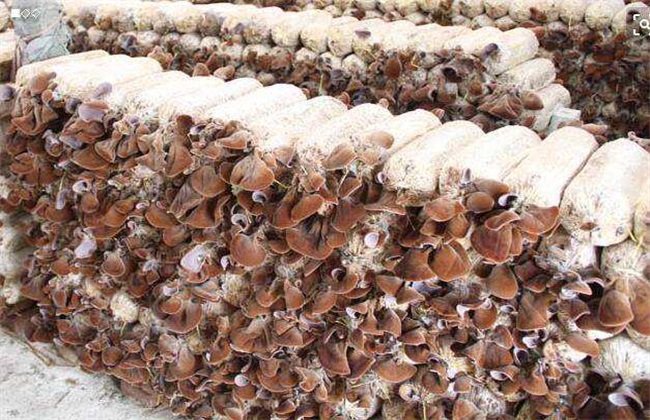
Where is the main production area of wood ear fungus? A detailed explanation of production area distribution
Where is the main production area of wood ear fungus
-
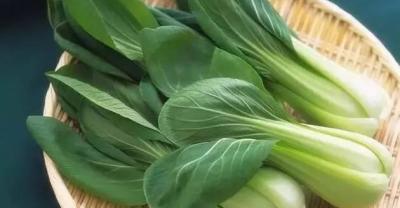
Do you know this vegetable from rural areas that has anti-cancer properties?
Do you know this vegetable from rural areas? It has anti-cancer properties The one being talked about is the beetroot. Beetroot is commonly cooked or pickled in the United States, and Russian borscht...
-

Corn prices stable in producing areas, higher at northern and southern ports, mold appears in Northeast
Daily Grain and Oil, November 15 news: COFCO Yushu announced on November 15 that starting at 10:00 today, it will add a purchase price for fourth-grade wet corn. The current purchase prices are second...
-

Central Asia Grain, Oil, Storage and Processing Industrial Park to Be Established in Lanzhou New Area
The Central Asia Grain, Oil, Storage and Processing Industrial Park project in Lanzhou New Area was officially signed recently. The project mainly revolves around imported grain from Kazakhstan, expanding the upstream and downstream industrial chains, and building...
-

Autumn potato planting is a good choice for disaster areas
Since July, some areas of our city have experienced continuous heavy to torrential rain, with severe torrential rain in localized areas, causing waterlogging in some farmlands and total crop failure. Autumn potato has a short growing period, high yield and good returns, making it a good crop for post-disaster self-rescue production. The main cultivation techniques are introduced as follows: 1. Select good varieties. For autumn-planted potatoes, choose early-maturing virus-free varieties with a short dormancy period, early tuber formation, rapid tuber bulking, good quality, high yield and a high marketable rate, such as virus-free Yupotato No. 1 and Yupotato No. 2.
-
High-quality, high-yield and high-efficiency cultivation techniques for potatoes in dry hilly and mountainous areas
About 85% of the potato planting area in our province is mainly distributed in hilly and mountainous areas, where the climate is cool, the frost-free period is short, sunlight is abundant, the temperature difference between day and night is large, and the annual rainfall is only about 400 mm, mostly concentrated in July and August. Every spring is dry, windy, and has high evaporation, creating ecological conditions of drought in nine out of ten years. The unfavorable factor of drought and water shortage seriously hinders the development of agricultural production. The five supporting techniques centered on drought resistance - "selecting improved virus-free seed potatoes, planting small whole tubers, sprouting and sunning seed potatoes, and one late and four deep" - are
-
High-yield and high-quality cultivation techniques for garlic in the Hangzhou area
Garlic is a plant of the genus Allium in the family Amaryllidaceae (Liliaceae) and is an important pungent vegetable. At present, the garlic planting area in China is gradually expanding. In addition to the main producing areas of Shandong Province, Jiangsu Province and Henan Province, it is also widely cultivated in other regions, among which the Yangtze River basin is also an important garlic producing area. Due to differences in climatic conditions, garlic cultivation techniques in each region have their own characteristics, and the cultivation and management methods also differ from those in other regions. The high-quality and high-yield cultivation techniques for garlic in the Hangzhou area are introduced as follows. 1 Site selection and land preparation Garlic likes fertilizer and water, and its root
-
High-quality and high-yield cultivation techniques for Yinjia No. 1 eggplant in high mountain areas
Yinjia No. 1 is a new eggplant variety newly bred by the Zhejiang Provincial Agricultural New Variety Introduction and Development Center. Our county introduced it in 2001 and successfully trial-planted it in high mountain areas, and the planting area has expanded year by year. In 2004, the county's planting area of Yinjia No. 1 reached 120 hectares, with an average yield of 3721.2 kg per mu and an output value of 4093.3 yuan; the highest field reached a yield of 4855.5 kg per mu and an output value of 5341.0 yuan, achieving good economic benefits. The high-quality and high-yield cultivation techniques for Yinjia No. 1 are summarized as follows:
-
Detailed Explanation of Key Cultivation Techniques for Small Hot Peppers in High Mountain Areas
I. Variety Selection Select pepper varieties with good yield performance and strong resistance according to market demand. II. Raising Strong Seedlings 1. Seed Treatment Before sowing, sun-dry the seeds for 4-6 hours, then soak them in 55°C warm water for 15 minutes, stirring continuously until the water temperature drops to 30°C, then let them soak undisturbed for 8-10 hours, wash off the sticky liquid on the seed coat, float away the shriveled seeds, rinse thoroughly with clean water, and dry in the shade. 2. Seedbed Preparation and Sowing Sowing in late March to early April is preferable. Choose at least 3
-
Cultivation Techniques for a Single-Season Rice Yield of 800 kg per Unit Area
I. Variety Selection: Select the best-quality varieties that have shown the best per-unit-area yield in actual production surveys over the past three years, such as "Chuanxiang No. 8." II. Main Recommended Techniques: Dry-raised seedlings, intensive cultivation techniques for single-season rice, soil-testing formula fertilization techniques, and integrated pest and disease control techniques. III. Specific Field Operations: 1. Dry-raised seedlings. (1) Before May 19, select fertile, loose vegetable garden field; at 6 sq m of seedling field per mu of main field, apply 5
条件筛选