-
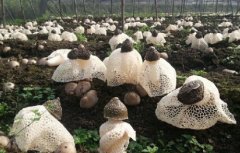
What Varieties of Bamboo Fungus Are There? Growth Environment and Premium Producing Areas Explained
There are many varieties of bamboo fungus, such as yellow-skirt, variegated, spiny-backed, long-skirt, short-skirt, red-skirt bamboo fungus, etc. Among them, the yellow-skirt bamboo fungus is toxic and cannot be eaten, otherwise food poisoning will occur. The biggest characteristic of the yellow-skirt bamboo fungus is that both the skirt and the stipe are yellow.
-
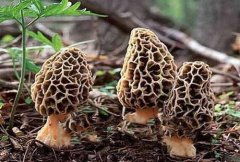
Who should not eat morel mushrooms? Raw-eating poisoning risks and main production areas
The morel mushroom gets its name because its shape closely resembles a sheep's stomach, so it is called morel. Wild morels are distributed in China's Shaanxi, Gansu, Qinghai, Tibet, Xinjiang, Sichuan, Shanxi, Jilin, Jiangsu, Hebei, Beijing, Hunan, Guizhou and other regions. Now
-

Cultivation of oyster mushrooms (Pleurotus pulmonarius) during the summer idle period can utilize shiitake mushroom sheds in high-altitude mountainous areas
Pleurotus pulmonarius is a medium-temperature variety, with a fruiting range of 15-28°C and an optimum of 18-22°C, and can fruit naturally in spring and autumn. Because Pleurotus pulmonarius has the characteristic of fruiting under variable temperature, under environmental conditions above the fruiting temperature range, proper low-temperature differential stimulation (temperature difference above 10°C) can promote fruiting body formation. In current production, during the summer high-temperature season when temperatures exceed 28°C, the method of placing physiologically mature spawn bags in a 2-4°C cold storage for cold stimulation for 10-12h, then moving them to the mushroom house for fruiting, is adopted for off-season
-
New Shiitake Mushroom Ground Cultivation Technology Helps Cultivation in High-Altitude Cold Mountain Areas
Shiitake mushroom is a temperature-variable fruiting fungus; when the day-night temperature difference exceeds 10°C, it grows well, yields high, produces large and thick-fleshed mushrooms of good quality. In high-altitude cold regions, the day-night temperature difference in spring and summer is large, often exceeding 10°C, making it suitable for cultivating shiitake mushrooms, with a per-mu yield of 3000-4000 kg. The ground cultivation technology for shiitake mushrooms in high-altitude cold mountain areas is a new cultivation model following ground cultivation and bag cultivation of shiitake mushrooms, and it is also a good project for mountain people to escape poverty and become prosperous. The main cultivation techniques are introduced as follows: Cultivation season and temperature. The general sowing period is from April 20 to May 10 each year
-

Where are the main producing areas of white fungus (Tremella fuciformis) distributed?
Where are the producing areas of white fungus? What are the requirements for cultivating white fungus? Please give an introduction. The main producing areas of white fungus are divided into: artificial cultivation -- Gutian County, Fujian Province, where Gutian County's output accounts for 95% of the national total, and also Tongjiang in Sichuan. Wild white fungus producing areas include -- Guizhou, Sichuan, Fujian, Hubei,...
条件筛选