-
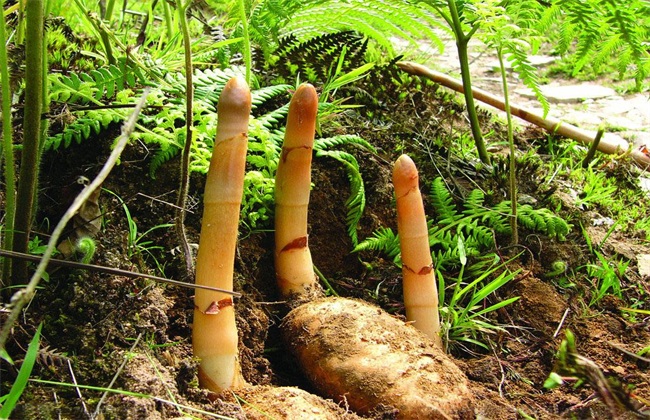
Where is the best place of origin for Gastrodia elata? A nationwide review of high-quality production areas
Where is the best place of origin for Gastrodia elata
-

Is honeysuckle suitable for growing in mountainous areas?
Honeysuckle, also known as Japanese honeysuckle flower or erhua, is a perennial vine whose flowers, leaves, stems and roots can all be used as medicine. In hilly and mountainous areas, growing honeysuckle on barren hills, hillsides and marginal land can both green the barren hills and wild ridges and bring relatively high economic returns. Honeysuckle has the functions of clearing heat and detoxifying, cooling the blood and resolving stasis, and can mainly treat externally contracted wind-heat, sores and ulcers with viral infection, red swelling with heat and pain, the early stage of warm disease, and bloody pus in the stool. Honeysuckle also contains a variety of trace elements essential to the human body, as well as enzyme acids beneficial to human health, and has a certain effect on anti-aging, cancer prevention and keeping the body light and fit.
-
Honeysuckle is an ideal choice for economic development in mountainous areas
I. Development and utilization prospects of honeysuckle (1) Medicinal value Honeysuckle is one of the ten precious and widely used medicinal herbs nationwide. As early as more than 2000 years ago, the "Shennong Bencao Jing" listed it as a superior grade, and recorded that "taken over a long period it lightens the body and prolongs life." Its flower buds contain luteolin, inositol, and chlorogenic acid. Research shows that chlorogenic acid is the main active ingredient for antibacterial and anti-inflammatory effects. It has a significant inhibitory effect on Staphylococcus aureus, hemolytic Streptococcus, Shigella dysenteriae, Salmonella typhi, Salmonella paratyphi, and Pneumococcus.
-
How Are Xinxiang Honeysuckle Flowers? An Introduction to Their Producing Areas and Cultivation
Xinxiang honeysuckle flowers are mainly distributed in the two counties of Fengqiu and Yuanyang, and are also grown in Yanjin and Xinxiang counties. Their flower buds are thick, long and plump, soft, glutinous and pure, and their quality can rival that of "Miyinhua". They are highly valued and praised by Chinese medicinal materials companies. In 1982, Fengqiu and Yuanyang counties were designated as national production bases. In 1983, after appraisal by relevant experts, Xinxiang's introduction and cultivation technology for honeysuckle was deemed the first of its kind in the country, and it won the third prize for scientific and technological progress from the National Science Commission and the second prize from the National Pharmaceutical Administration. By 1986, the city's planting area had reached 19,500 mu, with a total
-
How to regulate temperature when cultivating Gastrodia elata in plains and low mountain areas
The biggest difficulty in cultivating Gastrodia elata in plains and low mountain areas is controlling high temperatures and regulating temperature differences. (1) For indoor cultivation, cold water can be sprayed in the walkways and space, but water must not accumulate at the bottom layer of the Gastrodia elata. At the same time, open the opposing windows facing north and south for ventilation, or use an electric fan to cool down while opening the windows, so that air convection is achieved and the cooling goal is reached. When the temperature is low, close the doors and windows, and make the temperature difference as small as possible. (2) For outdoor cultivation, more broadleaf trees and green vine plants can be planted on the cultivation site, so that the cultivation site is cool and moist.
-
Detailed Introduction to Gastrodia Varieties and Main Producing Areas
Gastrodia belongs to the orchid family (Orchidaceae), subfamily Epidendroideae, tribe Gastrodieae, subtribe Gastrodinae. To date, about 30 species of this genus have been discovered worldwide. They are distributed in tropical, subtropical, temperate and cold-temperate mountainous regions. From New Zealand and New Caledonia in the east to Madagascar in the west. From Australia and New
-
How to Grow Schisandra? A Detailed Guide to Artificial Cultivation Techniques in the Liaodong Mountain Area
Schisandra (Schisandra chinensis) is a plant of the Magnoliaceae family. Its dried ripe fruit has high medicinal value, with effects such as astringing, tonifying, promoting fluid production, and stopping diarrhea. With the destruction of natural resources and excessive artificial harvesting, the current Chinese medicinal market is in short supply, and artificial cultivation has broad prospects. This is a Chinese medicinal herb project with relatively large investment, a long cycle, and considerable returns, so cultivation techniques are particularly important. 1. Site selection and land preparation. The seedling nursery should be loose and fertile land near a water source with good drainage and irrigation; old ginseng land is best. After plowing, harrow fine and make
-

Where is Zhishi suitable for planting? Suitable production areas and environmental conditions
Where is Zhishi suitable for planting
-

Where is the origin of Jiaogulan? Introduction to the distribution of its main producing areas
Where is the origin of Jiaogulan?
条件筛选