-
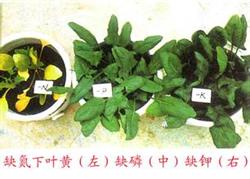
What to Do About Nitrogen Deficiency in Spinach? Detailed Control Measures
Nitrogen deficiency in spinach: leaves are pale green, the basal leaves (older leaves) turn yellow and this gradually spreads upward, and they turn brown when dry. Plants are stunted, with few branches (tillers), and show premature aging. Control method: apply sufficient base fertilizer, with 2000-3000 kg of decomposed manure, 30-35 kg of phosphate fertilizer, and 10-15 kg of potassium fertilizer per mu. 2-...
-
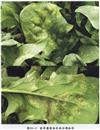
How to prevent and control downy mildew in spinach? Detailed explanation of prevention and integrated treatment methods
The disease is caused by a fungus called spinach downy mildew. It mainly affects the upper surface of the leaves; the lesions are pale yellow, irregular in shape and varied in size, with a diameter of 3-17 mm and indistinct edges. After the lesions expand, they join together into patches, and in the later stage they turn brown and the leaves die; on the underside of the leaves, a grayish-purple mold layer forms on the lesions. The disease spreads from the outer leaves...
-
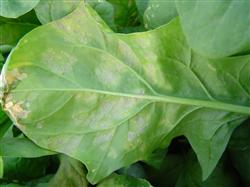
A Detailed Guide to the Prevention and Integrated Treatment of Spinach Downy Mildew
The disease is caused by a fungus called spinach downy mildew (Peronospora farinosa f. sp. spinaciae). It mainly affects the upper surface of the leaves; the lesions are pale yellow, irregular in shape, vary in size, measure 3-17 mm in diameter, and have indistinct edges. After the lesions expand, they join together into patches, and in the later stage turn brown and die, while a grayish-purple mold layer forms on the lesions on the underside of the leaves. The disease spreads from the outer leaves...
-
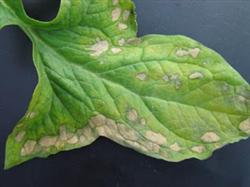
Detailed Guide to Identifying and Controlling Downy Mildew in Spinach
Downy mildew is a common disease of spinach, with severity varying from year to year. The spinach downy mildew pathogen is an obligate parasite that only infects spinach. I. Symptoms Spinach downy mildew can locally infect leaves and can also cause systemic infection. When leaves are locally infected, the affected areas first appear as pale green, water-soaked round spots, which then expand...
-
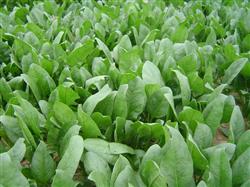
A detailed guide to four-season spinach cultivation techniques: master the key points for growing year-round
1. Sowing time and varieties. Autumn spinach is the main crop in spinach production, generally sown from August to September, but sowing can also be advanced to July or delayed to early October; after sowing, it can be harvested in batches in 30-40 d (days). Variety selection requirements are not strict, but for early-autumn spinach it is best to choose early-maturing varieties that are more heat-tolerant and fast-growing, such as Litou spinach, Huabo...
-
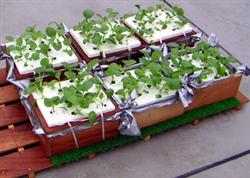
Detailed Explanation of Key Techniques for Hydroponic Spinach Cultivation in Summer
Spinach is one of the important vegetables in spring in northern China. It prefers cool conditions and cannot tolerate heat, with an optimum growth temperature of 15°C--20°C. Cultivation in summer is relatively difficult due to high temperatures and frequent rain. In recent years, some vegetable growers in Shouguang have successfully cultivated summer spinach using hydroponic techniques in greenhouses. The key cultivation techniques are introduced as follows:...
-
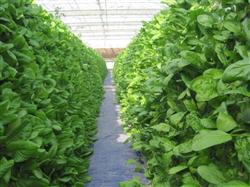
How to apply wintering fertilizer properly to spinach before overwintering
1. Sowing. Spinach is mainly broadcast-sown, though drilling is also possible. Under high-temperature conditions, germination is slow, so for early-autumn sowing it is best to soak the seeds to promote germination: soak the seeds for 12 hours, then treat them in a refrigerator at 4°C for 24 hours, and then keep them at 15-25°C to promote germination for several days; once most have germinated, they can be broadcast-sown. Sowing rate per mu...
-
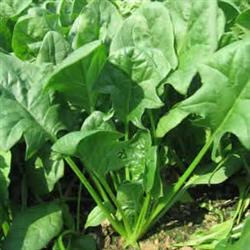
The three-part spinach cultivation guide: master the key growing steps
Sowing: Spinach is mainly broadcast-sown, though it can also be sown in rows. Because germination is slow under high temperatures, seeds sown in early autumn should be soaked and pre-germinated: soak the seeds for 12 hours, then place them in a refrigerator at 4°C for 24 hours, then keep them at 15-25°C to sprout for several days, and once most have germinated, broadcast-sow them. Sowing rate per mu: 10...
-
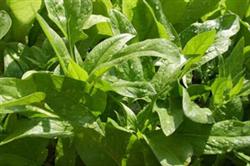
Detailed Explanation of the Key Points of Pollution-Free Cultivation Techniques for Spring Spinach
Spring spinach has a short growing period, and can generally be harvested and brought to market 30 to 50 days after sowing. Planting spring spinach plays an important role in quickly easing the spring shortage. 1. Select suitable varieties. After spring spinach is sown and emerges, the temperature is low and the daylight hours gradually lengthen, making it very easy to bolt after passing through phase development. Therefore, choose varieties that bolt late, have thick and large leaves...
-
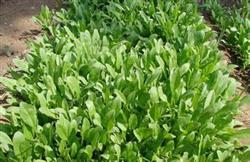
How to efficiently cultivate greenhouse cucumbers, rice, and spinach?
Spring spinach has a relatively short growing period, and can generally be harvested and sold 30 to 50 days after sowing. Planting spring spinach plays an important role in quickly alleviating the spring vegetable shortage. Choose suitable varieties. After spring spinach is sown and emerges, temperatures are low and daylight gradually lengthens, making it very easy for bolting to occur once it passes through phase development. Therefore, choose varieties that bolt late, have thick and broad leaves...
条件筛选