What to Do About Nitrogen Deficiency in Spinach? Detailed Control Measures
Nitrogen deficiency in spinach: leaves are pale green, the basal leaves (older leaves) turn yellow and this gradually spreads upward, and they turn brown when dry. Plants are stunted, with few branches (tillers), and show premature aging. Control method: apply sufficient base fertilizer, with 2000-3000 kg of decomposed manure, 30-35 kg of phosphate fertilizer, and 10-15 kg of potassium fertilizer per mu. 2-...
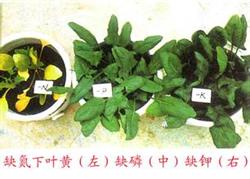
Nitrogen deficiency in spinach: leaves are pale green, the basal leaves (older leaves) turn yellow and this gradually spreads upward, and they turn brown when dry. Plants are stunted, with few branches (tillers), and show premature aging.
Control method: apply sufficient base fertilizer, with 2000-3000 kg of decomposed manure, 30-35 kg of phosphate fertilizer, and 10-15 kg of potassium fertilizer per mu. At the 2-3 true-leaf stage, apply a top dressing once together with thinning, using 7.5-10 kg of urea per mu. At the 6-7 leaf stage, apply 15-20 kg of urea per mu. For overwintering spinach, once spring temperatures are stable (no freezing), if the surface soil is dry and the heart leaves of the seedlings turn green, water early to promote regrowth. For autumn spinach, apply a top dressing once at the 2-leaf stage together with thinning, and at the 4-5 leaf stage water and apply a top dressing, mainly with quick-acting nitrogen fertilizer. During the spinach growing period, keep the soil moist; in drought, irrigate promptly or apply nitrogen fertilizer frequently together with top dressing.