-
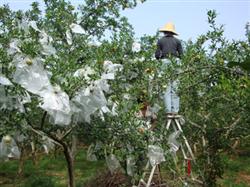
What should you pay attention to during the pomegranate coloring stage? Key points for growing pomegranate trees
Pomegranates are now beginning to enter the coloring stage. What should you pay attention to during the pomegranate coloring stage? Please let the experts give an introduction. Generally, from late August to early September, pomegranates begin to enter the coloring stage; during the pomegranate coloring stage, management should be carried out to avoid uneven coloring, fruit cracking and insect pests; the management methods can be carried out as follows....
-
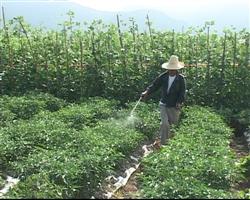
How should plant growth regulators be used correctly on vegetables?
How are plant growth regulators used on vegetables? Please provide guidance. When applying plant growth regulators to vegetables, you can refer to the following methods: 1. Determine the appropriate concentration according to the purpose of use. When using plant growth regulators, different concentrations should be adopted according to the purpose of use, the different vegetable species, and the different stages....
-
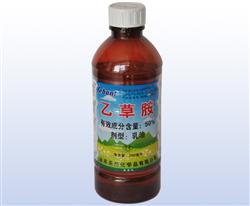
What precautions should be taken when using acetochlor in dryland?
What should be noted when using acetochlor in dryland? Please give an introduction. When using acetochlor in dryland, the following four points should be noted: Soil moisture. A certain level of soil moisture helps improve the weeding effect. If continuous drought weather occurs during the application period, the weeding effect will be greatly reduced. Therefore, watering first to increase soil moisture and then applying the chemical is...
-
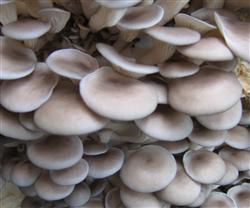
What should be paid attention to during oyster mushroom cultivation?
What should be paid attention to in oyster mushroom cultivation? Please give an introduction. In oyster mushroom cultivation, attention should be paid to the following 7 points: First note: air humidity too high. The relative air humidity should be kept at around 70% during the mycelium growth stage, and around 90% during the fruiting stage. If it exceeds 95%, with poor ventilation, it is prone to harmful bacteria and pests, and the mushroom caps are also prone to discoloration and rot....
-
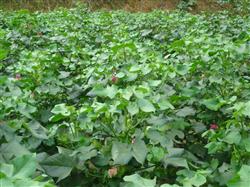
How should cotton be managed well in the middle and late stages?
How should cotton be managed well in the middle and late stages? Please introduce the management methods. In the middle and late stages, cotton can be managed by referring to the following methods: 1. Management during the flowering and boll-setting stage (1) Apply flowering and boll-setting fertilizer heavily and apply topping fertilizer. Cotton generally flowers around July 10. Fertilization during the flowering and boll-setting stage generally accounts for 50% of the topdressing amount during the growth period and can be appropriately advanced, applying as soon as flowers appear (July 10-15). On the basis of sufficient basal fertilizer or base fertilizer applied earlier, apply 40-45 kg per mu of compound fertilizer containing 15% each of nitrogen, phosphorus, and potassium, or 15-20 kg of urea, 15-20 kg of diammonium phosphate, and 10-15 kg of potassium chloride, or apply a formula fertilizer with the same content of nitrogen, phosphorus, and potassium. In cotton fields where flowering and boll-setting fertilizer is insufficient or there is a trend of fertilizer deficiency during the full flowering and boll-setting stage, applying topping fertilizer is beneficial for retaining summer bolls, increasing autumn bolls, and preventing premature senescence. In early August, apply 10-15 kg of urea as topdressing, no later than mid-August. In high-yield cotton fields, after the full boll stage, the root absorption capacity declines. In cotton fields with a trend of fertilizer deficiency, spray 300-500 times dilution (or 0.3-0.5 jin per mu) of potassium dihydrogen phosphate, or 15 ml of Lüzhi Feng (Shuofeng 481), or 10 ml of Duoxiao Fengchan Ling, and other plant growth regulators or foliar fertilizers, mixed with 30 kg of water, and spray 1-2 times. This has an obvious effect on increasing boll weight. (2) Irrigate in drought and drain in waterlogging. During the flowering and boll-setting stage, cotton is sensitive to water and is neither tolerant of drought nor waterlogging. Therefore, it is necessary to promptly meet the large water consumption demand of cotton fields. In high-yield cotton fields, as long as there is no rain for 7-10 days, irrigation should be carried out promptly. In general cotton fields, if the top leaves of the cotton plants show wilting at noon, they should be watered. When rainfall is heavy, drainage should be carried out promptly. (3) Intertillage and hilling. Before the cotton field closes in the early flowering stage, intertillage and hilling should be combined. This is beneficial for irrigation during drought and drainage during waterlogging in the full flowering and boll-setting period and helps prevent lodging in the later stage of high-yield fields. (4) Pruning. Top the plants early at the appropriate time, generally from July 15-20, and finish before July 25. Tip the side branches around August 10, no later than August 15. For row spacing above 1.1 m, retaining one vegetative branch (smooth shoot) during pruning gives the highest yield.
-
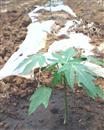
How should papaya trees be fertilized during cultivation?
How should papaya be fertilized? When is the best time to fertilize papaya? Please provide an introduction and guidance. Papaya base fertilizer: When deep-plowing the orchard in late September, apply mainly barnyard manure and human excrement and urine, mixed with quick-acting N fertilizer. For young trees, apply 15-30 kg of base fertilizer per tree; for large trees, apply 30-50 kg of base fertilizer per tree. Papaya topdressing methods:...
-
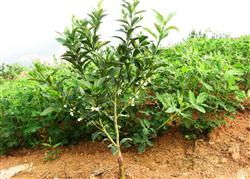
Navel Orange Cultivation Techniques: How Should Navel Orange Trees Be Pruned?
How should navel orange trees be pruned? Here is an introduction to the methods. When planting navel oranges, you can refer to the following pruning methods: 1. Pruning methods for young navel orange trees: Focus on developing the canopy, and prune lightly, avoiding excessive thinning and heavy heading back. On the basis of trunk determination of the nursery stock, cultivate the main branches in the 1st and 2nd years, and select and retain...
-
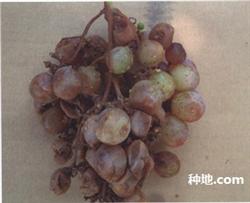
What should be done when a large number of rotten berries appear during the grape ripening period?
What should be done when there are a lot of rotten berries when grapes are ripening? For advice, the following methods can be used to prevent and control rotten berries during the grape ripening period: 1. Thoroughly remove sources of pathogens: after autumn, before the canes are taken down from the trellis, remove diseased and dead plant debris, and burn the removed diseased and dead plant debris in a centralized manner; in autumn before burying soil for cold protection and after emergence in spring, spray 50-100 times Solibar or 3-5 degrees lime sulfur mixture plus 300 times sodium pentachlorophenate to eliminate pathogen sources and reduce disease incidence; during the growing season, promptly remove diseased leaves, diseased berries, and diseased canes, and bury them deeply in a centralized manner.
-
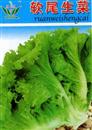
How should lettuce seeds be treated before planting?
How should lettuce seeds be treated? How do you germinate lettuce seeds in high summer temperatures? Experienced gardeners, please help advise. Lettuce prefers cool conditions and dislikes high temperatures. Its seeds begin to germinate above 4°C, with an optimum germination temperature of 15-20°C, and are inhibited by high temperatures above 30°C. Therefore, except in the high-temperature season, before sowing lettuce seeds, generally no...
-
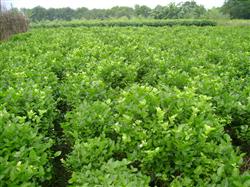
How should you fertilize jasmine to get it right?
How should you fertilize jasmine? Here is an introduction: jasmine blooms many times and has a high nutrient demand. The fertilization principle is to combine base fertilizer with topdressing, with topdressing mainly using quick-acting fertilizers; combine inorganic fertilizers with organic fertilizers, using decomposed organic fertilizer; and combine the three major elements nitrogen, phosphorus, and potassium, with nitrogen fertilizer as the main component. For field planting, the base fertilizer can use...
条件筛选