How should plant growth regulators be used correctly on vegetables?
How are plant growth regulators used on vegetables? Please provide guidance. When applying plant growth regulators to vegetables, you can refer to the following methods: 1. Determine the appropriate concentration according to the purpose of use. When using plant growth regulators, different concentrations should be adopted according to the purpose of use, the different vegetable species, and the different stages....
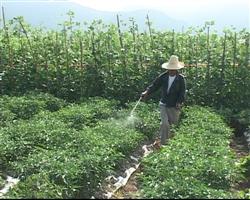
How are plant growth regulators used on vegetables? Please provide guidance.
When applying plant growth regulators to vegetables, you can refer to the following methods:
1. Determine the appropriate concentration according to the purpose of use
When using plant growth regulators, different concentrations should be adopted according to the purpose of use, the different vegetable species, and the different stages. When regulating plant growth and development, each plant growth regulator has an appropriate concentration. Even for the same growth regulator, different concentrations often produce different effects. Arbitrarily increasing or decreasing the concentration will affect the physiological effect of the plant hormone. For example, spraying cucumber seedlings with a 150×10﹣6 ethephon solution can induce female flower differentiation and increase early yield, but if the concentration is increased to 1000×10﹣6, it will kill male flowers.
2. Determine the appropriate spraying period according to the different stages of vegetable growth and development
At different stages of vegetable growth and development, the response to plant growth regulators differs greatly. Only when used during the appropriate growth period can the expected effect be achieved. For example, when using paclobutrazol to treat tomato seedlings to inhibit their growth, if treated too early, the plants are tender and prone to phytotoxicity; if treated too late, the expected effect cannot be achieved. The appropriate treatment period is the 5-6 leaf stage of tomato seedlings.
3. Choose the appropriate method of use according to the different growth regulators
Plant growth regulators have high physiological activity and are used in small amounts, so accurate and uniform application is very important; otherwise, local excess dosage may occur and cause phytotoxicity. Commonly used plant growth regulators include water-based formulations, powders, and emulsifiable concentrates. Those that can dissolve directly in water can be directly prepared and applied according to the required concentration and dosage, but they must be prepared and used immediately; those that cannot dissolve directly in water can first be dissolved with 90% and then diluted with water. When applying plant growth regulators, the method should be chosen according to the treatment period, such as spraying, root watering, flower dipping, root soaking, etc. The specific method used can be flexibly determined according to the situation, so as to fully exert the efficacy and keep the operation simple and convenient. For example, treatment of young leaves and young buds of seedlings at the seedling stage is suitable for spraying; to prevent flower and fruit drop during the flowering period and promote ovary development, flower dipping is generally used.
The use of plant growth regulators must be based on improving cultivation conditions, coordinated with various cultivation technical measures, and strengthened water and fertilizer management, so that the plants are under good cultivation conditions and can fully exert their effects.
Click to get more regulator application techniques
Click to get more pesticide application techniques