-

What are the key management points for field roses after a flood?
1. Pests and diseases are unlikely to occur, especially downy mildew, the most lethal disease in the growth of cut roses. The reason: the key point of the tall-stem rose cultivation technique is that the nutrient branches are placed on the two sides of the ridge respectively, and the rose stems are about 50 cm above the ridge surface. There are no leaves below the stems, so ventilation and air permeability are very good, which is unfavorable for the growth of pests and diseases and can effectively...
-
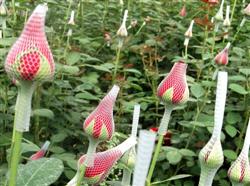
Detailed Explanation of Red Rosewood Cultivation Techniques and Management Methods
Red rosewood, Ochrosia coccinea, is a plant in the genus Ochrosia of the family Apocynaceae, distributed from Madagascar to Polynesia in the Pacific. Red rosewood is an evergreen small tree; the whole plant has white latex, the stems and branches are gray, and the young branches are bright green. The leaves are attractive in shape, nearly leathery or firmly papery, usually...
-
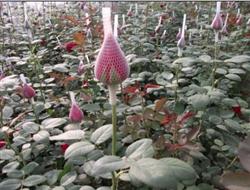
What are the common pests and diseases of roses? A detailed guide to prevention and control methods
Common rose diseases include rust, black mold, and powdery mildew. Rust often affects rose leaves, young branches, and flowers. In the early stage of the disease, rust-red spots appear on the leaves, and in severe cases the leaves wither, scorch, and drop off, affecting flowering the following year. Diseased leaves should be removed promptly and destroyed in a centralized manner. You can also spray once every half month from May to August...
-
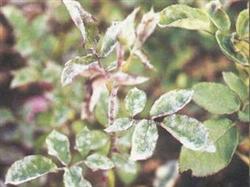
Identification and Control of Common Rose Diseases
Roses have four common diseases, such as: powdery mildew, black spot, crown gall, and stem canker. Although other diseases such as downy mildew, rust, and anthracnose are occasionally found, they are not as serious as the first four. Their symptoms and control methods are described below: Rose black spot. Black spot is caused by the fungus Diplocarpon rosae of the family Dermateaceae...
-
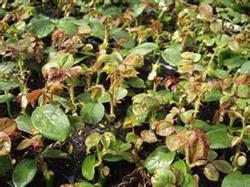
Detailed Explanation of Rose Propagation Methods and Cultivation Techniques
Rose Propagation Methods: Rose propagation methods can be divided into sexual propagation and asexual propagation. The main cultivated varieties in production - Pingyin double-petaled red rose, abundant-flower rose, purple-branch rose and other double-petaled varieties - are all propagated by asexual propagation. Asexual propagation includes division, root burial, grafting and softwood cuttings, with the most widely used...
-
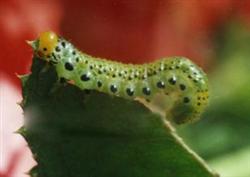
What to Do When Roses Have Pest Problems? A Detailed Guide to Prevention and Control Methods
Common pests that harm roses include leafcutter bees, stem sawflies, rose middle noctuid moths, cottony cushion scale, and red spider mites. Main control methods: 1. Leafcutter bees. They mainly damage the tender leaves of plants, and when they occur in large numbers they can bite complete leaves into ragged, incomplete ones within a short period. Mainly use manual capture of adults or spray 50%...
-

Detailed Explanation of the Key Points of Standardized Rose Cultivation Techniques
In recent years, our farm has implemented the Science and Technology Spark Project of the Provincial Department of Science and Technology, and has successively introduced five new rose cut flower varieties from outside the province - Meilan Lipstick, Bellamy, American Pink, Cardinal, and Red 90 - and has summarized a set of standardized cultivation techniques, which are introduced as follows: 1. Variety layout: Meilan Lipstick and Bellamy are the main summer cultivars...
-
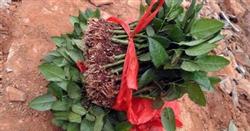
Rose seedling production and pruning techniques
I. Seedling production. Modern rose seedling production all uses the single-node cutting propagation method, or the graft-cutting propagation method to produce seedlings. (1) Single-node cutting: Cuttings are taken from second-grade cut flower branches, cutting single-node stem segments with plump axillary buds from the branches as cuttings. About 0.5 cm of stem segment is left above the axillary bud, ...
-
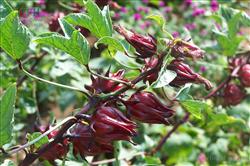
Detailed Explanation of the Key Cultivation Techniques for Roselle
Roselle (Hibiscus sabdariffa) belongs to the Malvaceae family, genus Hibiscus, and is an annual herbaceous plant native to Sudan in Africa. It has purple stems, green leaves, yellow flowers and red fruits, with brilliant colors. It is currently the world's most ideal natural plant health beverage; its seeds can be pressed for oil and have high medicinal value, and are also edible; the lower stems can be used as feed and fuel, so it may be said to be a treasure from top to bottom. In order to...
-
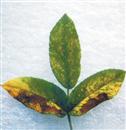
How to prevent and control rose rust? These methods you need to master
I. Symptoms Rose rust is a major disease of roses, common throughout southwest China, and more severe in areas with warm weather year-round and rainy, foggy winters. According to the author's surveys over many years, the incidence rate in some areas of our province is as high as 80%. White-flowered and purple-flowered roses are both infected, causing leaf drop, affecting growth and flowering, and it also...
条件筛选