Identification and Control of Common Rose Diseases
Roses have four common diseases, such as: powdery mildew, black spot, crown gall, and stem canker. Although other diseases such as downy mildew, rust, and anthracnose are occasionally found, they are not as serious as the first four. Their symptoms and control methods are described below: Rose black spot. Black spot is caused by the fungus Diplocarpon rosae of the family Dermateaceae...
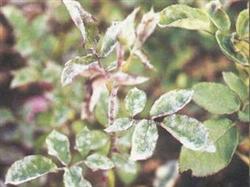 Roses have four common diseases, such as: powdery mildew, black spot, crown gall, and stem canker. Although other diseases such as downy mildew, rust, and anthracnose are occasionally found, they are not as serious as the first four. Their symptoms and control methods are described below:
Rose black spot
Black spot is caused by the pathogen Diplocarpon rosae of the family Dermateaceae, and is the most common disease in rose cultivation, with the most severe outbreaks occurring during periods of high temperature and high humidity. It occurs on leaves, petioles, and stems. When a plant is infected, black circular spots appear on the leaves, with mature leaves near the ground being the most severely affected. Infected leaves gradually yellow and drop off. In severe cases, most of the leaves on the whole plant drop off, making photosynthesis impossible and resulting in poor growth.
The first priority in controlling rose black spot is to maintain hygiene in the growing environment, for example: cleaning up diseased leaves to prevent fungal spores from spreading again; watering in the morning as much as possible so that the leaves stay dry, making it harder for the pathogen to reproduce and spread. Second, pay attention to pruning to avoid dense clusters of branches and leaves and to keep the plant well ventilated. Chemical control can be used, such as spraying the whole plant with Benlate (Yili) at 1000 times dilution, applying once every 5-7 days for 3-5 consecutive applications, which can also control rust and powdery mildew at the same time.
Powdery mildew
Rose powdery mildew is a fungal disease caused by the pathogen Sphaerotheca pannosa. It mainly infects young leaves, tender stems, and flower buds, and white powdery lesions appear on the infected parts; in severe infections, the leaves become brittle, shrivel and curl, and dry up.
The onset period of powdery mildew differs from that of black spot. When temperatures are lower and relative humidity is higher, powdery mildew occurs more severely, usually most often in winter. Generally speaking, it is most likely to occur under humid conditions, poor ventilation, and insufficient sunlight, so when cultivating roses in winter, powdery mildew must be controlled to allow the roses to grow well. Controlling rose powdery mildew, like black spot, requires attention to pruning to keep the plant well ventilated, and avoiding planting roses in places with insufficient light or isolating them from other plants that are easily infected by powdery mildew, such as: zinnia, dahlia, etc. Choosing disease-resistant varieties can reduce the threat of powdery mildew, or spray the whole plant with Benlate (Yili) at 1000 times dilution.
Crown gall
It is caused by the soil-borne bacterial pathogen Agrobacterium tumefaciens, mainly attacking the stem and root, and often occurs at the part where the plant contacts the soil. The infected part swells and forms a tumor-like growth that encircles the stem, causing poor growth and eventually death of the plant.
Because crown gall is very difficult to treat once a plant is infected, it is best to immediately pull out and burn diseased plants as soon as they are found, and only plant again after disinfecting the planting hole with a soil disinfectant. Prevention of crown gall mainly depends on careful selection when buying seedlings, and avoiding wounds on the stem before and after planting, especially on the part near the soil. In addition, soil from near infected plants should not be used for mounding, to avoid infection.
Stem canker
Stem canker, also known as canker disease, is caused by a fungal pathogen that enters the plant through wounds, causing all or part of the stem to die, and then dieback upward or downward, so that the branches and leaves above the affected part grow poorly or die. Wounds on roses are mainly caused by pruning; in addition, low-temperature cold damage or operations such as grafting can also cause wounds, and stem canker can also enter through places where the stem has been stripped or peeled. Generally, stem canker occurs more easily at the internodes, so when pruning, the wound should be kept as close to the node as possible, which can prevent the occurrence of stem canker. In addition, large-flowered roses, plants with nutritional deficiencies, or those infected with black spot are all more susceptible to infection.
To control rose stem canker, diseased branches should be cut off and burned at any time, because the pathogen produces spores that overwinter on the branches, so field hygiene must be maintained. Before and after pruning diseased plants, disinfect tools with 70% alcohol or 10% bleach. When pruning, the wound should be close to the node and at a 45-degree angle to prevent the pathogen from entering the wound.