-

What to Do When Desert Rose Leaves Turn Yellow? Five Main Causes and How to Handle Them
As a succulent shrub, the desert rose normally has emerald-green leaves. However, during the growing process, various reasons can cause the leaves to turn yellow, which gives flower lovers a real headache. So what should you do when desert rose leaves turn yellow? The editor will tell you the causes and solutions.
-

How to prune a desert rose? Illustrated guide to four common pruning methods
To maximize the ornamental value among the benefits and uses of the desert rose, pruning is indispensable in addition to mastering the correct growing methods. Its advantages are that it both prevents leggy growth and promotes flowering, so how do you prune a desert rose? Let's look at the desert rose pruning method illustrations
-

How to care for desert rose in winter? Heat preservation is the key point of winter care
We know that the desert rose is a very cold-sensitive plant, so extra attention must be paid when caring for it in winter. If the methods are improper, it may very likely suffer freeze damage and fail to overwinter successfully. So how do you care for desert rose in winter? Let us look at the winter cultivation methods for desert rose. Does desert rose drop its leaves in winter? Scientific research has found
-

How to grow Desert Rose so its roots grow bigger? What soil to use for more balanced nutrition
The Desert Rose has a thick, sturdy stem base but a short plant body, which makes it look very cute. Many flower lovers choose to grow Desert Rose precisely because they like this trait, so how do you grow Desert Rose so its roots grow bigger? What soil should be used to cultivate Desert Rose? The editor will answer these one by one.
-

How to grow Cherokee rose (Rosa laevigata) and care tips: plenty of water and fertilizer
Everyone has probably heard of Cherokee rose (Rosa laevigata); it is a very easy-to-grow plant, and its pure white fragrant flowers and distinctive fruits make people adore it. In daily life, many people want to grow Cherokee rose, so how do you grow it? Below is a carefully compiled guide to growing Cherokee rose and care tips.
-

Spring greenhouse cultivation of roses: beware of one disease and one pest
March and April are an important stage when roses in the greenhouse move from recovery into rapid growth, and also a period when various pests and diseases are relatively active. During this time, special attention should be paid to the prevention and control of downy mildew and red spider mites. Downy mildew is a greenhouse disease, prone to occur after the roses leaf out, and occasionally seen in open fields
-
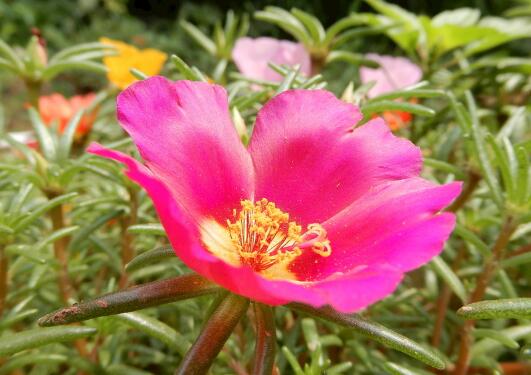
How to grow moss rose? Growing methods and precautions, it needs plenty of light
Moss rose is a flower native to Brazil. Because it blooms in sunlight and closes on cloudy days and in the evening, it is called moss rose. Moss rose is a common potted plant, but there are many things to pay attention to when growing it, about how to grow moss rose
-

Tuberose Benefits and Uses: Ornamental and Medicinal, and Its Fragrance Repels Mosquitoes
Tuberose, also known as night-blooming jasmine and moonflower, is a beautiful flower that blooms at night. Its flower shape is beautiful, and its fragrance can repel mosquitoes, making it deeply loved by flower enthusiasts. In daily life, many people keep a pot of tuberose at home for the sake of its beauty. However, if it were only beautiful, you would be underestimating tuberose too much.
-
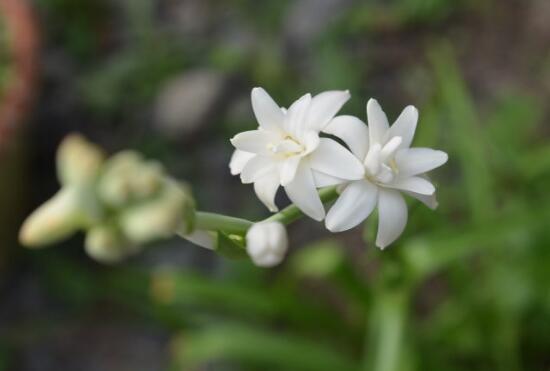
Tuberose blooms in July; care for it this way and it will flower more
Many flower lovers are certainly familiar with tuberose, because it is the night-blooming jasmine, a flower that blooms at night and has a rich fragrance. Rumor has it that tuberose's fragrance has a mosquito-repelling effect, so everyone looks forward to tuberose blooming. So when does tuberose bloom? How should tuberose be grown to produce more flowers? On this
-

What to Do When Fresh-Cut Roses Rot? A Detailed Guide to Prevention and Treatment
Rose rot usually starts from the base of the petals and the flower stem. This rotting phenomenon has nothing to do with humidity or temperature; rather, the roses are damaged by ethylene during storage. The entire stem of the rose becomes fibrous and woody, with the flower stem being the most fragile part, and it must bear the weight of the flower head.
条件筛选