Tuberose Benefits and Uses: Ornamental and Medicinal, and Its Fragrance Repels Mosquitoes
Tuberose, also known as night-blooming jasmine and moonflower, is a beautiful flower that blooms at night. Its flower shape is beautiful, and its fragrance can repel mosquitoes, making it deeply loved by flower enthusiasts. In daily life, many people keep a pot of tuberose at home for the sake of its beauty. However, if it were only beautiful, you would be underestimating tuberose too much, because tuberose has many other benefits and uses, such as medicinal healing. Let us take a look together.
I. Tuberose Benefits and Uses
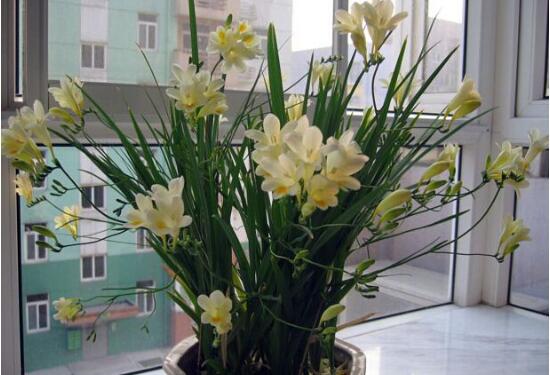
1. Ornamental value
When speaking of tuberose benefits and uses, the first thing that comes to mind is naturally its ornamental value. As shown in the picture, tuberose has emerald leaves and plain stems, with flower shapes as elegant as jade, and more unusually, it blooms at night, with a delicate fragrance overflowing, making people forget the summer heat in July and feel relaxed and happy. With such a plant, keeping it at home and waiting for it to bloom will dazzle your eyes.
2. Beautifying the home
According to the editor's knowledge, in southern China, tuberose is often used to decorate homes and courtyards. It has slender branches and can bloom in summer and autumn, with yellow-green flowers in elegant colors. Pairing beautiful tuberose with home furnishings instantly makes the indoor environment much more beautiful.
3. Purifying the air
Keeping tuberose indoors also reflects the common trait of plants: absorbing carbon dioxide and releasing oxygen. In addition, tuberose has a good purifying effect. It can absorb harmful gases such as formaldehyde and carbon monoxide. Although it is not as good as pothos, spider plant, or aloe, having it is still better than not having it.
4. Mosquito-repelling effect
Among tuberose benefits and uses, the most noticed may be its mosquito-repelling effect. Tuberose blooms in summer. Although its fragrance is not beneficial to the human body, it is quite effective at repelling mosquitoes and insects. I think this is also one of the reasons many people grow it.
5. Medicinal value
Tuberose is very beautiful, which makes many people overlook its medicinal value. It is understood that the flowers and leaves of tuberose can be used as medicine, with the effect of clearing the liver and brightening the eyes. It has a good effect on symptoms such as red and swollen eyes, measles dermatitis, and corneal inflammation. In addition, tuberose can also be used externally. It can treat inflammation and erosion of external injuries.
6. Edible value
Besides the above points, tuberose benefits are also reflected in its edible value. According to research, tuberose is a semi-wild vegetable whose flowers and flower buds can be eaten. In southern China, its flowers are stir-fried with meat as a dish. Overall, tuberose has good edible value. As for how to eat it, there is a detailed introduction in the tuberose eating methods, so we will not say more here.
Tuberose Benefits and Effects
Ornamental value
Tuberose petals are pure white, crystal clear, and charmingly fragrant. Blooming in midsummer, they make people feel relaxed and happy. Tuberose has slender flower stems and a long flowering period. It is an important material for cut flowers and is also often used to arrange flower beds, flower borders, and other places, looking very graceful.
Economic value
Tuberose is a flower with a rich fragrance and is a raw material for extracting essence. It can be used to make scented daily necessities, such as perfume and soap, to which a suitable amount of tuberose-extracted essence can be added.
Medicinal value
Tuberose is sweet in taste and cool in nature. It can clear heat and detoxify, and is mainly used for sores, swellings, and toxins. The leaves, flowers, and fruits of tuberose can all be used as medicine. It has the effects of brightening the eyes, drawing out toxins, and promoting tissue regeneration. It can also be pounded and applied externally, and can repel mosquitoes.
Tuberose Benefits and Uses
Tuberose Economic Value
Tuberose, as the name suggests, is a plant with fragrance. It is also a raw material for extracting essence. In fact, night-blooming jasmine and tuberose are the same thing.
The main components of tuberose extract include geraniol, nerol, neryl acetate, methyl benzoate, methyl anthranilate, benzyl alcohol, farnesol, eugenol, and tuberose ketone, among others. When used in food, it can give food a unique tuberose scent.
It can also be used to make some scented daily necessities, such as perfume and soap, to which a suitable amount of tuberose-extracted essence can be added.
Tuberose Ornamental Value
Tuberose leaves are clear and translucent, and the petals are pure white, giving people a feeling of delicate elegance. It contains fragrance and is pure in form, with a delicate scent overflowing. In midsummer, it can give people an enjoyment of beauty.
Tuberose has long flower stems, and the flowering scape is upright, 40-90 cm tall, with a long flowering period. The flowers are opposite, white, and arranged in relatively long spike-like inflorescences. It is an important material for cut flowers and also a beautiful flower for arranging flower beds.
Tuberose Medicinal Value
Tuberose is sweet and bland in taste and cool in nature, so it can clear heat and detoxify, and is mainly used for sores, swellings, and toxins. It was first recorded in "Names of Seed Plants."
The roots of tuberose contain about 1.8% sapogenin, mainly tigogenin, hecogenin, and 9-dehydrohecogenin; the flowers contain 0.08%-0.14% volatile oil, among which the main components are geraniol, nerol, farnesol, eugenol, and methyl o-aminobenzoate.
Besides ornamental value, tuberose can also be used as medicine. Taking an appropriate amount, pounding it, and applying it externally can repel mosquitoes. The leaves, flowers, and fruits of tuberose can all be used as medicine, with the effects of clearing the liver, brightening the eyes, drawing out toxins, and promoting tissue regeneration.
Tuberose has a certain effect on treating acute conjunctivitis, keratitis, corneal opacity, furuncles, and traumatic erosion, and can relieve symptoms.
Tuberose Edible Value
Night-blooming jasmine can be eaten, mainly using its fresh flowers and flower buds. It is a semi-wild vegetable.
In addition, tuberose has a relatively strong fragrance and is somewhat toxic, so it can drive away mosquitoes, which is also a convenience in life. Usually, screens are put over windows, and the plant is grown outdoors.