What to Do When Desert Rose Leaves Turn Yellow? Five Main Causes and How to Handle Them
As a succulent shrub, the desert rose normally has emerald-green leaves. However, during the growing process, various reasons can cause the leaves to turn yellow, which gives flower lovers a real headache. So what should you do when desert rose leaves turn yellow? The editor will tell you the causes and solutions.
What to Do When Desert Rose Leaves Turn Yellow
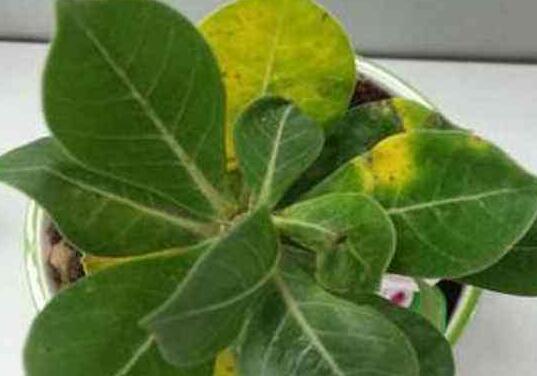
Through the cultivation methods for desert rose, we understand its growth habits. For example, it tolerates high temperatures and drought, does not tolerate shade, and fears cold. If the environment during planting happens to be the opposite of its growth habits, it can cause yellow leaves. So the causes include the following points.
1. Too much rain exposure
Because desert rose likes environments with strong light, many flower lovers often keep it in the sun to grow it. When the rainy season comes and it is not moved to a ventilated place in time, it gets too much rain, making the potting soil overly moist, which then hinders growth and causes the leaves to turn yellow.
Solution: Remove the yellowed leaves. When it rains, move the desert rose indoors to prevent it from getting too much rain.
2. Improper watering
Watering too much or too little can both cause yellow leaves. When watering too much, the potting soil easily becomes waterlogged, and roots soaked in water for a long time have their respiration blocked and have difficulty absorbing nutrients. Watering too little causes the desert rose to lack water during growth. Both lead to malnutrition.
Solution: Pay attention to reasonable watering during care. Neither water too much nor go a long time without watering. For methods, you can refer to the detailed introduction in how to water desert rose.
3. Temperature too low
Desert rose is relatively easy to grow, but its drawback is also very obvious: it is very afraid of cold and has weak resistance to cold weather. So when the temperature is too low, its leaves will wither and turn yellow.
Solution: What should you do when desert rose leaves turn yellow due to low temperature? The answer is to quickly move it to a warm environment for care. Especially in winter and autumn when temperatures drop sharply, pay even more attention to temperature changes.
4. Long-term lack of fertilizer
Although desert rose does not have a high demand for fertilizer, a long-term lack of fertilizer can also cause leaves to turn yellow, because nitrogen fertilizer is the main nutrient source that keeps leaves emerald green. If nitrogen is lacking, the leaves will lose their green color and then turn yellow.
Solution: Supplement fertilizer in time during the growing season, mainly with decomposed cake fertilizer. Pay attention to applying nitrogen fertilizer and phosphorus-potassium fertilizer to ensure thick green leaves and also promote flowering.
5. Not repotting for a long time
Desert rose is one of the plants most suitable for pot cultivation. No matter how strong a plant's adaptability is, when grown in pots it should have its potting soil changed every 1-2 years. The purpose is to keep the soil breathable, loose, and well-draining. If it is not repotted for a long time, the soil will become dry and compacted, and the earliest sign will be yellowing leaves.
Solution: Repot the desert rose once every 1-2 years, preferably in spring, when the temperature gradually rises and the desert rose is about to enter its vigorous growth period.
How to Grow Kalanchoe blossfeldiana: Cultivation Methods for Kalanchoe blossfeldiana
How to Grow Kalanchoe blossfeldiana: Cultivation Methods for Kalanchoe blossfeldiana
Kalanchoe blossfeldiana (scientific name: Kalanchoe blossfeldiana), also known as jiale flower,dwarf kalanchoe、Christmas kalanchoe, longevity flower,Blossfeld's kalanchoe, belongs to the Crassulaceae family, Kalanchoe genus, and is native to Madagascar in Africa. Kalanchoe blossfeldiana is a common ornamental flower.
Propagation
It can be propagated by cuttings and sowing. For cuttings, both stem cuttings and leaf cuttings can be used, but stem cuttings are more convenient and quick. For stem cuttings, first cut off the top bud of a healthy plant, about 5 to 6 cm long. After the wound heals, insert it into potting soil, keep the soil moist and the air circulating, and sprinkle water to cool it down when the temperature is above 30°C. Roots will develop after about 2 weeks, and then fertilization can begin. For leaf cuttings, select healthy, plump leaves and cut them off. Place the cut leaves in a cool place for about half an hour until the wounds dry and heal, then insert them shallowly or lay them flat on breathable sandy soil, keeping the sandy soil semi-moist. Do not let it become too wet, otherwise it will easily rot. When the air is dry or cold, you can cover them with a transparent film to retain moisture and warmth, and place them in a spot with soft sunlight and ventilation. Roots can form within one month, and shoots can appear in four months.
Seed propagation is usually used only in the early stages of developing horticultural cultivars. Kalanchoe blossfeldiana is mostly sown in March. Simply scatter the seeds on moist soil, gently press the seeds onto the surface of the soil, then wrap with a transparent plastic bag to retain moisture, and place in a sunny spot, but do not expose to strong light. Germination begins after about ten days. At this point the plastic bag can be removed, but care must be taken not to let the soil become too dry. If the air is dry, spray water mist to maintain humidity. After eight pairs of leaves have grown, it can be moved to a full-sun or half-sun location for normal management.
Planting
Kalanchoe blossfeldiana likes a growing environment with plenty of sunlight but short daylight hours. It is suitable for planting in full sun to half sun. Placing it in a dark place easily causes leggy growth. At noon in midsummer, avoid direct sunlight to prevent burning the leaves. Its growth speed is moderate. Kalanchoe blossfeldiana comes from semi-desert regions and is drought-tolerant. Water only when the soil is dry. In winter, reduce watering even more, only keeping the soil from drying out completely. Overwatering easily causes stem and root rot. After flowering, Kalanchoe blossfeldiana enters dormancy. During this period, reduce watering and do not fertilize. Only after about six weeks does it begin to return to normal growth and watering. Kalanchoe blossfeldiana cannot tolerate temperatures below 12°C, and the most suitable growing temperature is 18 to 27°C. Therefore, when temperatures are low, place Kalanchoe blossfeldiana in a bright indoor spot to overwinter and take warmth-retention measures. Kalanchoe blossfeldiana is not cold-tolerant. The suitable growing temperature is 15 to 25°C. When high temperatures exceed 30°C, growth is hindered. In winter, the indoor temperature needs to be 12 to 15°C. Below 5°C, the leaves will turn red and the flowering period will be delayed. If the room temperature exceeds 24°C, flowering will be inhibited. At temperatures around 15°C to 24°C, it will bloom continuously. Kalanchoe blossfeldiana is a short-day plant. Short-day management can begin in mid-September, pausing fertilization, and it must stay in darkness for at least fourteen hours per day before it can bloom.
Cultivation Techniques
Kalanchoe blossfeldiana is a succulent plant. Its thick, glossy leaves form a low cluster and stay emerald green all year round. The plant is small and exquisite, compact in shape, with dense flowers and strong disease resistance. It likes warm, humid conditions and is also drought-tolerant. It likes light and is also fairly shade-tolerant. It has a long flowering period and is easy to cultivate. It is suitable for indoor decoration in winter and outdoor display in summer, with excellent ornamental effect.
Abroad, Kalanchoe blossfeldiana is not only an indoor ornamental potted flower, but is also widely used in outdoor landscapes. At present, this concept is gradually being accepted by domestic garden designers, and they have begun to apply it to garden vignettes. Under modern management conditions, the production of Kalanchoe blossfeldiana can reach 100 pots/year·sq m, and the output per unit area is even higher than that of large potted flowers such as anthurium and bromeliads.
In recent years, imported double-petaled Kalanchoe blossfeldiana was successfully introduced by Beijing Wuzhou Xiangyuan Agricultural Development Co., Ltd. With the unique charm of its rose-shaped flowers, it has gained market recognition and become a very valuable "new variety flower" with development potential. Wuzhou Xiangyuan Company continues to innovate. In addition to the mainstream red series, it has also launched pink, purple, yellow, light green, and other varieties. In order to improve the domestic planting quality of Kalanchoe blossfeldiana, the company has, for many years, continuously communicated with foreign suppliers regarding seedling planting issues and summarized the key points of Kalanchoe blossfeldiana cultivation management.
Cultivation Techniques
Substrate Medium-grained peat mixed with lime, fertilizer, clay, etc.
Cutting pot diameter The standard pot specifications are 9 cm, 10 cm, or 11 cm.
Watering Should be controlled to avoid overly vigorous plant growth.
Fertilization Apply compound fertilizer with added calcium, together with watering, at a pH of 5.5 to 5.8. Note that a water sample analysis should be carried out before fertilization. Test the pH and EC values of the substrate in the pot once a week. The pH should be 5.0 to 6.0, and the EC should be 1.8 to 2.5.
Growth retardants Use CCC in the early stage of plant growth and B9 in the later stage.
Temperature The suitable temperature for rooting is 22°C, and afterward the suitable temperature for plant growth is 19°C. When outdoor light is too strong, use ventilation equipment to lower the temperature. In addition, avoid temperatures above 25°C, otherwise high temperatures will weaken the effect of short-day treatment.
Shading and artificial supplemental lighting In summer, high outdoor temperatures easily turn the leaves red. When light intensity is greater than 65,000 lux, shading must be carried out. In winter, in order to shorten the plant's growth time by one or two weeks and make it form more inflorescences, artificial supplemental lighting is needed, with light intensity required to reach 3,000 lux. This is generally done before short-day treatment, and the day length should be no less than 18 hours/day.
Relative humidity Should reach 75% to reduce the harm of pathogens.
How to grow Kalanchoe blossfeldiana: Every experienced flower lover has their own set of methods. After growing Kalanchoe blossfeldiana for many years, I have accumulated some experience and would like to exchange it with everyone here. Anyone with better care knowledge is welcome to speak freely.
One: Soil and Environment
Kalanchoe blossfeldiana does not have high soil requirements, and loose, breathable soil is best. Leaf mold, pine needle soil, and garden soil with cinder added are all fine. With sufficient sunlight, the suitable temperature is 15-25°C. Above 30°C it enters semi-dormancy, below 10°C growth stops, below 5°C the leaves turn red, and below 0°C it will suffer cold damage. Insufficient light easily causes leggy growth, resulting in weak branches, thin and small leaves, fewer flowers, and less vivid flower color.
Two: Stem Cuttings
After old Kalanchoe blossfeldiana plants finish flowering or come through the summer, they should be repotted and given new soil, otherwise their growth will weaken. Double-petaled varieties in particular easily become woody. I generally take cuttings every other year. Cuttings can be taken in all four seasons, with spring and autumn being best. Summer and winter also work, but rooting is slow. In summer, the survival rate of cuttings is somewhat lower. When taking cuttings, cut healthy branches with four or more leaves. After the wounds dry, they can be inserted for cuttings.
They can be rooted in water and then transplanted, or inserted directly into potting soil. Appropriate shading should be provided. Since the cuttings have not yet produced roots, a certain humidity must be maintained. You can mist appropriately to retain moisture. Roots can generally emerge in about a week. If the temperature is low, rooting will take longer. For branches inserted in soil, when the leaves look firm and glossy, it means they have rooted and survived.
Three: Growing Period
After the small seedlings survive, pinch off the tips and top them to encourage more branching. More branches mean more flowers, and the plant shape will also be beautiful. Kalanchoe blossfeldiana is drought-tolerant and does not need a lot of water. Water according to the principle of alternating moisture and dryness. In winter, low temperatures require controlling water volume to avoid root rot. Autumn is the peak growing season for Kalanchoe blossfeldiana. After September, ensure the supply of water and fertilizer so the plant grows robustly and can bloom more and with vivid color. In summer, be sure not to let it receive continuous rain. After rain, do not expose it to strong sun. High humidity and high heat will smother the roots, causing root rot and black rot disease. In summer, appropriate shading is also needed, and it cannot be exposed to blazing sun. If conditions allow, it can be moved to a north-facing balcony. If conditions do not allow, you can pull up a shade net or place it under tree shade. You can care for it according to your own conditions.
Notes on growing Kalanchoe blossfeldiana:
How to grow Kalanchoe blossfeldiana is the first question friends preparing to grow it think of. Kalanchoe blossfeldiana has glossy leaves and stays emerald green all year round. Its flowering period is from December each year to April of the following year. A short five months can bring beautiful ornamental value. However, Kalanchoe blossfeldiana is a relatively easy flower to grow. The soil can be allowed to lean dry, not wet. It is fine even if it dries to the point that the leaves are a bit wilted. After it dries thoroughly, water it thoroughly in one go. Some flower lovers have also tried leaving it outside a window in summer with no problems. If Kalanchoe blossfeldiana goes without light for a long time, it will grow leggy, and the leaves will correspondingly become thinner. Kalanchoe blossfeldiana is afraid of freezing, so in winter it needs to be placed indoors. When it blooms, just add some phosphorus fertilizer.
Kalanchoe blossfeldiana grows best in well-breathable earthenware pottery, and can also be grown directly in purple clay pots or plastic pots. It is worth noting that when planting, place a layer of crushed charcoal or hard plastic foam blocks at the bottom of the pot. This is to increase breathability. Heavy clay easily causes root rot and is not a good choice. For home potting, it is advisable to mix leaf mold and vegetable garden topsoil in equal amounts, then add 5% to 8% sand as potting soil. When planting, add some bone meal or nitrogen-phosphorus-potassium compound fertilizer as a base fertilizer.
Kalanchoe blossfeldiana has a relatively high water content in its body, so it is drought-tolerant and afraid of waterlogging. Water only when the soil in the pot is relatively dry. At ordinary times, keeping it slightly moist is enough. Water less in summer, preferably once every 5 to 7 days. With appropriate water control and the potting soil alternating between dry and wet, the branches will be lush and the flowers many. After bringing it indoors in winter, it is best to water at noon with water close to room temperature, about once a week.
Kalanchoe blossfeldiana likes a fertile environment. After flowering, apply nitrogen fertilizer appropriately once, preferably urea liquid fertilizer. This makes Kalanchoe blossfeldiana more robust. At other times, only nitrogen-phosphorus-potassium compound fertilizer can be applied. When fertilizing, never apply the fertilizer liquid to the leaves, otherwise they will wither. Also note that fertilization should not be done in summer.
In growing Kalanchoe blossfeldiana, also note that it likes an environment with sufficient sunlight, while appropriately avoiding the blazing sun. At other times, it is best to place it in sunlight. Maintaining more than four hours of light per day can make the plant more robust. Although it can also grow in semi-shade, the stems will be thin, the leaves thin, the flowers few, and the color pale. If it is too shady, it easily loses leaves and produces no flowers. The most suitable growing temperature for Kalanchoe blossfeldiana is 15°C to 25°C, and it can bloom in December.
In winter, Kalanchoe blossfeldiana needs protection from cold, and room temperature cannot be lower than 12°C. Kalanchoe blossfeldiana has phototropism, so during the growing period attention should be paid to changing the direction of the flowerpot, adjusting light, so that the plant receives light evenly and the branches grow evenly in all directions. Whenever the flowers fade, the flower branches should be removed to avoid wasting nutrients. After the flowers fade each spring, repot once. The potting soil should be made by mixing humus, garden soil, river sand, and a small amount of bone meal. This kind of potting soil is loose, fertile, well-draining, and slightly acidic, which is beneficial to the growth and development of Kalanchoe blossfeldiana.
Kalanchoe blossfeldiana is usually propagated by cuttings, which are easy to root and survive. Generally, in spring and autumn, cut stem segments with 3-5 leaves and insert them into a sand bed or vermiculite pot, 3-5 per pot, maintaining a moderately moist state. Roots can form after about 20 days.
In addition, in order to extend the growing period of Kalanchoe blossfeldiana, we can appropriately pinch the current season's Kalanchoe blossfeldiana. This not only makes its shape look more graceful, but also allows it to bloom at the right time.
Kalanchoe blossfeldiana, that is, dwarf kalanchoe, is a perennial succulent herb with opposite leaves that are plump, tender, and juicy and break easily. It has terminal cymes, with flowers in colors such as orange-red, yellow, and red. The plant shape is short, the flowering period is long, the flowers are abundant, and the ornamental value is high.
One: Pot and Soil
The pot should preferably be small, well-breathable, and suitable for planting in loose sandy loam. Kalanchoe blossfeldiana grows best when planted in well-breathable earthenware pottery, but it is not attractive indoors, so it can be placed inside a plastic or porcelain pot, or directly planted in a small purple clay pot or plastic pot. When planting, place a layer of crushed charcoal blocks or crushed hard plastic foam blocks at the bottom of the pot to enhance breathability. Although it is not very particular about soil, it easily rots in heavy clay, and grows best in loose, fertile, slightly acidic sandy loam. For home potting, it is advisable to mix leaf mold and vegetable garden topsoil in equal amounts, then add 5% to 8% sand as potting soil. When planting, add some bone meal or nitrogen-phosphorus-potassium compound fertilizer as a base fertilizer.
Two: Water Control and Fertilization
Moderate water control makes leaves lush, and more phosphorus and potassium fertilizer makes flower color vivid. Kalanchoe blossfeldiana is a succulent plant with a relatively high water content in its body, so it is more drought-tolerant and afraid of waterlogging, and grows well under the dry-air conditions of high-rise buildings. In spring and autumn, water thoroughly once after the potting soil has been dry for about 3 days, and usually keep it slightly moist. In summer, water less, preferably once every 5 to 7 days. For Kalanchoe blossfeldiana placed outdoors, avoid rain during the rainy season. Too much water easily causes root rot and leaf drop, and even death. With appropriate water control and the potting soil alternating between dry and wet, the branches will be lush and the flowers many. After bringing it indoors in winter, it is best to water at noon with water close to room temperature, about once a week.
Kalanchoe blossfeldiana likes fertilizer. Half a month after young seedlings are potted and planted, or half a month after old plants are divided, apply 2 to 3 times a nitrogen-based liquid fertilizer to promote stem and leaf growth. After flowering, apply once a nitrogen-based liquid fertilizer to promote recovery and vigor. At other times, except for stopping fertilization in summer, only nitrogen-phosphorus-potassium compound fertilizer can be applied. When fertilizing, do not get fertilizer on the leaves, otherwise the leaves easily rot. If the leaf surface is accidentally soiled, rinse it off with water. Kalanchoe blossfeldiana has a long flowering period, so the rule of not fertilizing during the flowering period should be broken. Apply a dilute nitrogen-phosphorus-potassium fertilizer or 0.2% potassium dihydrogen phosphate solution once a month so that later flowers do not become smaller and paler due to lack of fertilizer.
Three: Temperature and Light
Kalanchoe blossfeldiana likes an environment with sufficient sunlight. Except for slight shading at noon in midsummer, at other times it should be placed in a sunny spot. It needs at least more than 4 hours of direct light per day to grow robustly. On building balconies, turn the flowerpot 180 degrees every half month so that it receives light evenly, avoids uneven crown growth, and prevents a decrease in ornamental value. Although it can also grow in semi-shade, the stems will be thin, the leaves thin, the flowers few, and the color pale, far less lush than in a sunny spot. If it is too shady, it will not only easily lose leaves and produce no flowers, but even a plant that has already bloomed, if placed in shade, will have its flower color become dull and then the flowers will fall off and wither.
The most suitable growing temperature for Kalanchoe blossfeldiana is 15°C to 25°C. Above 30°C growth slows and it enters a semi-dormant state. Below 10°C growth stagnates, below 8°C the leaf color turns red and the flowering period is delayed, and below 0°C it easily freezes to death. Therefore, to grow Kalanchoe blossfeldiana well, it is necessary to create a small environment that is warm in winter and cool in summer. At noon in midsummer, avoid strong light and blazing sun, and place it in semi-shade with ample scattered light, such as under a large tree, under the eaves, or on a north-facing balcony. Pay special attention to ventilation and cooling. You can sprinkle water on the nearby ground, but do not sprinkle it on the plant.
After the Beginning of Autumn, from late August to early September, it can gradually be exposed to sunlight. From October onward, it should be exposed to more sunlight to promote its transition from vegetative growth to reproductive growth. When the minimum temperature drops to about 10°C, move it indoors and place it in front of a south-facing or west-facing windowsill so it can receive more sunlight, maintaining 10°C at night and 15°C to 18°C during the day. It can then bloom in December.
Four: Fertilization
During the cutting process, do not fertilize. Only after the branches survive and grow new leaves can fertilization begin, but be sure to apply thin fertilizer frequently. During the growing period, mainly use compound fertilizer. Summer is the semi-dormant period for Kalanchoe blossfeldiana, and fertilization must not be applied, otherwise it will burn the roots. October is the flower bud differentiation period, when you can spray some potassium dihydrogen phosphate aqueous solution and also combine it with root drenching. A concentration of 1:1000 or above is suitable. Spray once every 7-10 days until flower buds appear.
Five: Cutting Precautions
Kalanchoe blossfeldiana does not have very high soil requirements. Sandy loam or peat soil mixed with a small amount of base fertilizer is enough. During the growing period, fertilize once about every 3 days with compound chemical fertilizer or fermented organic liquid fertilizer to promote robust plant growth. In summer, with high temperature and high humidity, fertilization can be omitted. After flower buds appear, apply a relatively concentrated organic fertilizer or compound chemical fertilizer once. In the early stage of vigorous growth, pay attention to pinching to promote branching and make the flowers grow fuller.
Six: Disease Treatment
The main pests of Kalanchoe blossfeldiana include aphids, western flower thrips, scale insects, cyclamen mites, leaf rollers, and fungus gnat larvae.
Aphids can cause serious damage to Kalanchoe blossfeldiana, especially in winter and early spring. Using aphid parasites and wasps for biological control will be more effective than chemical control.
When western flower thrips cause damage, their numbers are relatively small. Thrips like to attack the soft tissue at the plant's growing points. Sticky traps can be used weekly to monitor their numbers.
Scale insects mainly feed on axillary buds and growing points. Even a small number of scale insects can cause great damage. As long as a plant is infested by scale insects, it can no longer be sold. Once scale insects are found in a greenhouse, it is recommended to deal with them immediately to prevent spread.
Cyclamen mites do not like warm, hot conditions, so they rarely cause damage in summer and mainly cause damage in winter. Symptoms include hindered growth, deformation of growing points, and deformed and faded flower buds. They often hide inside flower buds or among the tender leaves around growing points.
Fungal diseases of Kalanchoe blossfeldiana include powdery mildew, gray mold, Rhizopus, Myrothecium, stem rot, Pythium, etc. Powdery mildew is the most serious fungal disease harming Kalanchoe blossfeldiana. Powdery mildew is very difficult to identify because by the time white fuzzy mold appears, the disease is already very serious. Most powdery mildew on Kalanchoe blossfeldiana is difficult to control chemically.
Gray mold causes the leaves and stems of Kalanchoe blossfeldiana to rot in winter. Keeping the leaf surface dry and well-ventilated can effectively prevent it, but many gray mold infections leave obvious spots on the leaves.
Rhizopus mostly occurs in warm, humid environments. Thin, soft tissues are most susceptible to infection. It also occurs frequently if the environment is too warm or too humid.
Myrothecium appears during the seedling propagation period of Kalanchoe blossfeldiana and causes damage at the same time as fungus gnats. Plants placed too densely, poor air circulation, and warm, humid conditions between plants can all cause bacterial outbreaks.
Stem rot There are many fungi that cause stem rot in Kalanchoe blossfeldiana, such as Phytophthora, Thielaviopsis, Rhizoctonia, Cylindrocarpon, etc. Generally speaking, these fungi can be found on infected plants, but the most common situation is that they bore into the stems together with fungus gnats and cause damage at the same time. Treatment should target both pathogens and pests.
Pythium The root system of Kalanchoe blossfeldiana is very sensitive to improper watering. Too dry or too wet can both cause problems. According to experience, Pythium mostly appears as a secondary disease under harsh conditions. Kalanchoe blossfeldiana can survive with a small amount of roots. If the root environment is poor, the plant will only grow part of its roots, making it easier for Pythium to invade.
Viral damage to Kalanchoe blossfeldiana includes Kalanchoe mosaic virus, impatiens necrotic spot virus, yellow spot virus, kalanchoe latent virus, Kara virus, etc.
Kalanchoe mosaic virus (Green Island virus) This is the most common virus in Kalanchoe blossfeldiana, and it appears extremely widely in modern hybrid varieties. This virus only appears on plants grown in harsh environments and heavily infected plants, showing dark green mosaic spots on the leaves, and in severe cases inhibiting the growth of diseased plants. At present, there is no feasible immunological assay method for controlling this virus. Aphids may be carriers of this virus.
Impatiens necrotic spot virus This is a variant of tomato spotted wilt virus and can cause a series of damage to Kalanchoe blossfeldiana, sometimes even appearing like a mistake made during production. It is transmitted by western flower thrips.
Yellow spot virus can cause chlorosis and necrotic spots. There is currently no effective immunological assay method. In Kalanchoe blossfeldiana cultivation, once infected with this virus, the plant will be completely destroyed.
Kalanchoe latent virus This virus has no symptoms at all, but it can be detected by enzyme-linked immunosorbent assay.
Kara virus The symptom of this virus is light green to yellow mosaic spots on the leaves, and it can be detected.
Physiological diseases of Kalanchoe blossfeldiana mainly include pesticide spray damage, flower damage, short-day damage, ethylene damage, stress responses, mutations, etc.
Pesticide spray damage Some insecticides can cause toxic damage to the flowers and leaves of Kalanchoe blossfeldiana. Many EC components can corrode the cuticle of Kalanchoe blossfeldiana leaves and petals, ultimately causing flowers to fade and leaving spots on the leaves.
Flower damage There are many reasons for flower damage in Kalanchoe blossfeldiana, with continuous high humidity being the main cause. In the early planting stage, supplementing appropriate calcium ions and trying to maintain plant vigor can prevent this situation. Some sensitive and fragile varieties show particular symptoms under unfavorable conditions.
Short-day damage During Kalanchoe blossfeldiana cultivation, at least 6 hours of blackout shading are needed every day. Even during long-day treatment, being placed in darkness for a long time can cause robust leaves to become chlorotic.
Ethylene damage Ripe fruit placed in storage rooms or retail stores produces ethylene. When exposed to extremely low concentrations of ethylene, Kalanchoe blossfeldiana will drop flowers or degrade flower buds within a few days, so extra attention is needed during transportation, storage, or display. In addition, abnormal operation of CO2 generators in greenhouses can also cause the same problem.
Stress response Stress responses in Kalanchoe blossfeldiana can be caused by a series of reasons, including water, light, and temperature. Under mild conditions, the plant's mature leaves fade. When the environment is extremely harsh, ethylene begins to be produced inside the growing points, leading to typical ethylene poisoning symptoms: plant growth stops completely, growing points turn red, and flower buds degrade.
Mutation All caused by genetic defects.
The most common pests of Kalanchoe blossfeldiana are aphids and leafminers. Aphids are easy to deal with, but leafminers are troublesome. They like to bore into the leaves and are very hard to find. By the time they are discovered, the leaf mesophyll has basically been eaten clean, turning into transparent dry leaves. Usually pay more attention to changes in the leaves. Once discovered, spray pesticide to avoid an outbreak. Dimethoate, imidacloprid, baichongling, and others are all effective against this pest.
Growing Kalanchoe blossfeldiana indoors in winter most easily causes powdery mildew. The main reason is poor ventilation. Powdery mildew is generally treated with triadimefon. Sulfur powder can also treat powdery mildew. Sulfur powder is insoluble in water, so spray the leaves wet first, then evenly sprinkle sulfur powder on the diseased leaves. If powdery mildew occurs, treat and isolate it promptly, as it will infect other healthy flowers. Kalanchoe blossfeldiana also has stem rot and leaf blight, which can be sprayed with thiophanate-methyl 800-**** times solution. If stem rot is found, if it is not serious, medication can be used. If it is serious, cut healthy branches for cuttings, and the diseased plant should be thrown away.