How to grow Cherokee rose (Rosa laevigata) and care tips: plenty of water and fertilizer
Everyone has probably heard of Cherokee rose (Rosa laevigata); it is a very easy-to-grow plant, and its pure white fragrant flowers and distinctive fruits make people adore it. In daily life, many people want to grow Cherokee rose, so how do you grow it? Below is a carefully compiled guide to growing Cherokee rose and care tips, very detailed, so anyone who wants to grow it should definitely take a look.
1. How to grow Cherokee rose: understand its habits
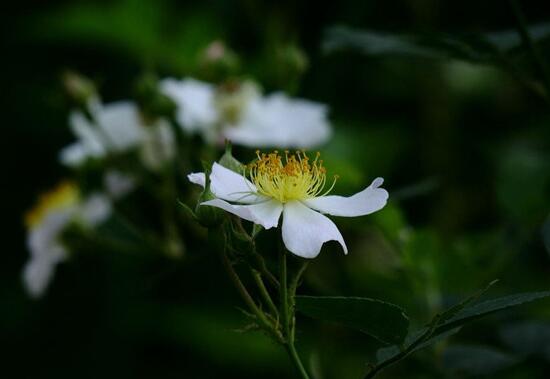
Growing plants is like raising animals: if you want to grow it well, you first need to understand its habits and then care for it accordingly. So for how to grow Cherokee rose, we will cover the growing methods and care tips from the aspects of soil, light, temperature, watering, fertilizing, pruning and so on. Let's continue reading.
2. Growing methods and care tips for Cherokee rose
1. Soil
How to grow Cherokee rose: first, of course, is choosing soil. It is understood that Cherokee rose is not strict about soil and ordinary soil will do, but if you want it to grow well, it is best to prepare a loose, fertile sandy soil rich in organic matter.
Note: Although Cherokee rose is not demanding about soil, it dislikes heavy clay and saline-alkali land. For potting soil, we recommend a mix of garden soil, leaf mold and similar media.
2. Light
In the growing methods for Cherokee rose, light is essential. Cherokee rose likes light, so it needs plenty of sunlight, but in summer we should keep it from being exposed to scorching sun.
Note: If you want Cherokee rose to bloom, it must have sufficient light, so its placement is best in a sunny spot; on cloudy and rainy days when light is lacking, supplemental lighting indoors should also be used.
3. Temperature
Cherokee rose likes a warm environment, so when growing it indoors, pay attention to keeping it warm in winter, and it is best to keep the temperature between 15-35°C.
4. Watering
How to grow Cherokee rose: watering is naturally indispensable. It is understood that Cherokee rose likes a moist growing environment, so we should water frequently, especially during the vigorous growth period and flowering period, increasing watering to keep the soil moist.
Note: When watering, do not pour water on the leaves. In addition, water appropriately in spring and autumn, just keeping the potting soil moist; in summer temperatures are high and water evaporates quickly, so we should water more; in winter temperatures are low and Cherokee rose enters dormancy, so we should water less.
5. Fertilizing
After watering, let's look at fertilizing, which is also very important in the growing methods for Cherokee rose. It is understood that Cherokee rose likes fertilizer and needs liquid fertilizer once every half month. In early spring, apply a concentrated fertilizer once, and in autumn apply a light fertilizer once. During the winter dormant period, applying a once decomposed dilute fertilizer solution helps it overwinter.
Note: Although Cherokee rose likes fertilizer, it should not be over-fertilized, otherwise the roots will burn. In addition, do not fertilize during the flowering period.
6. Pruning
When growing Cherokee rose, appropriate pruning is important to make it look good. Specific methods: ① Prune overly long branches, dead branches and dense branches to help Cherokee rose grow; ② After the flowering period of Cherokee rose, cut off spent flowers and some branches to extend the flowering period.
7. Pests and diseases
During the growth of Cherokee rose, due to various reasons, pest infestation and disease are unavoidable. It is understood that the diseases of Cherokee rose include powdery mildew and leaf spot, and the main pests include red spider mites and aphids. Once discovered, everyone should immediately prevent and control them. For specific methods, there is a detailed introduction in the pest and disease control section for Cherokee rose, so we will not say more here.
Melastoma candidum D.Don: Melastoma candidum guide: how to grow Melastoma candidum / how to propagate Melastoma candidum
Melastoma candidum profileMelastoma candidum D.Don
Growing methods and care tips for Melastoma candidum: introduction to Melastoma candidum
English name of Melastoma candidum: Melastoma candidum D.Don; Melastoma candidum is also known as Diqie, Baoyalangmu, Huoxuedan, Gaojiaoshanlosu, Tunkouba, Zhanzigan, Maozugan, Yeshiliu, Jinjitui, Zhunianian, Niunianian, Hongbaoyalang, Baoyalang, Daoguancao, Gaojiaonian, Pubizai, Jiuluozaihua, Buliu xing, Daduqiao, Shuiwainian, Gaojiaopuli, Dahao Tianfanlu, Pubizai, Jiuluozaihua, etc.
Melastoma candidum (Zhongshan Chuanxin Lu), Shan Shiliu (Taiwan, China), Da Jin Xiang Lu, Zhu Gu Nian (Guangdong), Bao Ya Lan (Yunnan).
Melastoma candidum, also known as Jin Shiliu and Jin Xieliu, grows wild in mountain slope wetlands and open woodlands; flowering period is July, fruiting period is October.
The flowers of Melastoma candidum bloom in summer; among their vivid colors there is a somewhat delicate pink blossom, yet they do not lose their own wild nature.
Morphological characteristics of Melastoma candidum
Melastoma candidum is an evergreen shrub, 0.5-1.5 m tall, with many branches; the stems are bluntly four-angled or nearly cylindrical, densely covered with appressed scale-like strigose hairs, the hairs flat with fimbriate margins. Leaves are stiffly papery, ovate or broadly ovate, apex acute, base shallowly cordate or nearly rounded, 4-10 cm long, 2-6 cm wide, entire, with 7 basal veins, both surfaces covered with strigose hairs and short soft hairs, the abaxial basal veins raised and covered with scale-like strigose hairs, lateral veins raised and densely covered with long soft hairs; petiole 5-15 mm long, densely covered with scale-like strigose hairs.
Leaves opposite, long elliptic to broad ovate, both surfaces densely covered with long soft hairs. Short cymes are borne at the tips of branches; 5 pink petals surround the golden yellow stamens at the center, very delicate and beautiful, and there is also a white-flowered variety that appears fresh and lovely. Both bloom in summer.
Corymbs are borne at the tips of branches, nearly head-like, with 3-5 flowers, rarely solitary, with 2 leaf-like involucral bracts at the base; bracts lanceolate or narrowly lanceolate, densely covered with scale-like strigose hairs; pedicels 3-20 mm long, densely covered with scale-like strigose hairs; calyx about 2.2 cm long, densely covered with scale-like strigose hairs and long soft hairs, lobes ovate or slightly broader, equal to or slightly longer than the calyx tube, apex acuminate, with a fine point, both surfaces hairy; petals rose-red or pink, obovate, 3-4 cm long, apex rounded, densely ciliate; in the longer stamens the connective is elongated at the base and curved, with 2 deep clefts at the end, while in the shorter stamens the connective is not extended, and the base of the anther locule has 1 pair of small tubercles; ovary half-inferior, densely covered with strigose hairs, with 1 ring of bristles at the apex.
Flowers large and beautiful, purple-red, usually 3 clustered at the branch tips, sometimes solitary or 5 clustered; bracts ovate to lanceolate, shorter than the calyx tube or equal to the calyx; calyx densely covered with lanceolate, appressed scale-like coarse hairs, lobes lanceolate and equal in length to the calyx tube; petals 5; stamens 10, filaments pale yellow, of which 5 have purple anthers and elongated connectives, while the other 5 have yellow, linear anthers with non-elongated connectives; pistil 1, lower part of the ovary united with the calyx tube, upper part densely covered with soft hairs, 5-loculed, ovules numerous, axile placentation, style purple-red.
Capsule urn-shaped and spherical, adnate to the persistent calyx, 1-1.5 cm long, 8-12 mm in diameter, densely covered with scale-like strigose hairs; seeds embedded in the fleshy placenta.
Flowering period May-July, fruiting period October-December.
Ecological habits of Melastoma candidum
Melastoma candidum is an evergreen small shrub that likes a warm and humid climate, is slightly drought-tolerant and tolerant of poor soil. It is best cultivated in loose soil containing much humus. It tolerates barren soil. Wild species mostly grow under pine forests on mountain slopes or in open shrub-grass communities at altitudes below about 120 m, about 1-4 m tall, with thick roots, light grayish brown. It is a common plant of acidic soils.
It grows best in well-drained sandy soil or leaf mold, and can take full sun or partial sun. Although it is drought-tolerant, if the soil can remain moist regularly, it will grow more vigorously.
It likes a warm and humid climate. Slightly drought-tolerant and tolerant of poor soil. It is best cultivated in sunny, loose soil containing much humus.
Cultivation techniques and field management of Melastoma candidum
After planting Melastoma candidum and before the rows close, loosen the soil and weed once every other month.
Water and fertilizer management
Melastoma candidum likes a warm and humid climate, is extremely drought-tolerant, slightly tolerant of poor soil, and has extensive cultivation management; apply human manure or compound fertilizer once each in spring, summer and autumn, and apply compost or plant ash in winter, followed by earthing up after topdressing.
Temperature management
Melastoma candidum likes high temperatures, is extremely cold-tolerant, and has a wide range of temperature adaptation.
Light management
A sun-loving plant, it must be planted in a sunny place and given sufficient light.
Propagation methods of Melastoma candidum
Melastoma candidum is mainly propagated by sowing and cuttings, carried out during the Spring Festival period.
Because Melastoma candidum likes a warm and humid climate, is slightly drought-tolerant and tolerant of poor soil. Therefore, it is best cultivated in sunny, loose soil containing much humus.
Melastoma candidum uses seed propagation. Sow from late March to early April in spring, mix the seeds with plant ash or fine soil, evenly broadcast them on the seedling bed, cover with 2 cm of fine soil, then cover with grass and water. The sowing rate per 1 ha is 22.5-30 kg; when the temperature is above 25°C, seedlings emerge in about 20 d, and after emergence remove the covering grass. When seedlings are about 15 cm tall, open holes at a row spacing of 40 cm x 40 cm and plant 3 plants per hole.
Disease control of Melastoma candidum
Melastoma candidum has strong stress resistance and is less susceptible to disease, so during the growing period, spraying a fungicide once a month is enough to prevent disease.
Variety classification of Melastoma candidum: main varieties
Paeonia delavayi
Subshrub, entirely glabrous. Stems 1.5 m tall; current-year branchlets herbaceous, with several scales at the base of the branchlets. Leaves are biternate compound leaves; leaf blade outline broadly ovate or ovate, 15-20 cm long, pinnately lobed, lobes lanceolate to oblong-lanceolate, 0.7-2 cm wide; petiole 4-8.5 cm long. Flowers 2-5, borne at branch tips and in leaf axils, 6-8 cm in diameter; bracts 3-4 (-6), lanceolate, unequal in size; sepals 3-4, broadly ovate, unequal in size; petals
Melastoma candidum
9 (-12), red, red-purple, obovate, 3-4 cm long, 1.5-2.5 cm wide; stamens 0.8-1.2 cm long, filaments 5-7 mm long, purple when dry; disk fleshy, enclosing the base of the carpels, apical lobes triangular or obtuse-rounded; carpels 2-5, glabrous. Follicles about 3-3.5 cm long, 1.2-2 cm in diameter. Flowering period May; fruiting period July-August.
Distributed in northwestern Yunnan, southwestern Sichuan and southeastern Xizang. It grows on sunny mountain slopes and in grassy areas at altitudes of 2300-3700 m. The type specimen was collected from Lijiang, Yunnan.
The root is medicinal; the root bark ("Chidanpi") can treat hematemesis, hematuria, bloody dysentery, dysmenorrhea and other conditions; the part with the root bark removed ("Yunbaishao") can treat chest, abdominal, hypochondriac and rib pain, diarrhea and abdominal pain, spontaneous sweating and night sweats and other conditions (Yunnan Province Drug Standards).
Distribution area of Melastoma candidum
Melastoma candidum is produced in Zhejiang, Guangdong, Guangxi, Fujian, Sichuan, Taiwan, China, Guizhou and other places.
Melastoma candidum grows under pine forests on mountain slopes or in open shrub-grass communities at altitudes below about 120 m, and is a common plant of acidic soils. It also occurs in Indochina. The type specimen was collected from coastal islands in southern Guangdong.
Medicinal or dietary value of Melastoma candidum
The medical information and health dietary information on Hugarden are for reference only and cannot be used as a basis for diagnosis or medical treatment. Any health issue should be consulted with professional medical staff, and treatment of any disease should follow a doctor's advice.
Ultimate flower-protecting task: love yourself, start from reality, and strictly follow a doctor's advice. For illness, do not be careless, do not delay, do not give up hope, face it bravely, warm the silent world with love, and care for the flower field in your heart with your heart.
Medicinal value
The Melastoma candidum plant is used as medicinal material. The roots (Melastoma candidum root) and fruits (Melastoma candidum fruit) of this plant are also used medicinally.
[Medicinal material source] The whole herb of Melastoma candidum, a plant in the Melastomataceae family. The whole plant is dug up in autumn, washed, chopped and sun-dried.
[Nature and flavor] Sour; astringent; cool in nature.
[Meridian entry] Enters the spleen, stomach, lung and liver meridians.
[Functions and indications] Relieves food accumulation and promotes diuresis, activates blood and stops bleeding; clears heat and detoxifies. Mainly used for food accumulation; diarrhea; hepatitis; traumatic swelling and pain, external bleeding; epistaxis; coughing blood; hematemesis; bloody stool; excessive menstruation; metrorrhagia and metrostaxis; postpartum abdominal pain; leukorrhea; insufficient lactation; thromboangiitis; intestinal abscess; sores and swelling; venomous snake bites.
[Usage and dosage] Oral administration: decoct in water, 9-15 g; or grind into powder, or infuse in liquor, or squeeze the juice. External use: appropriate amount, pound and apply; grind into powder and mix for application, decoct in water for washing, or chew.
[Supplementary formulas]
① For traumatic injuries: Melastoma candidum 1 liang, Cherokee rose root 5 qian, stew with lean pork and an appropriate amount of red wine, and take orally. (Fujian Folk Herbs)
② For swollen and painful knees: Melastoma candidum 8 qian, Japanese honeysuckle stem 3 qian, decoct in water and take, twice a day. (Fujian Folk Herbs)
③ For carbuncle swelling: fresh Melastoma candidum leaves 1-2 liang, decoct in water and take, and pound the residue for external application. (Fujian Chinese Herbal Medicine)
④ For ear carbuncle: Melastoma candidum 1 liang, one pig ear, decoct in water and take.
⑤ For snakehead felon: Melastoma candidum 6 qian, stew with pork and take.
⑥ For blocked lactation: Melastoma candidum 1 liang, lean pork 4 liang, stew with an appropriate amount of wine and water and take. (Formulas ④ and below are from Fujian Folk Herbs)
⑦ For abdominal masses and menstrual swelling: Xingkouba, August melon root, Wuniangteng, fleeceflower root, stinkweed root, Dawanzhi root, stew with meat and take. (Sichuan Chinese Materia Medica)
Roots and leaves can relieve food stagnation, astringe and stop bleeding, and treat indigestion, enteritis and diarrhea, dysentery with bloody stool and other conditions; the leaves are pounded for external application or used as dry powder as a hemostatic for external injuries.
Uses of Melastoma candidum: ornamental value
Melastoma candidum is a beautiful flowering ornamental plant and can be planted alone, in groups, or in clusters to decorate gardens.
The flowers of Melastoma candidum consist of five petals, and the flower color is rose-red or pink, sparkling and striking in the sunlight. Its buds open one after another, and the flowering period can last all year, giving it high ornamental value. In addition, the plant form of Melastoma candidum is quite good, and care and management are relatively easy, so it is gradually being promoted and used in landscaping, suitable for flowerbed planting or pot cultivation.
Garden uses of Melastoma candidum: landscape application
Melastoma candidum is a beautiful flowering ornamental plant and can be planted alone, in groups, or in clusters to decorate gardens.
Flowering ornamental type, suitable for courtyard accent planting or pot cultivation. The flowers are large, rose-red and beautiful, and it is praised as the wild peony flower, hence the name Melastoma candidum.
Landscape uses
Melastoma candidum is a beautiful flowering ornamental plant and can be planted alone or in clusters to decorate gardens.
Cultural background and legends of Melastoma candidum
This is a legend about Melastoma candidum: It is said that in the mountainous area of Nantou there is a folk story. During the Jiaqing period of the Qing Dynasty, an indigenous woman named Meijia who lived in the Shuishe mountain area and liked to wear purple clothes fell in love with a Han young man named Wang Liu. At that time, although there were commercial exchanges between Han people and indigenous people, they did not visit each other, and their desire to marry would have been impossible to approve by the tribe, so on a summer afternoon they decided to elope, agreeing to wait under an old camphor tree. Unexpectedly, an afternoon thunderstorm brought a shocking great thunderbolt that split the camphor tree in two, and Meijia, who had first hidden under the tree, was tragically struck by lightning and her whole body burned to charcoal. When Wang Liu arrived, he saw only a few fragments of purple clothing among the ashes, mixed in with the wild grass. Before long, the vegetation sprouted again and bloomed with beautiful purple flowers, which were Melastoma candidum, and the tribe members all believed it was the reincarnation of Meijia.
King of wildflowers
Some people say the peony is the king of flowers, so Melastoma candidum should be the king of wildflowers. In fact, flowers of the Melastomataceae do not have the domineering aura of a king; on the contrary, among their vivid colors there is a somewhat delicate pink blossom, while not losing their own wildness, and that is the original appearance of the Melastomataceae.
Its flowers bloom in summer, in broad-leaved forests where a little sunlight reaches; sometimes by the roadside at more than 1,000 meters you can see it blooming. Its flowers open in groups, so you can appreciate the overall landscape and also notice the beauty of a single flower.
Flower language of Melastoma candidum
Flower language of Melastoma candidum: natural.
Melastoma candidum is a plant in the genus Melastoma of the family Melastomataceae, native to Brazil. Because among many wildflowers Melastoma candidum is the most gorgeous and has something of the peony's elegance and nobility, it got its name. Melastoma candidum is not a wild peony. As for its name, although it has "peony" in it, it has nothing to do with the peony; unlike the king of flowers, the peony, it is not so elegant and noble, yet it has a kind of refined rural spirit, and can be called the queen of wild flowers.
Melastoma candidum pictures