-
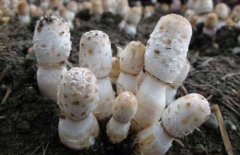
Complete List of Common Edible Mushroom Species Names
There are an enormous number of mushroom species; within the known range, mushrooms comprise as many as 36,000 species, distributed all over the world, with forest leaf-litter areas being the most abundant. So which mushroom species are common? Let's take a look below. Chicken leg mushroom: also
-
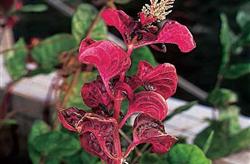
What Is Red Wood Ear? A Complete Guide to Red Wood Ear
What is red wood ear? An introduction: red wood ear is a perennial upright herb. The stems are purplish-red, 1-2 m tall. Leaves are simple and opposite; broadly ovate to nearly round, 2.5-5 cm long, apex deeply concave or 2-lobed, base nearly truncate, slightly decurrent into an ear-like shape, margins wavy, slightly rolled inward, leaf surface slightly curled and uneven, purplish-red with...
-
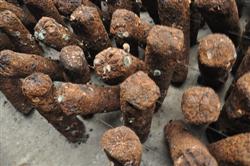
What Is Green Mold Disease in Shiitake Mushrooms? A Complete Guide
What is green mold disease in shiitake mushrooms? An introduction. Green mold is the most common and most damaging competitive contaminant fungus in shiitake mushroom production. If management methods are improper and prevention and control are not timely, it can cause major losses to shiitake mushroom production. 1. Symptoms and conditions of green mold outbreak. In the early stage of green mold outbreak, the mycelium appears as white patches, then...
-
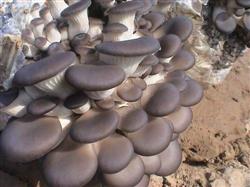
Complete Guide to Oyster Mushroom Varieties and Cultivation Techniques
What oyster mushroom varieties are there? What cultivation techniques are involved? Please provide an introduction. Oyster mushroom is also known as freeze mushroom, abalone mushroom, white shiitake, phoenix-tail mushroom, and delicious northern wind mushroom. It belongs to the class Basidiomycetes, order Agaricales, family Pleurotaceae, genus Pleurotus (mushroom). Oyster mushroom is tender and plump in texture, delicious in taste, and rich in nutrients. It is a health food with high protein and low fat....
-
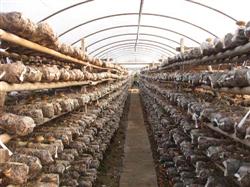
What is the silver ear mushroom cultivation process? A detailed explanation of the complete steps
What is the silver ear mushroom cultivation process? Please give a brief introduction. The silver ear mushroom cultivation process can be referenced as follows: 1. Material preparation: the substrate formula is 78% cottonseed hulls, 10% sawdust, 10% wheat bran, 2% gypsum powder, with a moisture content of 60-65%. 2. Bag filling: use 13×55 cm polyethylene plastic bags, fill them with a bagging machine (wet weight about 2 jin), punch three holes in each bag with a hole puncher specially designed for silver ear mushrooms and stick the adhesive tape over them. Note that the two ends should be 5 cm from the bag top, and the other hole is punched in the middle, then put into the sterilization stove.
-
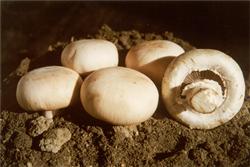
What is Agaricus bisporus green mold? A complete guide to this disease
What is Agaricus bisporus green mold? An introduction. Agaricus bisporus green mold, commonly known as green mold, is one of the main and most common contaminant fungi in mushroom production. Trichoderma can infect mushrooms at every stage of production. Trichoderma has a strong ability to decompose cellulose and can produce toxins that inhibit the formation and growth of mycelium and fruiting bodies...
-

A Complete Guide to New High-Quality Cultivation Techniques for the Oyster Mushroom
The oyster mushroom, also known as the small oyster mushroom, has a crisp, tender texture, a delicious flavor and rich nutrition. It is a type of oyster mushroom harvested when the cap diameter of the fruiting body is less than 3 cm; because the mushroom body is small, fresh and tender, and tasty, it sells extremely well on the market. Over the 2 years since our center introduced it, we have refined and summarized its biological characteristics and cultivation techniques. The new high-quality cultivation techniques for the oyster mushroom are summarized below. 1 Cultivation season The oyster mushroom is a low-temperature type of fungus; its fruiting temperature range is 5-22°C, with the optimum fruiting temperature range being 13-18°C. In this region it is suitable to fruit in September-
-
A Complete Analysis of the New Machine-Bagging and Irrigation Technology for Oyster Mushroom Cultivation
Drawing on shiitake mushroom production techniques to grow oyster mushrooms, a new machine-bagging and bag-cultivation technology for oyster mushrooms has been summarized, and it is introduced as follows: 1. Preparation of spawn bags: according to the formula of 88% cottonseed hulls, 10% wheat bran, and 2% gypsum, add 1.1-1.2 kg of water per kg of dry material. Use the special bagging machine for shiitake production to fill the material into 55×15×0.004 cm low-pressure polyethylene plastic bags, with each bag holding 2.1-2.3 kg wet weight of material. Then, put the material bags into a sterilization stove for sterilization; after the temperature rises to 100°C, keep it for 10
-
What are the control methods for mushroom droplet disease?
Droplet disease is caused by infection with rod-shaped bacteria. Its symptoms are colorless or yellowish-gray droplets of varying sizes produced on the mushroom bodies. Brown or yellow, sometimes green, small spots appear on the caps. This disease was first discovered in France, is rare in the United States and Japan, and has not yet been reported in China. Control measures: keep the inside and outside of the mushroom house clean and hygienic, strengthen ventilation and air exchange, and do not make the mushroom house too humid.
-
A Complete Guide to New Summer Cultivation Methods for Straw Mushrooms
Straw mushrooms are the only high-temperature, fast-growing variety among edible fungi. The cultivation substrate is mainly rice straw and wheat straw. They are delicious and nutritious. The summer cultivation techniques are introduced as follows: Preparation of mushroom beds. The mushroom beds are set up inside a plastic greenhouse, and the greenhouse is covered with plastic film and straw mats to retain warmth and moisture. The mushroom beds are 1 m wide, with unlimited length, and the spacing between beds is 30 cm, which can serve both as walkways and as water storage ditches. On the beds, sunken mushroom troughs are dug crosswise. The troughs are 30 cm wide and 20 cm deep, with a 20 cm small soil ridge left between troughs. Within the troughs, spray 0.2
条件筛选