High mortality from avian encephalomyelitis in laying hens: how to prevent and control it?
Avian encephalomyelitis in chickens mainly affects young laying hens and is an infectious disease. Its main features are ataxia, paralysis and head tremor in chicks. Avian encephalomyelitis in laying hens can occur in all four seasons and is spread horizontally and vertically, occurring sporadically and as regional outbreaks. The incidence and mortality are related to the young age of the laying hens, the number of susceptible laying hens and the virulence of the virus. Among laying hens, the incidence in chicks is 40-60%, the mortality is 10-25%, or even higher, the egg production rate drops by 5-45%, the hatchability of breeding eggs drops by 10-35%, and the rate of dead embryos increases sharply in the 3 days before hatching.
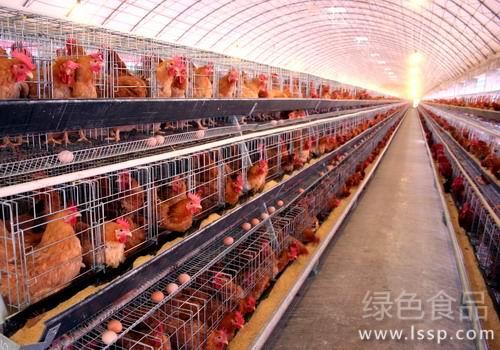
Laying hens
I. Clinical symptoms:
When laying hens are affected, the incubation period is 6-7 days. Typical symptoms are mostly seen in chicks among laying hens, showing neurological tremor. However, when adult laying hens are infected, the clinical symptoms are not obvious. The flock's spirit, droppings, feed intake, water intake, egg color, etc. are all normal, but egg production drops sharply, egg weight decreases, and egg size becomes smaller. After about 15 days, egg production recovers.
II. Prevention and control measures
1. There is currently no specific treatment for avian encephalomyelitis in laying hens. The affected flock can only be given strengthened feeding management, and the chicken house should be kept warm and well ventilated.
2. Strictly control breeder farms. If breeders have contracted avian encephalomyelitis, before egg production returns to normal, or for at least half a month from the day the breeders' egg production declines, the breeding eggs laid must not be incubated and can be handled as commercial eggs.
3. Vaccination. In areas where the disease is endemic, breeders should be vaccinated with infectious avian encephalomyelitis vaccine at 100-120 days of age.
4. Drug prevention. If laying hens at the peak of egg production have contracted avian encephalomyelitis, in order to prevent major losses, they can be appropriately given some astragalus polysaccharide and broad-spectrum antibiotics to improve immunity and prevent secondary infection.