-

The dace is an aquatic improved species with relatively high economic value for farming.
Dace is also known as river fish and slippery fish. There are more than 20 species of dace worldwide, distributed only in China, Japan, Korea and the eastern part of the former Soviet Union. China has about 10 species of dace, mainly distributed in the waters of northern China. The species vary by region; those with mature farming technology and relatively high economic value include: 1. Baikal dace. Mainly distributed in the **Burqin area of China. This fish is a small to medium-sized precious fish, weighing 100-200 grams, with excellent flesh flavor, strong reproductive capacity and high population yield. 2. Northeast dace. Most are distributed
-
Detailed Explanation of the Causes and Comprehensive Prevention and Control Measures of Swine High Fever Syndrome
Recently, many pig farms have consulted about the causes and prevention and control technical issues of swine high fever syndrome. Based on my own practical experience, the author puts forward some views for your reference. Causes: Swine high fever syndrome is essentially a swine disease caused by mixed infection of multiple viruses, bacteria, and protozoa triggered by immunosuppressive swine diseases. Biological factors: classical swine fever virus, circovirus, porcine reproductive and respiratory syndrome virus, pseudorabies virus, Eperythrozoon, Toxoplasma, Streptococcus, Salmonella paratyphi, Mycoplasma, Actinobacillus pleuropneumoniae, Haemophilus parasuis, Pasteurella, etc.
-
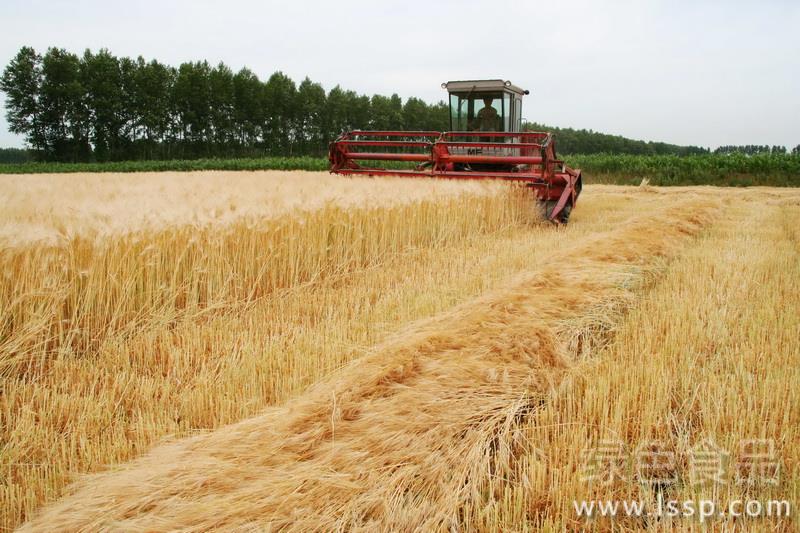
High-yield cultivation techniques for barley with drought resistance, cold tolerance and wide adaptability
High-yield cultivation techniques for barley with drought resistance, cold tolerance and wide adaptability
-
Introduction to the High-Protein Soybean Variety Fudou 234
The new high-protein spring soybean variety "Fudou 234", bred by the Institute of Farming and Crop Rotation of the Fujian Academy of Agricultural Sciences (Tel: 0591-7573144, Postcode: 350013), recently passed expert appraisal organized by the provincial crop variety approval committee. "Fudou 234" has an average yield of 232.2 kg per mu, higher than the control variety Pudou 8008. The notable feature of this new variety is its high protein content; the protein content of "Fudou 234" reaches 45.4%.
-
Introduction to the High-Protein Soybean Variety Fudou 310
The new high-protein spring soybean variety "Fudou 310", bred by the Institute of Farming and Rotation Research, Fujian Academy of Agricultural Sciences (Tel: 0591-7573144, Postcode: 350013), recently passed expert appraisal organized by the provincial crop variety approval committee. "Fudou 310" has an average yield of 186.7 kg per mu, higher than the control variety Pudou 8008. The notable feature of this new variety is its high protein content, with "Fudou 310" reaching a protein content of 46%.
-
Introduction to the High-Protein Soybean Variety Nandou No. 3
This variety was developed by the Nanchong Institute of Agricultural Sciences in Sichuan Province through systematic selection from Gongdou No. 5. It has a determinate pod-setting habit, a plant height of about 46 cm, green young stems, and 2-3 branches. The leaves are ovate, the flowers are white, and the pubescence is brown. The seeds are oval, the seed coat is light green, and the hilum is light brown. The seeds are large, with a 100-seed weight of about 28 g. Nandou No. 3 has a growth period of 95-100 days when sown in spring and 75-80 days when sown in summer or autumn, making it an early-maturing variety. It is resistant to viral diseases and lodging. According to the grain, oil and food
-
Comprehensive High-Yield Cultivation Techniques for Soybean in High-Cold Regions
Soybean is the main crop in the Jiamusi region of Heilongjiang Province, with an annual sown area of more than 900,000 mu, accounting for more than 75% of the total sown area. For a long time, due to the cold climate, short frost-free period, insufficient accumulated temperature, and lack of suitable varieties, soybean yields have remained stagnant at only about 150 kg, and in disaster years even less than 100 kg. In view of this, based on the climatic characteristics of Heilongjiang Province, we have developed several techniques suitable for soybean
-
Analysis of the Key Points of Integrated High-Yield Technology for Rainfed Soybean
I. Basic Information: 1. Project source: One of the projects under the "Comprehensive Technical Research on Increasing Production in the Sanjiang Plain Agricultural Region" issued by the National Science and Technology Commission during the "Sixth Five-Year Plan" period. A national key research project. 2. This project was reviewed in December 1985 by an appraisal committee composed of 20 experts and scholars including famous professors Wang Jinling and Zhang Zijin from China's soybean science community. The appraisal concluded that the research direction was correct, the approach was right, the measures were appropriate, and the results were remarkable, with an obvious yield-increasing effect on subsequent crops as well. Breakthrough progress had been made in integrated research and supporting technologies,
-
How does the large-seeded, high-yielding Huayou No. 5 soybean perform?
On September 30, right in the harvest season for field crops, the reporter saw in the contiguous fields of Huayou No. 5 soybean planted in Gongjiazhuang Village, Qiaoxi District, Shijiazhuang City: the golden leaves could no longer hide the pods covering the plants, the pods hanging on the stems were as densely packed as harvested corn wrapped around tree trunks, the plump beans seemed about to burst the pods, and the 3 seeds in each pod refused to be outdone, each growing perfectly round. Wang Yuling, the breeder of this variety and director of the Soybean Office of the Shijiazhuang Academy of Agriculture and Forestry Sciences, who was conducting a survey in the field, introduced that Gongjiazhuang Village has 1
-
Detailed Explanation of the Technical Regulations for High-Yield Cultivation of Soybean with Sparse Planting
Technical Regulations for High-Yield Cultivation of Soybean with Sparse Planting: 1. Selection of dedicated varieties: Choose branching-type varieties with tall and luxuriant plants, strong stalks that do not lodge, a long flowering period, large flower clusters, a high pod-setting rate, tolerance to high fertilizer and water levels, and medium or medium-late maturity. 2. Land selection, tillage and fertilization: Choose flatland plots with high soil organic matter content and good moisture conditions, plots with a previous crop, and plots of equal fertility; the best previous crop is corn stubble, and organic fertilizer should be applied in increased amounts. 3. Sowing: Carefully select seeds. Seeds should be free of pests and diseases, uniform in size and plump. The sowing period is generally when the 5 cm soil temperature steadily
条件筛选