-
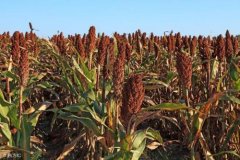
When is sorghum harvested, and what is the current purchase price per jin?
When is sorghum harvested? How is the purchase price? Let's take a look together. Sorghum is ready for harvest 35~40 days after heading, when the stems and leaves turn yellow and the grains are hard and milky white; the heads should be cut and harvested promptly with a sickle. After the sorghum heads are sun-dried, they can be threshed by rolling with a cart wheel
-

When is the best time to plant taro? Detailed guide to high-yield techniques for over 10,000 jin and market prices
Taro is now grown fairly widely. Do you know what the current yield per mu of taro is? So how should you plant it to achieve high yields? What is the current market price of taro per jin, and what are the prospects for growing taro? Now common
-
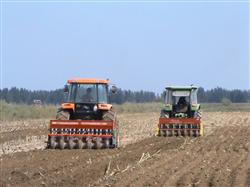
Current Wheat Growth Analysis and Spring Management Recommendations
Seven parts sowing, three parts management: improving sowing quality is the key to a bountiful grain harvest. At present, spring wheat in our province is about to enter the sowing period. How well we manage the sowing stage and improve sowing quality bears on the overall prospects for a bumper spring wheat harvest all year. 1. Select good varieties. To achieve a high wheat yield, soil is the foundation, fertilizer is the nutrition, and water is the lifeline, ...
-
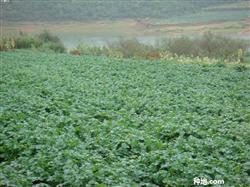
What problems currently exist with radish fertilization?
What problems currently exist with radish fertilization? Please note that current radish fertilization has the following problems: 1. Existing problems and fertilization principles. In response to problems such as emphasizing nitrogen and phosphorus fertilizer while neglecting potassium fertilizer, an imbalanced nitrogen-phosphorus-potassium ratio, unreasonable fertilization timing, obviously insufficient application of organic fertilizer, and insufficient attention to the application of trace element fertilizers...
-
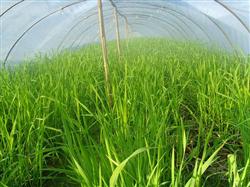
Current Management Key Points for Greenhouse Facility Cultivation of Water Bamboo
This year's early spring saw a historically rare stretch of continuous rain and low temperatures, and the growth progress of water bamboo under current greenhouse facility cultivation is delayed by 5-7 days compared with normal years. Take advantage of the breaks in the weather to step up field management for greenhouse facility cultivation of water bamboo and accelerate healthy growth of water bamboo under greenhouse facility conditions. Specifically, do the following: 1. Thin seedlings in a timely manner...
-
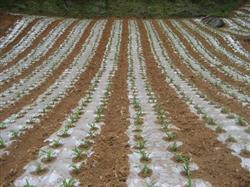
Key points of current management measures for spring-sown corn
1. Adapt to local conditions and select improved varieties. In plain and hilly areas, promote Yedan 13 and Xiyu No. 3, paired with Huayu No. 4, Zhongdan 32, Chenghai No. 1, and Yuanzheng 808; for intercropping in cotton fields, select short-stalked, short-growth-period varieties such as Yedan 22, Yedan 51, and 9362; in suburban areas, where fresh eating is the main purpose, plant Zhongnuo 1...
-

Analysis of the Current Status and Existing Problems of Upland Rice Production
Upland rice, also known as dryland rice, is a type of cultivated rice with strong drought resistance, tolerance to poor soil, and suitability for dryland direct seeding and dryland management. It can be planted in any soil suitable for growing major dryland grain crops such as wheat and corn. It does not require water layer management throughout the entire growth period, and its irrigation volume is only 1/4 to 1/10 that of paddy rice. Upland rice is more drought-tolerant and barren-tolerant than paddy rice, and has the water-saving characteristics of low input and high output. I. Overview of World Upland Rice Production Currently, the world's upland rice planting area is 0.18 billion hectares. In West Africa, upland rice accounts for more than 75% of the rice growing area, and in
-
Occurrence of Pests and Diseases in Rice Seedbeds and Current Control Methods
During the rice seedbed stage, aphids, thrips, and damping-off disease mainly occur, harming the growth of rice seedlings. Adult and nymph rice thrips often gather at the leaf auricle, ligule, and inside the central leaf to cause damage; the affected parts first show small yellow-white spots, after which mottled white patches appear on the leaf surface. Affected seedlings recover green slowly, become stunted and fail to grow, appearing as if "stuck in the clump." Damping-off disease mostly occurs in wet (semi-dry) seedling nurseries and dry seedling nurseries, causing seedling death. Because temperatures in early to mid-April are unstable, aphids, thrips, and damping-off disease are prone to occur, affecting full, uniform, and strong seedlings. Agricultural technology centers of all townships and subdistrict offices are requested to strengthen water
-
How should current rice production be managed? Technical guidance is here
At present, China's early rice production has entered the late growth stage. In southern Guangdong and Guangxi, the vast majority of early rice has entered the grain-filling stage, and a small portion has entered the maturity stage; in central Guangdong and Guangxi, heading has begun; in northern Guangdong and Guangxi, it has entered the initial heading stage to heading stage. Early rice in the middle and lower reaches of the Yangtze River has entered the milk-ripe stage and is expected to begin harvesting around July 10. Single-season rice in Northeast China is in the tillering peak stage, young panicle differentiation stage and booting stage from south to north; mid-season rice in the winter paddy field areas of Southwest China is in the booting stage, the river valley and hilly areas have begun young panicle differentiation, and the Chengdu Plain area is in the field-drying stage at the maximum tiller stage
-
Current Technical Guidance on Rice Seedbed Management
Currently, some early-sowing areas are affected by sharp temperature changes caused by cold waves, and rice seedlings have suffered frost damage to varying degrees, which has affected seedbed management and will delay the transplanting process to a certain extent. In order to improve seedbed management and reduce low-temperature damage, the following technical guidance on seedbed management is hereby proposed. 1. Small-tunnel seedling cultivation. According to the weather forecast, add more covering material on the tunnel and keep it sealed for insulation. In case of frost, candles can be lit or smoke can be generated inside the tunnel to raise the temperature and prevent freezing. For medium and large tunnel seedling cultivation, ventilation should be reduced or even stopped. Straw curtains should be placed around the tunnel, plastic film should be laid flat inside the tunnel,
条件筛选