Current Management Key Points for Greenhouse Facility Cultivation of Water Bamboo
This year's early spring saw a historically rare stretch of continuous rain and low temperatures, and the growth progress of water bamboo under current greenhouse facility cultivation is delayed by 5-7 days compared with normal years. Take advantage of the breaks in the weather to step up field management for greenhouse facility cultivation of water bamboo and accelerate healthy growth of water bamboo under greenhouse facility conditions. Specifically, do the following: 1. Thin seedlings in a timely manner...
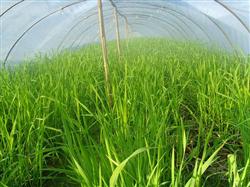
This year's early spring saw a historically rare stretch of continuous rain and low temperatures, and the growth progress of water bamboo under current greenhouse facility cultivation is delayed by 5-7 days compared with normal years. Take advantage of the breaks in the weather to step up field management for greenhouse facility cultivation of water bamboo and accelerate healthy growth of water bamboo under greenhouse facility conditions. Specifically, do the following:
1. Thin and set seedlings in a timely manner. After mid-March, temperatures rise quickly and the water bamboo plants in the greenhouse grow rapidly. Complete the thinning and setting of seedlings before the end of March, remove weak and spindly seedlings, and keep 20-25 vigorous seedlings per clump. When thinning seedlings, weeds can be removed by hoeing to improve soil aeration. At the same time, press mud around the root zone of the water bamboo clumps to mound the roots, so that the tillers spread out and their nutritional status improves.
2. Strengthen fertilizer and water management. On the premise of having applied basal fertilizer and seedling fertilizer, apply stalk-strengthening fertilizer in a timely manner after thinning and setting seedlings in early April, generally about 30 kg of imported compound fertilizer per mu. In late April, when 30% of the water bamboo plants have formed the swollen stem, apply swollen-stem fertilizer as appropriate according to leaf color, generally 20-30 kg of imported compound fertilizer per mu, to ensure the nutrients needed after the water bamboo forms its swollen stem and to ensure the swollen stem is plump and white. Fields under current facility cultivation of water bamboo should be irrigated, with shallow water irrigation as the main method in March and April, establishing a certain water layer; do not alternate wetting and drying frequently, as this affects swollen stem formation. After the water bamboo forms its swollen stem in late April, deepen the water layer to about 15 cm to protect the swollen stem with deep water and improve the quality of the water bamboo.
3. Prevent fertilizer and pesticide damage to seedlings. After the greenhouse is covered and sealed with film, ammonium bicarbonate, urea or other volatile chemical fertilizers and any chemical herbicides must not be applied inside the greenhouse. Only an appropriate amount of high-quality three-element compound fertilizer may be used, to prevent other chemical fertilizers and herbicides from scorching the seedlings. After applying high-quality three-element compound fertilizer, ventilation at both ends of the greenhouse must also be maintained for more than 2-3 days.
4. Prevent high-temperature damage to seedlings. After early March, the door films at both ends should be opened frequently for ventilation and seedling hardening, while on nights when low temperatures arrive, the greenhouse still needs to be sealed for insulation. When the sunny-day temperature reaches 17-18°C, the temperature inside the film has already reached 32-33°C, so the door films at both ends of the greenhouse should be opened promptly for ventilation, which also helps air exchange and strengthens the seedlings. When the sunny-day temperature reaches 20°C or above, part or all of the skirt film should be removed promptly to regulate the maximum temperature inside the greenhouse so that it does not exceed 35°C, preventing high-temperature scorching of the seedlings.
5. Prevent freezing injury from removing all the film too early. After late March, temperature changes are still relatively drastic, so use the door films at both ends and the skirt films on both sides for regulation. In normal years, all the film can generally be removed after mid-April, and in years with frequent late spring cold spells, the time for removing all the film should be appropriately delayed. If all the film is removed too early, the plants will suffer freezing injury from cold air, and the production of water bamboo will instead be delayed.