Detailed Explanation of Key Points in High-Oil Corn Cultivation Techniques
The application effects of phosphorus and potassium fertilizers vary greatly depending on the available soil content. Increasing the application of phosphorus and potassium is beneficial for strong seedling early development, sturdy plants with large ears, improving the grain-to-leaf ratio, and increasing grain number and grain weight, and is an important condition for improving population quality. However, after phosphorus and potassium fertilizers are applied, most are absorbed and fixed by the soil, resulting in low absorption and utilization rates in the current season, and in the soil...
 1. Characteristics of High-Oil Corn and Its Nutritional Value
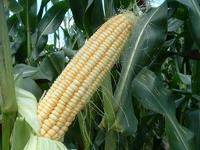
The outstanding characteristic of high-oil corn is its high grain oil content, which is on average more than 5% higher than that of ordinary corn.
High-oil corn generally has higher protein, lysine and tryptophan. In addition, the vitamin A and vitamin E of high-oil corn are also higher than those of ordinary corn.
2. Breeding of High-Oil Corn
In recent years, the breeding of high-oil corn in China has entered a new stage of independent development, and a series of hybrid varieties with disease resistance and lodging resistance have been bred.
3. Producing Commercial High-Oil Corn by Intercropping and Mixed Planting of Ordinary Hybrids with High-Oil Corn
Using high-oil corn as the male parent to pollinate ordinary corn, commercial high-oil corn can be obtained through the xenia effect.
Using high-oil pollen to produce high-oil corn can not only increase the grain oil content and dry grain weight of ordinary corn, but also, by pollinating ordinary corn with high-oil pollen, self-pollination is avoided, thereby increasing grain weight and yield, and moreover, the characteristic of male sterility can be utilized to eliminate the step of detasseling.
When using ordinary hybrids to produce high-oil corn, several key points must be grasped:
(1) The flowering periods of ordinary hybrids and high-oil hybrids are the same. If the flowering periods differ greatly, staggered sowing or other methods should be adopted to make them similar, so as to ensure that the silks of the ordinary hybrids can encounter pollen while they are viable.
(2) The ratio of ordinary hybrids to high-oil hybrids should be appropriate. When the pollen amount of the high-oil hybrid is relatively large, the ratio can be appropriately increased; otherwise, it should be smaller, to ensure there is enough.
(3) When using male-fertile ordinary corn hybrids to produce high-oil corn, detasseling should be carried out in a timely manner to ensure that high-oil pollen hybridizes with them.
(4) When using sterile ordinary corn, if its flowering period is the same as that of high-oil corn and staggered sowing is not needed, the intercropping planting method can be adopted, that is, ordinary corn and high-oil corn are sown in different rows according to a predetermined ratio. Mixed planting can also be used, that is, the two types of seeds are mixed together and sown. Mixed planting makes the distribution of the two types of plants in the field more uniform, and therefore pollination and seed setting are better. However, when the sterile ordinary corn used and the high-oil corn do not have the same flowering period and the flowering period needs to be adjusted, or when fertile ordinary corn is used and detasseling operations are required, the intercropping method is better, as it facilitates field operations.