Detailed Explanation of Key Cultivation Techniques for Specialty Corn
Specialty corn includes fodder corn, waxy corn, sweet corn and popcorn. The botanical characteristics and biological traits of specialty corn differ from those of common corn, and therefore its cultivation techniques also have special requirements. 1. Fodder corn. Fodder corn refers to corn varieties used for green fodder or silage. At present, ...
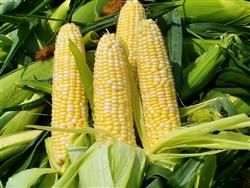
Specialty corn includes fodder corn, waxy corn, sweet corn and popcorn. The botanical characteristics and biological traits of specialty corn differ from those of common corn, and therefore its cultivation techniques also have special requirements.
1. Fodder corn
Fodder corn refers to corn varieties used for green fodder or silage. At present, the varieties available in our province for use as fodder corn include Ludan 50, LD963, Ludan 981, Yedan 22, etc.
The key points of cultivation management are:
① Sowing in stages. For cultivation aimed directly at green fodder, in order to extend the supply period of green fodder, sowing can be carried out in stages, with an interval of 15-20 days.
② Increasing density. The planting density of fodder corn is generally 1/3 or more higher than that of grain corn, at about 7000 plants per 1/15 hectare.
③ Sufficient fertilizer and water. Because fodder corn is planted at a relatively high density, it has very high requirements for fertilizer and water, so nitrogen, phosphorus and potassium fertilizers should be appropriately increased, especially potassium fertilizer, and watering should be done in a timely manner to obtain a relatively high forage yield.
④ Harvesting at the right time. The best harvest period for silage corn is generally around 40-odd days after pollination, that is, the early dough stage of grain development, the 1/4 milk line stage (the milk line on the grain has dropped to 3/4 of the grain).
2. Waxy corn
The fresh tender ears of waxy corn can be eaten fresh and used as a vegetable, and waxy corn flour can also be used to make nian gao and pastries. Waxy corn varieties include Lunuo 2, Lunuo 5 and Lunuo 6, bred by the Corn Research Institute of the Shandong Academy of Agricultural Sciences.
The main requirements in corn production are:
① Isolated planting. After waxy corn crosses with common corn, its stickiness decreases and some of its unique traits are lost. Therefore, when planting, it must be well isolated from common corn. Isolation methods include spatial isolation, temporal isolation and barrier isolation. The distance for spatial isolation is generally 300-400 m. Temporal isolation requires a gap of more than 40 days for spring sowing and more than 25 days for summer sowing. For barrier isolation, the goal of isolation can be achieved by planting tall crops such as sorghum and kenaf around the waxy corn field.
② Sowing in stages. Where there are no cold storage conditions and the purpose of cultivation is to boil fresh ears for eating, spring sowing, summer sowing or multi-stage sowing can be carried out in order to supply the market continuously, and film-covered cultivation can also be used in late March and early April to bring the product to market earlier.
③ Controlling pests. After corn ears are damaged by scarab beetles, corn borers and cotton bollworms, their commercial quality declines, so they should be controlled in a timely manner.
④ Harvesting at the right time. For those boiled as fresh ears for eating, harvest is generally 25-30 days after pollination; for those whose grains are ground into flour, harvest should be at full maturity of the corn.
3. Sweet corn
Sweet corn has three types: common sweet, super sweet and augmented sweet. Sweet corn can be eaten raw or cooked, and is mostly made into canned products. Sweet corn varieties include Tianyu 2, Tianyu 4 and Tianyu 6, selected by the Chinese Academy of Agricultural Sciences; Ketian 110, jointly developed by the Institute of Genetics of the Chinese Academy of Sciences and Zhongnong Liangzhong Company; and Tianyu 1, bred by Shandong Agricultural University and Tai'an Seed Company.
The main cultivation requirements are:
① Isolated planting. After sweet corn receives pollen from common corn, xenia occurs, greatly reducing the quality of sweet corn. Therefore, sweet corn must be planted in isolation from other corn to prevent cross-pollination.
② Fine sowing. Because sweet corn seeds have low starch content, the grains are shriveled and thin, lacking sufficient nutrients, and have poor seedling emergence ability, so it is not easy to obtain a full stand; even if seedlings emerge, it is very difficult to achieve strong seedlings. Therefore, before sowing, the seeds must be carefully selected, and the land must also be finely prepared. For sowing depth, super sweet corn should not exceed 3 cm, and common sweet corn should not exceed 4 cm. For sweet corn planted for the purpose of boiling fresh tender ears for eating, plastic film mulching cultivation can be used to bring the product to market earlier.
③ Controlling insect pests. Sweet corn plants are sweeter than common corn, and insect damage is severe, especially after the corn ears are bored and bitten by corn borers and scarab beetles, the commercial quality declines. Therefore, controlling insects is especially important for sweet corn.
④ Timely harvesting. The suitable harvest period for sweet corn is generally about 20 days after pollination.
4. Popcorn
Popcorn made from popcorn corn is a nutrient-rich health snack food. Popcorn varieties include Yellow Rose and Yellow Rose 2, bred by the Institute of Crop Germplasm Resources of the Chinese Academy of Agricultural Sciences, and Taibao 1, bred by Shandong Agricultural University.
The production of this corn mainly emphasizes 3 aspects:
First, because popcorn grains are small and emerge slowly, sowing must be fine;
Second, most popcorn varieties have the characteristic of cross-incompatibility, that is, the silks can only accept pollen from themselves or the same variety to fertilize and set seed, and after receiving pollen from other types of corn, they show cross-incompatibility and do not set seed, so isolation is not necessary when planting.
Third, harvest at the full maturity stage, because only after popcorn grains are fully mature can popcorn with the maximum popping expansion be processed.