What is glyphosate aqueous solution? A detailed introduction for you
What is glyphosate aqueous solution? Please note that commercially available glyphosate comes in many forms and many formulations, such as glyphosate isopropylamine salt, glyphosate ammonium salt, and glyphosate, among which 10% glyphosate aqueous solution and 41% glyphosate isopropylamine salt account for the vast majority. According to Announcement No. 1158 jointly issued by the Ministry of Agriculture and the Ministry of Industry and Information Technology...
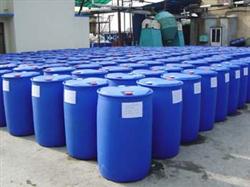
What is glyphosate aqueous solution? Please note
Commercially available glyphosate comes in many forms and many formulations, such as glyphosate isopropylamine salt, glyphosate ammonium salt, and glyphosate, among which 10% glyphosate aqueous solution and 41% glyphosate isopropylamine salt account for the vast majority.
According to the requirements of Announcement No. 1158 jointly issued by the Ministry of Agriculture and the Ministry of Industry and Information Technology, glyphosate mixed aqueous solutions with a glyphosate content below 30% produced before August 31, 2012 under the original pesticide registration certificate or temporary pesticide registration certificate may be sold and used within their product quality guarantee period. In other words, after August 31 of this year, it will no longer be permitted to sell glyphosate mixed aqueous solutions with a content below 30%. So, what exactly is the difference between 41% glyphosate isopropylamine salt and 30% glyphosate?
Glyphosate itself is poorly soluble in water, but its salts are easily soluble in water; the salts can be potassium salt, sodium salt, ammonium salt, isopropylamine salt, etc. The active ingredient of all glyphosate formulations is glyphosate acid, which is acidic and has poor water solubility. After forming a salt, water solubility increases; generally it can form ammonium salt, isopropylamine salt, potassium salt, sodium salt, etc., and the most common are ammonium salt and isopropylamine salt.
First, in terms of herbicidal effect, potassium salt is generally slightly greater than isopropylamine salt, and isopropylamine salt is slightly greater than ammonium salt and sodium salt. Glyphosate isopropylamine salt is a salt obtained by the neutralization reaction of glyphosate with the organic base isopropylamine, and it is more soluble in water; the component with herbicidal activity is glyphosate acid. At the same content, the herbicidal function of glyphosate is superior to that of glyphosate isopropylamine salt, but the two have the same weed-killing spectrum and mechanism of action.
Next, in terms of content, for different glyphosate salts, according to the national standard for pesticide names and the national standard for glyphosate aqueous solution, the active ingredient content is calculated as glyphosate acid content, and the active ingredient content is the labeled content*(0.95~1.10); the conversion factor between glyphosate isopropylamine salt and glyphosate is 1.349, that is, glyphosate isopropylamine salt equals 1.349*glyphosate content. Therefore, we can calculate that the glyphosate content in 41% isopropylamine salt and 33% ammonium salt is approximately 30%. At present, the 41% isopropylamine salt on the market is prepared from technical material, while the 30% glyphosate currently on the market is not in salt form. In products registered by the Ministry of Agriculture under the name glyphosate, the labeled active ingredient is the content of glyphosate; while in products registered under the name glyphosate isopropylamine salt, the labeled active ingredient is the content of glyphosate isopropylamine salt.
However, there are still differences between 41% glyphosate isopropylamine salt aqueous solution and 30% glyphosate aqueous solution:
Labeling as 41% glyphosate isopropylamine salt aqueous solution indicates that the product is the isopropylamine salt of glyphosate.
While 30% glyphosate aqueous solution may have the following possibilities:
(1) 30% glyphosate aqueous solution exists in the form of isopropylamine salt, similar to 40.5% glyphosate isopropylamine salt aqueous solution (slightly lower)
(2) 30% glyphosate aqueous solution exists in the form of potassium salt, similar to 37% glyphosate potassium salt aqueous solution
(3) 30% glyphosate aqueous solution exists in the form of ammonium salt, similar to 33% glyphosate ammonium salt aqueous solution
(4) Both sodium salt and dimethylamine salt are possible.
Click to get more organic fertilizer application techniques
Click to get more chemical fertilizer application techniques