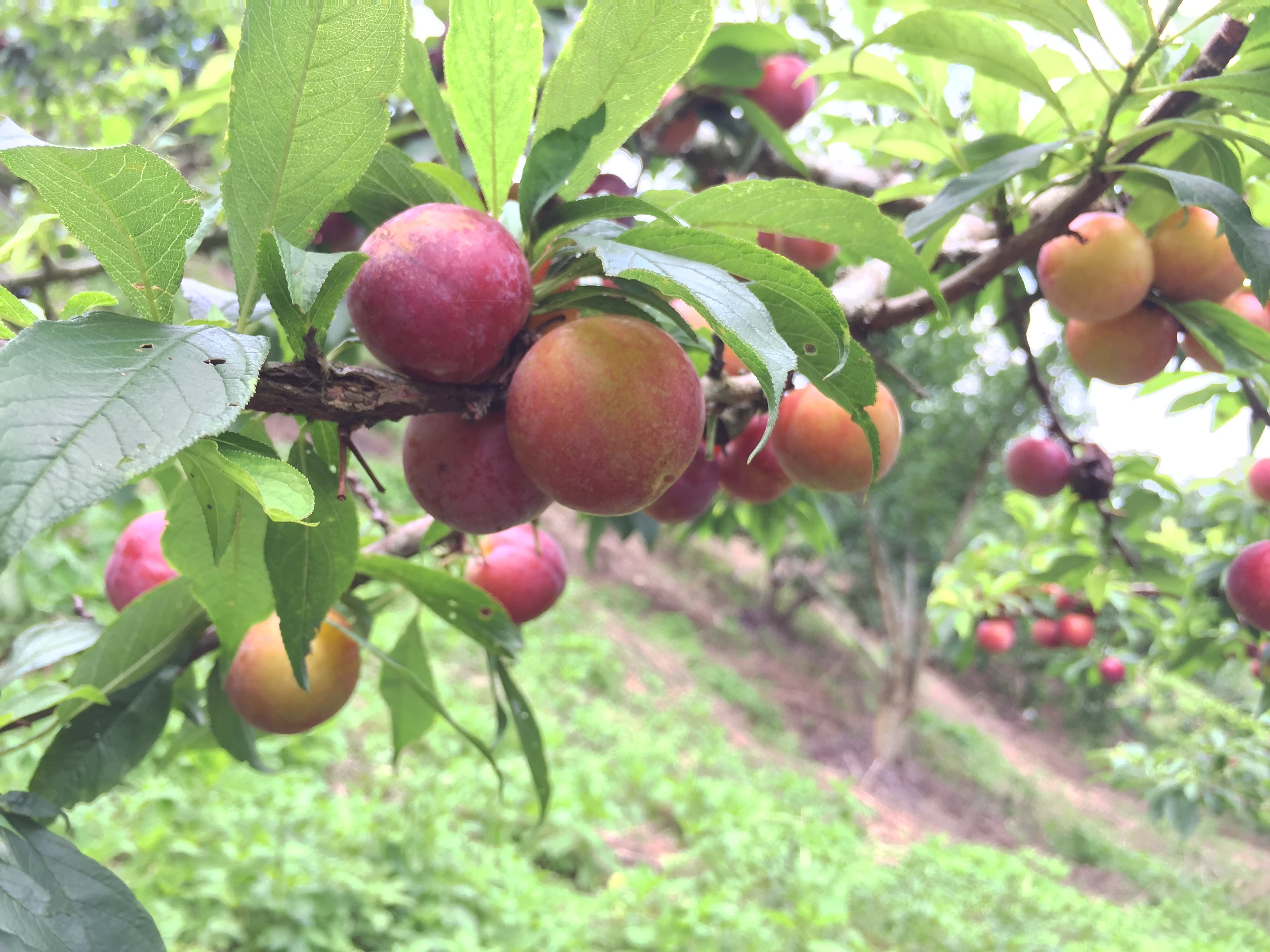
Characteristics of the most common plum varieties: Hongyu plum, Baiyu plum, yellow-fleshed plum, and Tai'an plum
When talking about Tai'an in Miaoli, you can't help but mention plums, bamboo shoots, ginger, and hot springs! Today, the editor came to Yunyi Farm at an altitude of 800 m to visit Brother Li Shiqing, who specializes in growing plums. The Li family has been growing plums since Brother Li's grandfather's time, and Brother Li took over the plum orchard from his father six years ago. When it comes to growing plums, he has some ideas that differ from the older generation!
When talking about Tai'an in Miaoli, you can't help but mention plums, bamboo shoots, ginger, and hot springs! Today, the editor came to Yunyi Farm at an altitude of 800 m to visit Brother Li Shiqing, who specializes in growing plums. The Li family has been growing plums since Brother Li's grandfather's time, and Brother Li took over the plum orchard from his father six years ago. When it comes to growing plums, he has some ideas that differ from the older generation! The cultivation method for Black Splendor plums is relatively simple, and the cultivation methods for other plum varieties are basically the same.
Reducing pesticide use
Having won the Grand Prize in the 2013 Miaoli Tai'an plum evaluation, Yunyi Farm grows as many as five plum varieties - Baiyu plum, Hongyu plum, yellow-fleshed plum, red-fleshed plum, and Tai'an plum. When he took over the plum orchard, Brother Li decided to reduce pesticide use and also extend the intervals between spraying, because the children all eat plums directly in the orchard, and he hopes to grow fruit that can be eaten with greater peace of mind!
The jade plum twins - Hongyu plum and Baiyu plum
Brother Li said: "Most farmers grow Hongyu plums, the plums commonly seen on the market for pickling. Very few people are willing to grow Baiyu plums because they are very hard to care for, and the thin-skinned Baiyu plum easily splits open at the bottom (fruit cracking) as soon as it rains!" Baiyu plum likes sunlight, and a place with sufficient sunlight allows Baiyu plum to color fully and look more beautiful! Baiyu plums are usually relatively small, about the size of a 10-yuan coin, but here at Brother Li's place you can eat Baiyu plums as big as golf balls! Compared with Baiyu plum, Hongyu plum has thicker skin and is more sour and astringent. Usually no one eats it as a fresh fruit; it is almost always used for pickling.
Sweet, fragrant, and juicy yellow-fleshed plum
The yellow-fleshed plum is one of the earliest plums in Taiwan, also known as the water plum. Compared with the crisp sweetness of the Baiyu plum, the biggest feature of the yellow-fleshed plum is that it should be eaten after softening. When freshly picked, the fruit is still green; it must be left until the color turns yellow, the fruit softens, and it gives off fragrance - that is when the yellow-fleshed plum tastes best! The flesh of the yellow-fleshed plum is sweet, fragrant, and juicy, and its thin skin is slightly sour but not astringent. It can be eaten peeled or with the skin on! But the skin has a great deal of nutrients, so those who do not mind sourness are also advised to eat it with the skin on!
The mouth-watering red-fleshed plum
Around the Dragon Boat Festival is the production period for red-fleshed plums. The red-fleshed plums hanging heavily in the orchard each have an even coating of bloom! There are two varieties of red-fleshed plum, soft-branch and hard-branch. Soft-branch red-fleshed plums are usually larger, have finer flesh, and also self-thin their fruit! Hard-branch red-fleshed plums have higher yields, but do not easily grow very large, and they do not self-thin their fruit! What is self-thinning? It turns out that on soft-branch plum trees, you will see some dried-up small red-fleshed plums. To avoid too many fruits competing for too few resources, the plum tree thins its own fruit! Hard-branch plum trees do not do this; however many fruits set after flowering is how many there are! I curiously asked Brother Li: "Are soft-branch ones better or hard-branch ones better?" Brother Li said: "That depends on the person. Hard-branch ones are all about yield; unless manual thinning is done very thoroughly, they will not grow large. Although soft-branch ones self-thin, they still rely on manual thinning. This is like gambling, because the self-thinning situation is different every year, sometimes more and sometimes less, so when manually thinning it is very hard to judge the amount, and you have to rely on experience and a little luck!"
Taiwan's California plum - Tai'an plum
In Brother Li's orchard, the Tai'an plum is the latest plum to begin being harvested! It is commonly called "stomping ah" (please pronounce it in Taiwanese), meaning super sour - after eating it, you will stomp your feet! Here we need to clear the Tai'an plum's name a little, because the Tai'an plums seen in ordinary fruit shops are all harvested early, before they are fully ripe, so they are sour, astringent, and unpleasant to eat, and some are used for pickling. But Brother Li said: "Just like eating California plums, you have to wait until they are completely black before eating them. When fully ripe, Tai'an plums are sweeter than red-fleshed plums!"
Farmers all have to watch the solar terms
Brother Li: "This year has an intercalary sixth month, and on top of that it kept raining for a while, so the Baiyu plums are not as delicious as in past years! The current solar term is very suitable for the growth of red-fleshed plums, but this solar term came too late. If we had this kind of weather before the Dragon Boat Festival, that would be even better!" Plums are actually a temperate fruit, so in Taiwan they are mostly planted near mountainous areas. When the weather is too hot, plums ripen quickly and do not easily grow very large! Brother Li also mentioned that once Grain in Ear has passed, fruit flies arrive!