Where in China is suitable for growing wasabi? Mid-altitude wasabi in Alishan may make a comeback
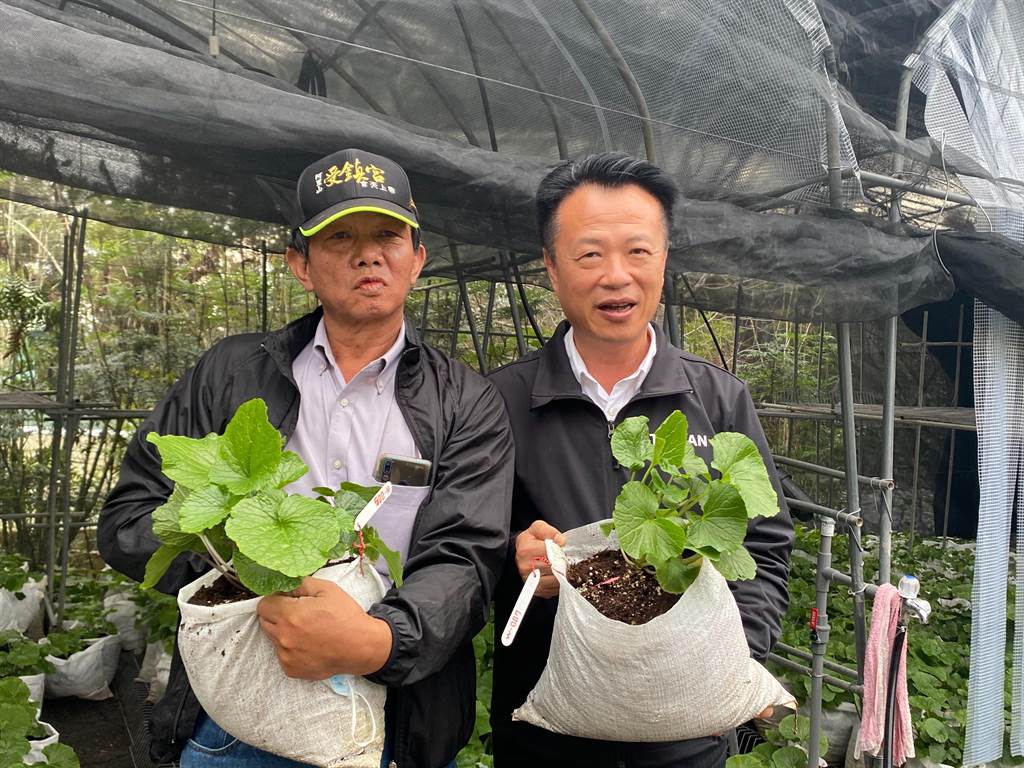
The distinctive crop "wasabi" of Alishan Township in Chiayi County gradually disappeared after the Forestry Bureau banned its cultivation on national forest land 20 years ago for national land conservation. Jiang Jinpin, a wasabi farmer who is also a wasabi merchant, introduced 12 Japanese varieties 3 years ago and cultivated them under net houses in the Shizhao area at an altitude of about 1200 m, successfully domesticating 2 wasabi varieties suitable for cultivation at mid-altitude, and is expected to be able to give healthy seedlings to farmers for planting next year.
The distinctive crop "wasabi" of Alishan Township in Chiayi County gradually disappeared after the Forestry Bureau banned its cultivation on national forest land 20 years ago for national land conservation. Jiang Jinpin, a wasabi farmer who is also a wasabi merchant, introduced 12 Japanese varieties 3 years ago and cultivated them under net houses in the Shizhao area at an altitude of about 1200 m, successfully domesticating 2 wasabi varieties suitable for cultivation at mid-altitude, and is expected to be able to give healthy seedlings to farmers for planting next year.
Wasabi was once a high-value cash crop on which residents of Alishan relied for their livelihood, mostly exported to Japan, but starting in 2011 the Forestry Bureau took back the land on the grounds that planting wasabi violated soil and water conservation and ecological conservation, and the area gradually shrank. Once it no longer had an economic scale, it could not be exported, farmers were unwilling to plant it, and Alishan wasabi became a thing of the past.
Jiang Jinpin is from Alishan and has run a wasabi production and marketing business for more than 40 years. Because of Forestry Bureau policy, he moved his wasabi business to Yunnan, bringing considerable income to local residents. In 2018, because of the Soil and Water Conservation Bureau of the Council of Agriculture's mid-altitude wasabi restoration project, he returned to Taiwan, China and introduced 12 Japanese wasabi varieties to experiment with at an altitude of about 1200 m, successfully testing out 2 kinds of wasabi suitable for mid-altitude.
⟦NL>
Jiang Jinpin said the roots, stems and leaves of wasabi can all be used. Green-stem wasabi can be harvested for stems and leaves about 6 months after planting, while red-stem wasabi, because its color is unpopular with customers, is mostly grown for about 2 years before the roots are taken for use. At present, authentic Alishan wasabi sells for 2800 yuan per kg, and it will be an important cash crop in mountainous areas in the future.
A few days ago, County Magistrate Weng Changliang also visited Jiang Jinpin's wasabi restoration garden. Jiang Jinpin pointed out that next year he expects to be able to sell healthy wasabi seedlings suitable for mid-altitude planting, and he also hopes that in the future Alishan can follow Japan's example and establish a wasabi sightseeing park to drive the tourism industry. Weng Changliang also affirmed the success of the restoration and said he would support related development in the future.