How to reasonably prevent and control tomato viral diseases? A detailed explanation of control methods
For the vast majority of tomato growers in our country, tomato viral diseases are extremely troublesome, because they not only spread quickly, but the damage they cause to tomato yields is also incalculable. Tomato viral disease is a plant disease that has become widespread in recent years. It has many different types of symptoms. On the one hand, it is hard to detect in the early stages, and on the other hand, it is very easily confused with symptoms such as nutrient deficiency and whitefly damage, which easily leads to problems such as missing the best time for countermeasures and inaccurate disease identification. If it is discovered too late, it will be very troublesome to try to rescue the crop by then.
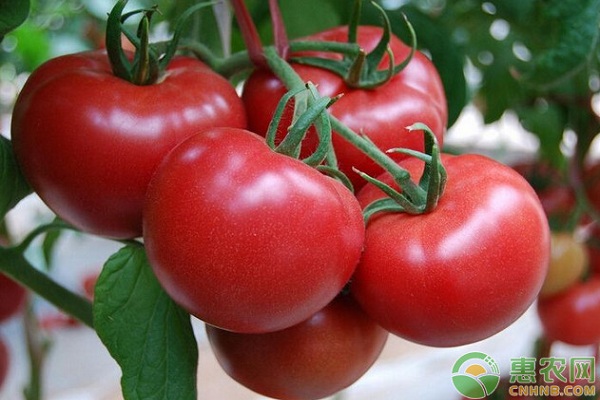
Regarding tomato viral diseases, I believe all farmer friends most want to understand these three points: ① the types and key symptoms of tomato viral diseases; ② how do tomato viral diseases, which are prone to outbreaks, spread? ③ how to reasonably prevent the damage caused by tomato viral diseases?
I. What are the common types and symptoms of tomato viral diseases?
Mosaic-type viral disease, fern-leaf-type viral disease, yellow-top-type viral disease, leaf-roll-type viral disease, giant-bud-type viral disease, stripe-type viral disease, and leaf-curl-type viral disease. Among the above seven types of tomato viral diseases, the highest incidence rates are mosaic type and fern-leaf type, and the order of severity of damage is yellow leaf-curl type > mosaic type > fern-leaf type, exceeding stripe type, etc. Among them, the yellow leaf-curl-type viral disease, which has been explored and discovered in recent years and spreads quickly with devastating damage, cannot be cured once it occurs, and the damage is even more severe.
1. Symptoms of mosaic-type viral disease
The plant's normal growth is inhibited and development is slow. The uppermost leaves have dark green, light green, or yellow-green patches. Some leaves become transparent. When the condition worsens, the leaves become deformed or appear as narrow strips. The top leaves also become wrinkled, and the plant becomes dwarfed, flowers drop and fruit falls, and the fruit size shrinkage problem is severe.
2. Symptoms of fern-leaf-type viral disease
The plant's growth rate slows down. The uppermost leaves cannot extend well, appearing as narrow strips or curling downward in a spiral shape. Viewed from top to bottom alone, they mainly appear fern-like. Some plant leaves show a lack of leaf mesophyll. After flowering, the flowers are very large and there is little fruit set, with many deformed fruits. In severely affected plants, more branches and stems grow, and the plant becomes dwarfed, etc.
3. Symptoms of leaf-roll-type viral disease
The plant is short in size, with scattered branches and stems, and it is not easy for fruit to set. The leaves show upward curling at the leaf margins (young leaves may turn into spherical or spiral deformities, etc.), and yellowing between the petioles.
4. Symptoms of yellow-top-type viral disease
The plant's normal growth is inhibited, indeterminate branches are scattered, and the uppermost leaves of the plant are small and show yellowing and wrinkling.
5. Symptoms of giant-bud-type viral disease
The plant's fruit yield is significantly reduced or the fruit is conical. Many branches sprout from the uppermost part of the plant and the buds at the leaf axils. The leaf color becomes lighter and appears striped.
6. Stripe-type viral disease
It can occur on the plant's fruit, leaves, and stems. The leaves have tea-brown spots that spread from the main vein to the branch veins and cause shrinkage. The veins have striped lesions. The peach tree has dark red lesions, dead spots, or deformities. When the condition worsens, it can cause the plant to yellow, wither, and even die.
7. Yellow leaf-curl viral disease
The symptoms of yellow leaf-curl disease are: slow plant growth, dwarfing of the plant, severe flower drop and fruit drop after flowering, many deformed fruits, shrinkage of the top new buds, clustered and wrinkled appearance, leaf color fading to yellow with small black spots on the leaves, leaves becoming thicker, brittle, and hard, and curling at the leaf margins. After disease onset in seedlings, the dwarfing of the plant is severe. After disease onset in mature plants, the uppermost leaves and tender buds show the above conditions, but the lower leaves and fruit basically show no symptoms and are basically unaffected.
II. How do tomato viral diseases spread?
Tomato viral diseases mainly spread through whiteflies, scale insects, and other vectors.
III. How to reasonably prevent tomato viral diseases?
1. Carefully select highly resistant varieties
According to scientific research, domestic varieties currently have relatively weak resistance to tomato viral diseases, while foreign varieties have stronger resistance to viral pathogens, especially resistance to tomato yellow leaf-curl virus, which is even more notable. Therefore, when selecting varieties for planting, strict supervision is essential, and varieties with strong resistance should be selected. Syngenta of France, Rijk Zwaan of the Netherlands, Hazera of Israel, and Dongqin Seed Industry of Hebei Province all have tomato varieties with regulators against this virus. In addition, using plots that have not previously grown cruciferous, cucurbitaceous, or solanaceous crops to cultivate disease-free vigorous seedlings is also an effective way to reduce the occurrence of viral diseases; severely affected plots can also be rotated with crops such as pepper and cowpea.
2. Improve pest control
Because whiteflies and scale insects are the key transmission vectors of tomato viral pathogens, in whitefly control, early prevention and management must be strengthened, and control must be carried out promptly and effectively.
3. Scientific fertilizer and water management methods
In fertilization, not only should base fertilizer be applied, but fertilizer should also be applied promptly according to the needs of different growth stages. At the same time, organic fertilizer and microbial fertilizer should be applied as topdressing. The application of nitrogen fertilizer should be controlled, phosphorus and potassium fertilizer should be applied as topdressing, and foliar fertilization with medium and trace elements should be used during planting. In irrigation, the soil should be kept moist, but flood irrigation should be avoided. It is best to use the irrigation method of light water and frequent watering, with small amounts each time and multiple times, so that vigorous seedlings and strong plants can be cultivated, improving the tomato plant's own ability to resist diseases and pests.
4. Scientific drug prevention
At present, there are temporarily no specialized drugs on the market that can completely eradicate tomato viral diseases, which is also the key reason why viral diseases are difficult to prevent after onset, prone to epidemics, and cause heavy losses. It is recommended that in the early stage of disease onset, viral inhibitors (such as Virus A500, Paiyoujie 800, etc.) plus gene activators should be sprayed promptly as a thickening treatment to protect the health of tomato plants and reduce the scope of disease onset. Everyone may also try the following formula: 15 grams of 72% agricultural streptomycin plus 20 grams of 20% jinggangmycin plus 10 grams of Qinongsu plus 50 grams of urea aqueous solution plus 25 grams of all-purpose zinc plus 15 KG of water plus an appropriate amount of soap powder aqueous solution, or 75 grams of skim milk powder plus 1 tablet of medical pipemidic acid plus 25 grams of all-purpose zinc plus 15 KG of water, or 10 grams of Qiyin plus 25 grams of all-purpose zinc plus 15 tablets of medical virus spirit, etc., for spraying, which has a very good practical effect on preventing viral diseases.
The above is all the content for today. If the many farmer friends want to maintain high and excellent tomato yields, they must improve the prevention and management of viral diseases.