How to grow Sophora flavescens? Detailed guide to cultivation techniques and market prices
The dried tubers of Sophora flavescens can be used as medicine; they can kill insects, promote urination, clear heat and remove dampness, and so on. It is cultivated in all provinces of China. Sophora flavescens is a perennial woody plant, so price fluctuations increase the risk of growing it. Below is an introduction to the cultivation techniques for Sophora flavescens.
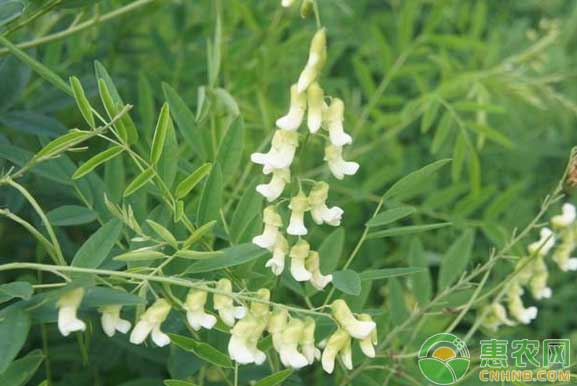
Sophora flavescens is harvested after growing for 2-3 years, in late autumn or early spring; the underground stems are dug up, dried and sliced, and that is the finished product. Sophora flavescens does not occupy good land; it can grow on beaches, small hillsides, barren hills and grasslands, and can also be used as a landscaping species for mountain-closure and sand-fixation shelterbelts. It can grow for many years and the longer it grows the more there is. Therefore the prospects for developing Sophora flavescens cultivation are full of hope.
1. Characteristics
Sophora flavescens mainly grows in sunny spots on hillside grasslands, plains, hilly terrain, roadsides, sandy land and red soil land. It likes a warm climate. It has loose requirements for soil; generally any soil can be used for planting, but soil or sandy soil that is deep, fertile and easy to drain and irrigate is preferable.
2. Planting
2.1 Site selection, land preparation and fertilisation
Sophora flavescens is a deep-rooted plant, so it is appropriate to choose clay loam, sandy loam or clay soil that is deep, fertile, easy to drain and irrigate and exposed to spring sun for planting. Apply 3000 kg of fully rotted compost or farmyard manure per mu, crush it fine and spread it evenly, deep loosen 40-50 cm and rake it level and fine, and make high beds 1.3 m wide.
2.2 Propagation methods
Sophora flavescens can be propagated by seed or by cuttings. The sowing period is divided into spring sowing and autumn sowing. Spring sowing is around Qingming, and autumn sowing is before freezing.
Seed propagation: before sowing, first soak the Sophora flavescens seeds in water at about 50°C for 10—12 hours. Then sow them on the surface of the prepared bed at a row spacing of 65×50 cm, and water to firm the soil so they sprout easily. The sowing rate is 3 kg per mu. Put 3—5 seeds in each hole.
Root division propagation: cut the Sophora flavescens rhizome heads into several pieces according to the number of bud eyes; each piece has 2—3 bud eyes and is used as propagation material. After the wounds heal, transplant them on the surface of the prepared bed at a row spacing of 65×50 cm. Water to firm the soil so they survive easily.
3. Cultivation techniques
3.1 Effective drainage and irrigation
In dry weather and after fertilising, irrigate promptly to keep the soil moist. In rainy periods, pay attention to preventing waterlogging and avoiding water accumulation that rots the roots.
3.2 Hilling and weeding
After seedlings emerge, carry out hilling, weeding and earthing up, keeping the field free of weeds and the soil loose and moist so that Sophora flavescens grows easily.
3.3 Fertilisation
On the basis of applying enough base fertiliser, fertilise twice each year: the first time in mid-to-late April, applying 2005 kg of dilute manure water per mu; the second time in mid-to-late August, mainly with phosphorus and potassium fertiliser. Poor land should appropriately increase the frequency of fertilisation.
3.4 Flower removal
Except for land kept for seed, promptly cut off the flower stems to prevent nutrient consumption.
4. Harvesting and processing
The roots can be harvested in August-November after the stems and leaves wither 2-3 years after planting, or in March-April before sprouting. Dig out the whole plant and divide it into single strips according to the natural growth of the roots, remove the rhizome heads and fibrous roots, wash off the fine sand, and dry in the shade or air-dry, and it is done. Cut fresh roots into 1 cm thick round slices or oblique slices, and dry in the shade or air-dry to make Sophora flavescens slices.
Sophora flavescens is generally harvested around Frost's Descent 2—3 years after planting, after the above-ground stems and leaves wither. When harvesting, first cut off the above-ground stems and leaves, then dig out the underground roots, clean off the mud and soil and remove the rhizome heads, and dry them to sell as medicine. The yield of dried slices per mu is 700-800 kg, and the seed yield of Sophora flavescens is around 100-150 kg.
The yield of dried slices per mu is 600-800 kg, and the comprehensive benefit per mu is 6000-8000 yuan, with an average annual profit of more than 2000 yuan. The price of Chinese medicinal materials changes greatly every year, so growers who intend to plant should pay attention to market trends and choose carefully.