Watering times and key points for winter wheat at different stages
Wheat is one of the key crops in China, and now is the critical period for winter wheat. Throughout the entire process of growing winter wheat, a little carelessness can lead to falling into misconceptions about winter wheat cultivation. In mild cases, it affects wheat emergence; in severe cases, it can cause seed rot and dead plants. Farmers all know that when growing winter wheat, the most important thing is watering.
After sowing winter wheat, it is generally appropriate to water once with a seedling-promoting watering to speed up wheat seed emergence. This is mainly because wheat emergence has requirements for soil moisture, and the suitable soil moisture for emergence is around 75%. Of course, to achieve high wheat yields and increased income, it is not enough to water appropriately after sowing; wheat also needs watering at several growth stages. So how should it be done?
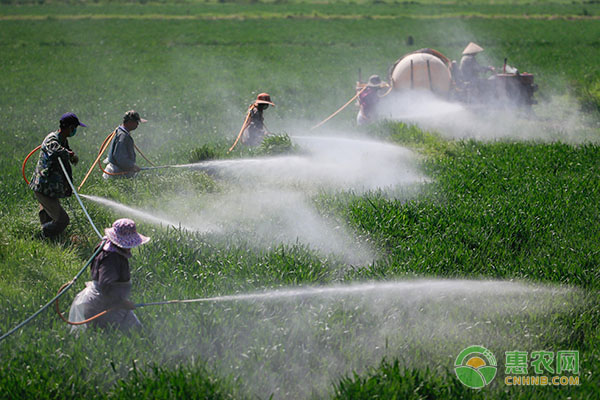
1. Emergence water
That is, the water applied after wheat is sown and before emergence to promote the broadcast seeds to emerge as early as possible. Emergence water does not always have to be applied; this depends mainly on whether the soil and seedling conditions are good. If the moisture in the wheat field itself is suitable, then the emergence water can be skipped or delayed; but for North China, because it is relatively dry, it is generally necessary to apply emergence water immediately after sowing. When applying emergence water, the water volume must be controlled properly. It is not suitable to water too much; making the soil slightly moist is enough. Otherwise, it easily causes soil caking, reduces soil aeration, and is unfavorable for wheat emergence.
2. Overwintering water
Overwintering water is an important measure to ensure wheat safely overwinters. This is because water has a relatively high thermal conductivity. During overwintering, if the soil is relatively moist, it helps buffer drastic changes in soil temperature, thereby reducing the degree of cold damage to wheat. The timing of overwintering water must be grasped well; it should not be too early or too late. When the local temperature drops to around 3°C, watering can begin. In my hometown, it is generally done in late October to early November. The amount of water should be moderate, and likewise should not be too much. It is best to properly cultivate and loosen the soil after watering.
3. Greening water
After early spring, decide whether to apply greening water based on soil organic matter, watering before overwintering, and other conditions. For wheat fields with fertile soil and sufficient watering before winter, do not apply greening water; it is only necessary to properly cultivate the soil to preserve heat and promote the growth of wheat tillers. Of course, for situations such as poor soil, drought with little rainfall, and late-sown wheat, it is recommended to apply greening water in time. Especially in North China, attention should be paid to irrigation with greening water. The watering time should be determined according to local temperature drops, and it is generally carried out in mid-April.
4. Heading water
When wheat enters the jointing stage, it is a period of abundant demand for water and fertilizer. At this time, watering should be combined with fertilization. Usually, fertilizer and water must be applied together to promote well-developed underground roots and increase the total number of grains per spike during the booting stage.
5. Booting water
The water consumption of wheat at the booting stage is the highest of the entire growth cycle. Sufficient soil moisture is a key factor affecting flower retention and grain increase in wheat. Although the demand for booting water is large, flood irrigation is not allowed. Special attention should be paid to the amount of watering to prevent wheat root rot. The watering time should be grasped flexibly. The wheat booting stage is generally around mid-to-late April. But if heading water is applied too late, booting water can be postponed to the end of April for irrigation; if heading water has not been applied or the soil is too dry, booting water can be applied early in early April.
6. Grain-filling water
Generally, within 15-20 days after wheat heading, appropriately apply wheat grain-filling water. This is beneficial to the accumulation of organic compounds in the grains, thereby increasing wheat grain weight and increasing yield per mu. Grain-filling water should not be applied too late. In addition, special attention should be paid: under weather conditions of high temperature, low humidity, and dryness accompanied by strong winds and rainfall, it is not suitable to irrigate with grain-filling water, so as to prevent causing wheat lodging.
The above are the key points for watering winter wheat at different stages. To achieve high wheat yields, scientific and standardized watering cannot be ignored. Farmers growing winter wheat should, according to the water requirements of wheat growth and development, water well with the above 6 types of water. When watering, the amount used must follow the principle of "small amounts, multiple times." It is hoped that the above content can be of some help to farmers growing wheat.