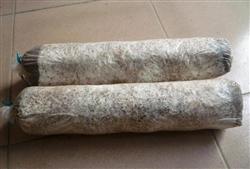
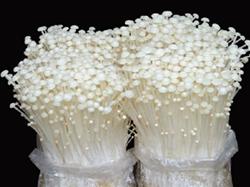
The growth and development of enoki mushroom (Flammulina velutipes) is divided into two major stages: mycelium and fruiting body
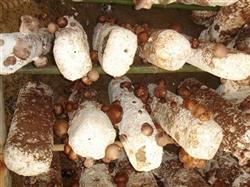
The growth and development of enoki mushroom refers to the complete process that begins when the spawn is inoculated into the growing substrate, through mycelial germination and spreading, to primordium differentiation, growth and finally harvest. The whole cycle is broadly divided into two stages: mycelial growth and fruiting body development, and each stage has clearly different requirements for temperature, humidity, light and air, which is the core basis for cultivation management.
In terms of temperature, enoki mushroom is a typical low-temperature fungus. The mycelium grows relatively fast in a warm environment, generally around 20-plus degrees Celsius is more suitable, and too high or too low a temperature will weaken its growth. Entering the fruiting stage requires a markedly lower temperature, and lower temperatures favor primordium differentiation and firm fruiting bodies, so high-quality mushrooms are more easily obtained in autumn and winter or under artificially controlled temperature conditions.
Water and humidity also change with the stage. The growing substrate should be kept moist but not waterlogged, and air humidity during the mycelial stage can be somewhat lower to reduce the growth of contaminant microorganisms; during the fruiting stage, higher air humidity is needed, and when the environment is too dry the fruiting bodies are thin and small and the caps tend to open, so water can be sprayed appropriately into the air and onto the floor to raise humidity.
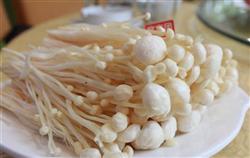
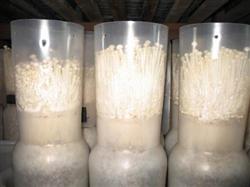
In terms of light and aeration, the mycelium grows well in darkness, while the formation of fruiting bodies requires weak scattered light. Enoki mushroom is an aerobic fungus, and during the fruiting stage a moderately increased carbon dioxide concentration can instead inhibit cap opening and promote elongation of the stipe, making the mushroom stems slender, white and tender, which is also a commonly used management approach in commercial mushroom cultivation.
Mastering the patterns of each stage of enoki mushroom growth and development helps to reasonably arrange the timing of spawn production, mycelial running and fruiting, and to regulate the mushroom house environment by combining measures such as temperature control, moisture retention, ventilation and supplemental lighting, thereby improving yield and quality. If problems such as slow mycelial running, failure to fruit or deformed fruiting bodies occur in production, they are mostly related to improper management of temperature, humidity or aeration, and the causes need to be identified and adjusted in time.
Related Reading