Enoki mushroom cultivation techniques and suitable growing environment conditions
What kind of environment is suitable for enoki mushroom growth? Please give an introduction. The enoki mushroom is a wood-rotting fungus that can utilize monosaccharides, cellulose, lignin and other compounds in wood. However, its ability to decompose wood is relatively weak, and after hard trees are felled, fruiting bodies cannot grow unless a certain degree of decay has been reached. Aged broadleaf...
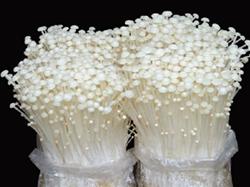
What kind of environment is suitable for enoki mushroom growth? Please give an introduction
The enoki mushroom is a wood-rotting fungus that can utilize monosaccharides, cellulose, lignin and other compounds in wood. However, its ability to decompose wood is relatively weak, and after hard trees are felled, fruiting bodies cannot grow unless a certain degree of decay has been reached. Aged broadleaf tree sawdust, after being piled and fermented and partially decomposed, is more suitable for enoki mushroom growth.
1. Carbon source: The carbon nutrition required by the enoki mushroom all comes from organic carbon compounds, such as cellulose, lignin, starch, pectin, pentosans, organic acids and alcohols. Starch is the best, followed by glucose, fructose, sucrose, mannitol, maltose, lactose and galactose, which can also be utilized, but inulin cannot be utilized.
2. Nitrogen source: The enoki mushroom can utilize a variety of nitrogen sources, among which organic nitrogen is best, such as peptone, glutamic acid and urea. Natural nitrogen-containing compounds such as beef extract and yeast extract are also very good nitrogen sources. Among inorganic nitrogen, ammonium nitrogen, such as ammonium sulfate (in the presence of vitamin B1), can also be utilized, while the utilization of nitrate nitrogen nutrition and nitrite nitrogen is very poor.
3. Inorganic nutrition: The growth and development of the enoki mushroom also require a certain amount of inorganic salts, such as potassium dihydrogen phosphate, calcium sulfate, calcium carbonate and ferrous sulfate. The enoki mushroom obtains elements such as phosphorus, iron and magnesium from these inorganic salts. Among them, the three elements phosphorus, potassium and magnesium are the most important, and the suitable concentration is 100 mg to 150 mg per liter of culture medium.
4. Vitamins: The enoki mushroom is a natural auxotroph for vitamin B1 and B2, and vitamin B1 and B2 must be added externally for it to grow well. Potatoes and rice bran contain relatively large amounts of vitamins, so when preparing culture media with these materials, it is not necessary to add vitamins again. However, for enoki mushroom strains with sparse mycelium of oidia, when preparing stock culture media, a small amount of vitamin B1 or vitamin B2 needs to be added (oral VB1 and VB2 can be used), so that the mycelium can grow vigorously.
5. Temperature: Temperature is an important factor affecting the growth and development of enoki mushroom mycelium and fruiting bodies. Spores are formed in large numbers at 5°C to 25°C and easily develop into mycelium. Mycelium grows within the range of 3°C to 34°C, with the optimum temperature being 23°C to 25°C. At 30°C to 40°C, mycelium growth is extremely slow. Mycelium has a very strong tolerance to low temperatures and can still survive after 138 days at -21°C. Mycelium has weak resistance to high temperatures; at 34°C, mycelium stops growing, and after exceeding 34°C it will soon die. Therefore, under natural conditions, during the high-temperature period in summer, enoki mushroom mycelium does not grow vigorously and easily forms oidia.
6. Water and humidity: The enoki mushroom is a moisture-loving fungus, and mycelium can grow normally in culture material with a water content of 60% to 80%. During cultivation, a water content of 70% in the culture material is more suitable. At this time, mycelium grows fastest. Too much or too little water in the culture material will affect mycelium growth. When the water content is too high, mycelium grows slowly or even does not grow, and even if fruiting bodies grow, the base of the stipe is prone to discoloration. If the water content of the culture material is below 60%, the mycelium is thin and weak, develops poorly, and turns gray. The relative humidity of the air also has certain requirements. During the mycelium growth stage, it should be controlled within 60% to 70%; if the humidity is too high, the contamination rate increases. During the fruiting body development stage, it should be controlled at 80% to 90%. 7. Air: Although the enoki mushroom is not very sensitive to carbon dioxide, it still needs sufficient oxygen during fruiting body growth. Because its cap is small, the ventilation rate indoors can be less than that for other mushrooms with large caps. When oxygen is lacking, fruiting body growth is inhibited. The carbon dioxide in the air required for enoki mushroom growth is most suitable at 0.03% to 0.06%.
8. Light: The enoki mushroom is a light-avoiding edible fungus. Mycelium grows normally under completely dark conditions and can die under direct sunlight. Normal growth of fruiting bodies requires an illuminance of 2 to 4 lux, or even complete darkness. If the light is strong, the stipe does not grow long, the cap opens prematurely, and the commercial value is low. Eating enoki mushrooms mainly means eating the stipe; the shorter the stipe and the earlier the cap opens, the lower the commercial value.
9. pH: The enoki mushroom requires a weakly acidic culture medium. On agar culture media with pH 3 to 8.4, mycelium can grow, but mycelium growth is best in the range of pH 5.6 to 6.5. Primordium differentiation and fruiting body growth and development are suitable at pH 5 to 6.
Click to get more enoki mushroom cultivation techniques
Click to get more edible mushroom cultivation techniques