An Introduction to Ash Tree Varieties: Characteristics and Uses of Common Varieties
Ash trees are the collective name for deciduous trees of the genus Fraxinus in the olive family (Oleaceae). They have opposite branches and pinnate compound leaves, and their foliage turns yellow in autumn, giving a fine ornamental effect. Their name comes from the old practice of raising wax insects on the trees to harvest white wax; today they are mainly cultivated as landscaping and timber trees.
Common ash varieties include common ash, big-leaf ash, small-leaf ash, Chinese ash (Fraxinus chinensis), velvet ash, and American ash. Common ash is widely distributed and highly adaptable, and is mostly used as a street tree and shade tree; Chinese ash has gnarled, rugged, and aged-looking branches and trunks, making it an excellent material for bonsai; velvet ash is relatively salt- and alkali-tolerant and is fairly common in the landscaping of northern coastal areas; big-leaf ash and small-leaf ash are often used for courtyard and park landscaping.
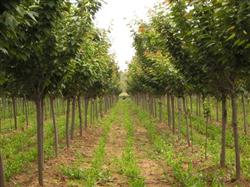
Ash trees like light, are cold- and drought-tolerant, and are not demanding about soil; they can even grow on mildly saline-alkaline land. They have strong sprouting ability, tolerate pruning, and are relatively low-maintenance. When planting, it is best to choose a site with ample sunlight and good drainage; once established, they are fairly easy to care for.
In terms of uses, ash wood is tough and elastic, making it suitable for tool handles, furniture parts, and sports equipment, while the sprouted branches can also be used as weaving material. As a landscaping tree, its golden-yellow leaves in autumn are quite ornamental, making it suitable for planting in rows along roadsides or as accents in courtyards.
In day-to-day care, attention should be paid to controlling leaf-eating pests and trunk-boring pests to keep the tree vigorous; pruning should be done during the dormant period, removing dead branches, diseased branches, and overly dense branches to improve ventilation and light penetration. As long as water and fertilizer are appropriate and pests are controlled in time, ash trees can generally maintain good growth for the long term.
Related Reading