What are the common pests and diseases of cherry blossoms, and how are they controlled?
What are the common pests and diseases of cherry blossoms? Here is an introduction to how to control them. There are many types of pests and diseases affecting cherry blossoms; the common ones are described below: Shot-hole brown spot disease occurs from May to June, with small purplish-brown spots appearing on the leaves, which gradually expand into circular shapes; after the diseased spots dry and shrink, they become small holes. The pathogen mostly overwinters on diseased branches and diseased...
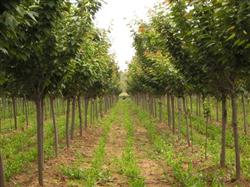
What are the common pests and diseases of cherry blossoms? Here is an introduction to how to control them
There are many types of pests and diseases affecting cherry blossoms; the common ones are described below:
Shot-hole brown spot disease Occurs from May to June. Small purplish-brown spots appear on the leaves, which gradually expand into circular shapes; after the diseased spots dry and shrink, they become small holes. The pathogen mostly overwinters on diseased branches and diseased leaves. Its optimum development temperature is 25°C to 28°C, and it spreads by wind. It is more likely to infect and cause disease in rainy seasons. When the tree is weak, drainage is poor, and ventilation and light penetration are inadequate, the disease occurs severely.
Control methods: (1) Strengthen cultivation management, prune and trim reasonably, and take care to cut off diseased shoot tips, promptly clean up diseased leaves and burn them, creating clean growing conditions for the plant.
(2) Before new shoots sprout, spray 3 to 5 degrees Baumé lime sulfur mixture. During the disease period, spray 160 times Bordeaux mixture, or 50% Benlate wettable powder at 1000 to 2000 times dilution, or 15% zineb at 600 to 800 times dilution.
Leaf blight In summer, yellow-green circular spots appear on the leaves, later turning brown, with scattered small black dots. The diseased leaves wither but do not fall off.
Control methods: (1) Remove and burn diseased leaves, and spray Bordeaux mixture before budding.
(2) From May to June, spray 65% zineb wettable powder at 500 times dilution, once every 7 to 10 days, for 2 to 3 consecutive sprays.
Crown gall disease Mainly occurs at the base of the main trunk, and sometimes also on the root crown or lateral roots. Tumors form on the diseased part, initially milky white or flesh-colored, gradually turning brown or dark brown, spherical, with a rough surface, uneven and cracked. After infection, the root system develops poorly, with very few fine roots; aboveground growth is slow, the tree becomes weak, and in severe cases the leaves yellow and fall early, or even the entire plant dies.
Control methods: (1) Seedlings infected with crown gall disease must be centrally destroyed. Before planting, it is best to soak the seedlings in 1% copper sulfate for 5 to 10 minutes, then wash them with water, and then plant them.
(2) If diseased plants are found, use a knife or saw to thoroughly remove the cancer tumors and their surrounding tissue.
(3) The soil around diseased plants can also be disinfected by scattering sulfur powder at a rate of 50 grams to 100 grams per sq m. At the same time, pay attention to soil improvement.
Scale insects There are quite a few species of scale insects that harm cherry blossoms, mainly including water-wood hard scale, chaff scale, long-white scale, and Japanese wax scale. Adults and nymphs pierce and suck sap from branches and leaves, weakening plant growth. At the same time, some species secrete large amounts of excrement, which easily induces sooty mold and affects growth and flowering. Control methods:
(1) The most favorable period for controlling scale insects is the peak hatching stage of the nymphs. Spray 25% phosmet at 600 to 800 times dilution or 40% omethoate emulsifiable concentrate at 1000 times dilution.
(2) In winter and spring, spray 5 degrees Baumé lime sulfur mixture, or 3% to 5% diesel emulsion, to eliminate overwintering nymphs. The effect is relatively good.
Pear lace bug Mainly harms the underside of cherry blossom leaves, piercing and sucking sap. The damaged areas have many speckled brown excrement and black fly-speck-like marks left by egg-laying. The entire underside of the damaged leaf appears rusty yellow, while the upper side forms pale white spots. When damage is severe, the spots on the leaves merge into patches, the whole leaf loses its green color and turns pale white, and defoliation occurs early.
Control methods: (1) In winter, clear weeds and dead branches and fallen leaves, and destroy them centrally. (2) When individual newly emerged white adults are found among nymph clusters on the leaves, it indicates that the first-generation nymphs have basically hatched, and pesticide should be sprayed promptly for control. This is a favorable period for control. Use 90% trichlorfon at 1000 times dilution, or 50% malathion emulsifiable concentrate at 1500 times dilution, or 40% omethoate at 1000 times dilution.
Lesser clearwing moth The larvae bore and feed inside the inner bark of cherry blossom trunks. The adult body is blue-black. It occurs once a year, and the larvae overwinter under the bark, so damage can begin in early spring. They emerge as adults in August and September, and eggs are laid in bark crevices or wounds in the trunk bark.
Control methods: (1) Apply lime coating on cherry blossom branches and trunks to prevent egg-laying.
(2) In spring, if holes are seen on dry branches with gum flowing out or insect frass, use a mallet to tap and crush the larvae inside, or use a small knife to cut open the trunk bark and capture and kill the larvae. Then apply a fungicide.
(3) Use 50% phoxim emulsifiable concentrate at 700 times dilution to smear the boring entry sites or spray the entire branches and trunk to kill young larvae. Red spider mite When temperatures are high and drought occurs from June to July, red spider mites reproduce rapidly and their numbers surge, making the damage severe at this time. They mainly pierce and suck sap from cherry blossom leaves, causing damaged leaves to lose green color and show gray-yellow spots, resulting in scorching and early defoliation. Damaged tender buds turn yellow and scorched and cannot unfold leaves, affecting normal growth and ornamental value, and can also lead to attacks by other pests and diseases.
Control methods: (1) If red spider mites are found on individual cherry blossoms, remove them promptly.
(2) Before cherry blossoms bud in early spring, spray the trunk with crystalline lime sulfur mixture at 300 to 500 times dilution to eliminate overwintering female adults and eggs.
(3) During the damage period, spray 50% bromopropylate emulsifiable concentrate at 2500 times dilution, or agents such as omethoate and dicofol.
(4) Because mites easily develop resistance, pay attention to alternating the use of acaricides.
Aphids Aphids mainly harm cherry blossom buds, new leaves, and flower bud parts. With piercing-sucking mouthparts, they suck sap from within the plant. The affected plant parts grow slowly, and the leaves wrinkle and curl; in severe cases they fall off. If flower buds are damaged, they cannot develop normally and drop off. These insects can also secrete large amounts of honeydew, inducing severe sooty mold and greatly reducing the ornamental value of the damaged cherry blossoms.
Control methods: (1) When the number of insects is not large, spray clean water to wash them off, or combine with pruning to cut off and dispose of infested branches.
(2) In mid-to-late April, bury and apply 15% aldicarb granules around the cherry tree where there are the most fibrous roots, using 1 to 2 grams per tree and burying to a soil depth of 2 cm. The effect is good.
(3) Spray 50% menazon emulsifiable concentrate at 1000 to 1500 times dilution, or 2.5% deltamethrin emulsifiable concentrate at 4000 to 5000 times dilution, or 20% fenvalerate emulsifiable concentrate at 2000 times dilution.
Click to get more cherry blossom cultivation techniques
Click to get more flower cultivation techniques