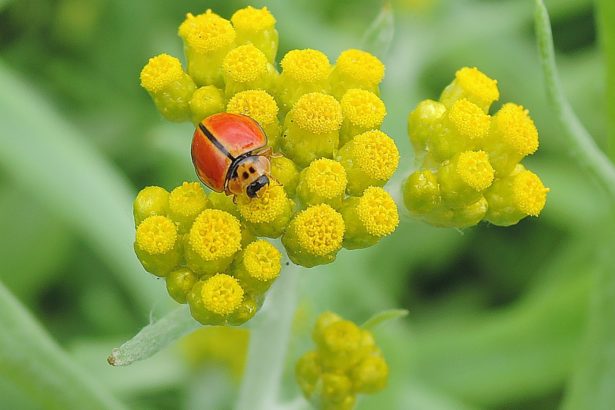
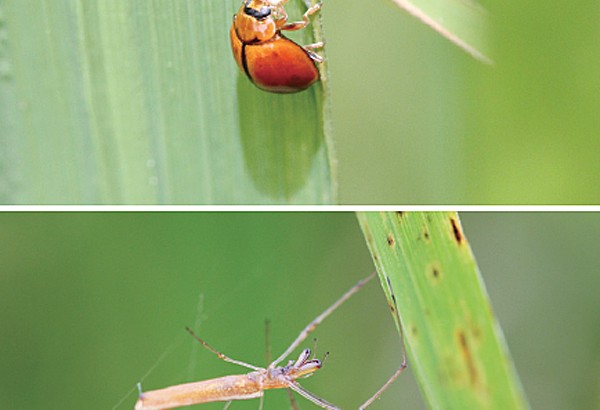
What does the seven-spot ladybug eat? It mainly preys on aphids and other agricultural pests
The seven-spot ladybug (Coccinella septempunctata) is a common predatory beneficial insect in farm fields and vegetable gardens, and aphids are its most important food. All kinds of aphids, such as the English grain aphid, cotton aphid and green peach aphid, are targets of its predation; besides these, it also feeds on scale insects, whiteflies, psyllids and mites, as well as other small, slow-moving pests.
From larva to adult, the seven-spot ladybug lives by predation its whole life, and its appetite is considerable; the predatory capacity of the larval stage is no weaker than that of the adult. Once it finds a plant covered with a cluster of aphids, it often stays there and feeds continuously. When pests in the field are few and food is scarce, it will also feed on some pollen and nectar to supplement its nutrition, but it does not gnaw on the leaves and fruits of crops.
Precisely because it feeds mainly on pests, the seven-spot ladybug is regarded as an important natural enemy in biological control. When aphids in a field are abundant, seven-spot ladybugs often migrate in naturally and suppress the pest population, which is very helpful for reducing pesticide use.
If you want to keep seven-spot ladybugs in your field, the key is to reduce the use of broad-spectrum insecticides and leave them habitat space, for example by keeping weed strips at the field edges and planting hedgerows and wildflowers; this not only gives the ladybugs somewhere to hide and reproduce, but also attracts other natural enemies such as frogs and spiders. It should be noted that not all ladybugs are beneficial insects; the twenty-eight-spot ladybug, for instance, which feeds on the leaves of potatoes and eggplants, is a plant-eating pest, so when observing, pay attention to the number and arrangement of the spots on the wing covers to avoid mistaking the predatory seven-spot ladybug for a pest and treating it as such.
Related reading