What do seven-spot ladybugs eat? Introduction to their main food types
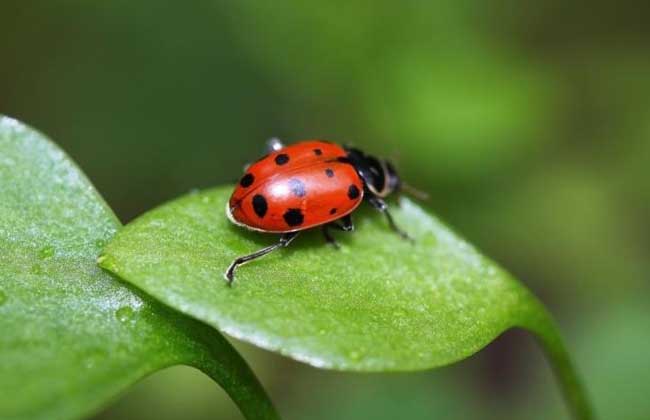
The seven-spot ladybird, also known as the golden tortoise, new daughter-in-law, and flower lady, is a predatory insect of the genus Coccinella in the family Coccinellidae. It is widely distributed across China, found in the Northeast, North China, Central China, Northwest, East China, and Southwest. Its life goes through 4 different developmental stages: egg, larva, pupa, and adult. Let's take a look below at what the seven-spot ladybug eats!
What do seven-spot ladybugs eat?
The seven-spot ladybug is a beneficial insect. Adults can prey on pests such as wheat aphids, cotton aphids, pagoda tree aphids, peach aphids, scale insects, and mites, greatly reducing the damage to trees, melons and fruits, and various crops from pests. People call it the “living pesticide”. It is non-toxic and harmless to humans, livestock, and natural enemy animals, leaves no residue, and does not pollute the environment.
Living habits of the seven-spot ladybug
1. Winter: The seven-spot ladybug overwinters among the roots and stems of wheat and rapeseed, and some overwinter in sun-facing clods of soil and soil crevices.
2. Spring: Once the temperature rises above 10°C in spring, the overwintering seven-spot ladybugs wake up and begin to move about. They can be found on wheat and rapeseed plants.
3. Summer: As temperatures rise and food increases, seven-spot ladybugs multiply in large numbers. They can be found on any plants parasitized by aphids and scale insects, such as cotton, willow, pagoda tree, elm, and legumes. Sometimes there are even scenes of large numbers of seven-spot ladybugs gathering.
4. Autumn: The number of seven-spot ladybugs in the fields decreases. They often lay eggs on corn, radishes, and cabbage. At this time, the morning and evening temperatures are lower, and seven-spot ladybugs tend to hide and are not easy to find. They need to be collected after 7 o'clock in the morning and before the sun sets.
Interesting phenomena of the seven-spot ladybug
1. Catch a seven-spot ladybug and gently pinch it with your finger. Your finger will immediately be stained with some yellow liquid. This is its protective fluid. It smells very unpleasant, but it is harmless to the human body. When the seven-spot ladybug encounters an enemy attack, it immediately secretes this foul-smelling yellow liquid, making the enemy fear it at the smell and flee in panic.
2. The seven-spot ladybug also has camouflage skills. When it encounters a strong enemy and feels danger, it immediately drops from the tree to the ground, contracts its three pairs of slender legs, and lies still as if “unconscious”, playing dead to fool the enemy. Based on the seven-spot ladybug's death-feigning habit, if you suddenly shake the branches of a plant, there are often seven-spot ladybugs playing dead on the ground.
3. A seven-spot ladybug that has just emerged from the pupal shell stays on the pupal shell motionless. At this time, you can do an interesting experiment: suddenly push it off with your finger to give it a scare. After more than a day, the seven-spot ladybug's elytra gradually harden, but the seven spots still cannot appear, making it a “spotless” seven-spot ladybug.