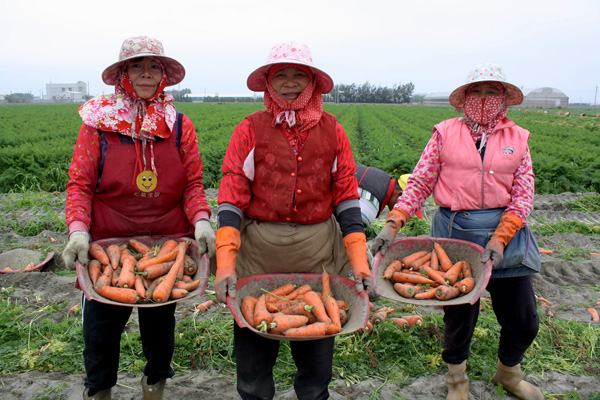
Detailed Key Points of Carrot Cultivation Techniques: Full Management from Sowing to Harvest
The carrot is a biennial herbaceous plant of the Apiaceae family, grown for its thickened fleshy taproot, which is rich in carotene. It is highly adaptable and is cultivated throughout both northern and southern parts of our country. Carrot cultivation techniques comprise a whole set of growing methods built around site selection and land preparation, sowing and seedling raising, field management and harvesting. Only when all these steps are coordinated properly can the fleshy roots grow straight and plump.
Carrots prefer loose, fertile, well-drained sandy loam. If the soil is compacted or mixed with stones and hard objects, the fleshy roots are prone to deformities such as forking and bending. Before sowing, the soil should be deeply plowed and finely harrowed, and fully decomposed organic fertilizer should be applied as a base fertilizer while turning the soil. Carrot seeds germinate rather slowly and are usually sown in drills; after sowing, the soil covering should not be too thick, and the soil should be kept moist. In dry conditions, a modest amount of water can be added to promote emergence.
For field management, once the seedlings have grown two or three true leaves, they need to be thinned and finally spaced in several rounds; leaving the plants too dense will make the fleshy roots thin and slender. During the growing period, cultivate and weed in good time. During the root-swelling stage, the crop needs more water and nutrients, and watering should be even and consistent; alternating drought and flooding easily causes the roots to split. For topdressing, nitrogen, phosphorus and potassium should be used together with an emphasis on potassium; too much nitrogen tends to cause excessive leaf growth while the roots develop poorly.
Common carrot diseases include black spot and soft rot, while pests are mainly aphids and soil-dwelling insects. In production, prevention is mostly achieved through crop rotation, changing to a different crop, and cleaning up the field; once diseases or pests are found, targeted control should be carried out promptly. When the fleshy roots are fully swollen and the outer leaves begin to turn yellow, they can be harvested in batches. Harvesting too early gives insufficient yield, while harvesting too late readily leads to pithiness, affecting market quality.
Related Reading