How to grow overwintering spinach? Master the key points of cultivation techniques
Overwintering spinach cultivation techniques How to grow overwintering spinach
Spinach originated in Iran and was introduced into China from Nepal during the reign of Emperor Taizong of Tang. It is now one of the vegetables commonly cultivated in our country. According to sowing time, spinach can be divided into spring spinach, summer spinach, autumn spinach and overwintering spinach. Overwintering spinach refers to spinach sown from mid-October to early November each year and harvested around the Spring Equinox of the following year. The market supply of overwintering spinach can effectively fill the market gap, and its cultivation value is relatively high. So how should this overwintering spinach be grown? Qinnong Network will introduce it to you next: the cultivation techniques of overwintering spinach.
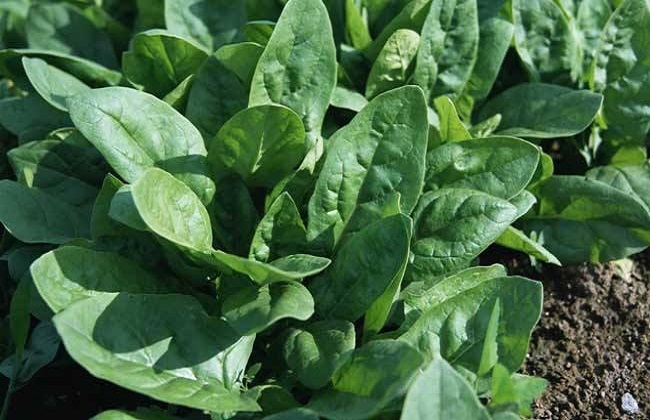
I. Selecting varieties
Because overwintering spinach needs to grow throughout the entire winter, varieties with strong overwintering ability, strong cold resistance, good quality, fast growth and high yield potential should be selected. Ordinary spinach varieties are prone to bolting during the overwintering period, which reduces yield and quality and affects the value of spinach.
II. Land preparation
After the previous crop is harvested, stubble should be cleared in time. Then each mu of land requires 5000 kg of decomposed organic fertilizer and 50-60 kg of ternary compound fertilizer, with deep ploughing of more than 25 cm, after which flat beds 1.2 m-1.5 m wide should be made.
III. Sowing
The choice of sowing time is very important. Practice has proved that overwintering spinach is relatively safe when it has 4-5 leaves, so sowing from late September to early October is appropriate. Spinach seeds germinate slowly. To shorten the emergence period, the seeds can be soaked in 20°C warm water for 12 hours one day before sowing, then taken out, dried slightly and sown. If sowing is later, 4-5 days before sowing the seeds can be soaked in cold water for 12-24 hours, taken out and piled indoors at a thickness of about 15 cm, covered with gunny bags to keep warm, and turned once a day so that the temperature and humidity in the pile are uniform, with the temperature kept at about 20°C. After 3-4 days, when more than 60% of the seeds show radicles, they can be sown. Coated seeds do not need soaking or pregermination. There are two sowing methods: dry sowing and wet sowing. Dry sowing means sowing and pressing first, then watering; wet sowing means watering before sowing, sowing after the water seeps down, and covering with soil after sowing. Seeds that have been pregerminated must be sown wet. There are two sowing patterns: broadcasting and drilling. Drilling requires sufficient bottom soil moisture; when broadcasting, the seeds should be scattered evenly, then covered with about 2 cm of soil. Generally, the seeding rate is 4-5 kg per mu, appropriately increased for late sowing. In addition, the sowing time of overwintering spinach also directly affects the overwintering ability of the seedlings, the harvest time and the yield.
IV. Daily management
The daily management of overwintering spinach mainly targets the management of three periods of overwintering spinach, including seedling stage management, overwintering stage management and green-returning vigorous growth stage management. The management methods required differ by period. Qinnong Network will introduce them specifically below.
1. Seedling stage management: After sowing, if the soil is dry, a light watering can be given. When the moisture condition is suitable, shallowly scratch the bed surface to loosen the topsoil and facilitate emergence. After emergence, when there are 1-2 true leaves, keep the soil moist; when there are 3-4 true leaves, water can be appropriately controlled to promote root development and facilitate overwintering. If the seedlings are too dense, thin them once when there are 2-3 true leaves, with a spacing of 3-5 cm. If there is aphid damage, spray pesticide for control.
2. Overwintering stage management: The period from when spinach stops growing to before it turns green again the following spring is the overwintering stage. To prevent cold and drought damage, one freezing water can be applied before the soil freezes; if fertilization is insufficient, urine water can be mixed in. After the soil freezes, horse manure or barnyard manure can be spread to protect the seedlings through winter. Before green returning, choose clear and warm weather, and after the frost thaws, splash fresh urine, 1000-2000 kg per mu, finishing at 3-4 p.m.
3. Green-returning vigorous growth stage management: In early March of the following year, spinach begins to turn green and grow. Because the temperature is still low at this time, if the moisture condition is good, watering can be temporarily withheld and hoeing should be done to preserve moisture; if the moisture condition is poor and the temperature rises quickly, one watering can be given, with the amount preferably small rather than large. However, saline-alkali land can be appropriately watered to press down salts. For windbreak beds and sandy loam, where temperature rises quickly, watering should be appropriately earlier. After spinach begins vigorous growth, the demand for fertilizer and water surges. During this period, the soil should be kept moist and not allowed to dry out. Topdressing and watering should be carried out promptly to promote vegetative growth and delay the bolting period. Generally, 15-20 kg of urea is applied per mu. Water after fertilizing. With sufficient fertilizer and water, spinach grows quickly and can be harvested in 10-15 days. Adopting windbreak and flat film mulching cultivation methods in early spring (mulching for 7-10 days) can achieve the goals of earlier market supply and high yield.
V. Pest and disease control
The pests and diseases affecting overwintering spinach mainly include downy mildew, anthracnose, viral disease and aphids. For downy mildew and anthracnose, at the early stage of disease, spray with 75% chlorothalonil 600 times solution, 25% metalaxyl 700-800 times solution or 40% fosetyl-aluminium wettable powder 200-300 times solution. For viral disease, in addition to crop rotation, aphids and other virus-transmitting vectors should also be controlled in time. Aphids can be controlled with pesticides such as imidacloprid.
VI. Timely harvest
Generally, when the seedlings are more than 10 cm tall, they can be harvested in batches. About 15 days before one-time harvest, 15-20 mg/kg of gibberellic acid can be sprayed on the leaves, and urea or ammonium sulphate can be added, which can advance the harvest and increase yield.
VII. Seed production
The sowing period for spinach kept for seed can be slightly later than that for overwintering spinach. Drill sowing, with a row spacing of 20-23 cm. After green returning in spring, gradually pull out off-type plants and early-bolting male plants, leaving some vegetative male plants, so that the plant spacing reaches about 20 cm. During the bolting period, excessive irrigation is not suitable, so as to avoid thin and weak flower stalks that lodge and reduce seed yield. After flowering, topdress, irrigate and spray 1%-2% clarified superphosphate solution on the leaves to make the seeds plump. After the male plants set seeds, pull out the male plants to facilitate ventilation and light penetration. When most stems and leaves have withered and yellowed and the seeds are mature, harvest, then after-ripen for several days and thresh.
The above is the introduction to the cultivation techniques of overwintering spinach brought to you by Qinnong Network. From the above, it can be seen that among the cultivation techniques of overwintering spinach, the most critical step is the sowing time, which is also the key point that farmers should pay attention to.