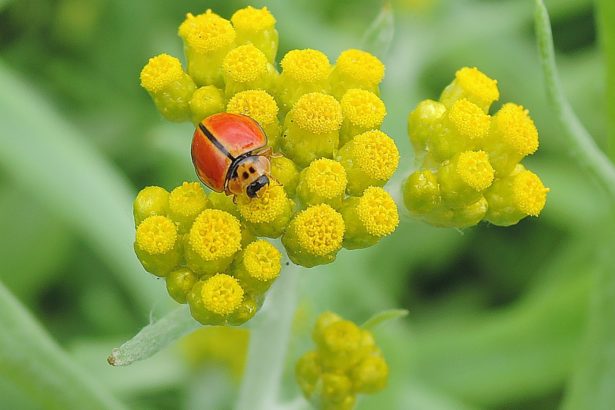
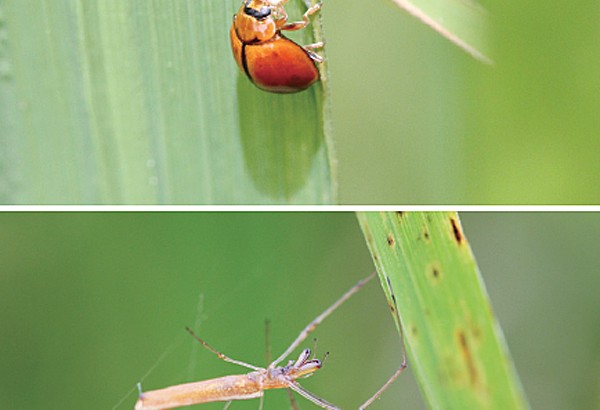
The 28-spotted ladybird is a pest among ladybirds, mainly feeding on solanaceous vegetables.
The 28-spotted ladybird is a type of plant-eating ladybird, named for the twenty-eight black spots in total on its two elytra. The adult is about five to six millimeters long, hemispherical in shape, and mostly reddish-brown or yellowish-brown in body color. At first glance it looks much like the beneficial ladybirds that prey on aphids, and it is often mistaken for them.
Unlike most predatory ladybirds, both the adults and larvae of the 28-spotted ladybird chew on leaves, making it a typical herbivorous pest. It favors solanaceous crops, and potatoes, eggplants, tomatoes, and peppers are often damaged by it; some species also harm cucurbit crops. After leaves are damaged, thin strip-like or net-like transparent marks are often left behind. In severe cases the leaf mesophyll is eaten away completely, and the plants' growth becomes noticeably weaker.
For control, manual collection of adults and removal of egg masses on the undersides of leaves can be combined with farming operations, while weeds and crop residues in the field should be cleared away to reduce its overwintering and hiding places. When pest numbers are high, a targeted pesticide spray can be used, taking care to spray the undersides of leaves, because eggs and young larvae mostly cluster there. Protecting and using parasitic natural enemies in the field also helps suppress pest numbers.
Many people assume that any ladybird they see is beneficial, but the key to telling them apart lies in their feeding habits. Ladybirds that prey on aphids and other small insects are helpers on the farm, while those that chew on crops, like the 28-spotted ladybird, should be treated as pests. During cultivation, if abnormal chewing marks are found on leaves, the undersides of the leaves should be checked promptly and the problem dealt with as early as possible to prevent pest numbers from growing.
Related Reading