What Color Is Earthworm Blood? Characteristics and Circulatory System Explained
Earthworm blood is the body fluid in an earthworm that is responsible for transporting oxygen and nutrients. Unlike most higher animals, earthworms do not have lungs; instead, they rely on their moist skin for gas exchange, and after oxygen passes through the body wall, it is carried throughout the body by the blood. For this reason, earthworms must live in moist environments; once the skin dries out, both respiration and blood circulation are affected.
In terms of color, earthworm blood is usually red because the plasma contains hemoglobin, which can carry oxygen. Unlike humans, however, earthworm hemoglobin is dissolved in the plasma rather than enclosed in red blood cells, so its blood appears uniform and translucent. A few species differ slightly in pigment composition, and their blood color may be paler, but common earthworms are mostly in the red range.
The earthworm circulatory system is a closed-tube system; the blood always flows within vessels such as the dorsal vessel and ventral vessel and does not pour directly into the body cavity. The dorsal vessel sends blood forward, and it then turns to the ventral side through several pairs of contractile vascular arches. These vascular arches are often vividly called the earthworm's hearts, driving blood to circulate continuously through the body.
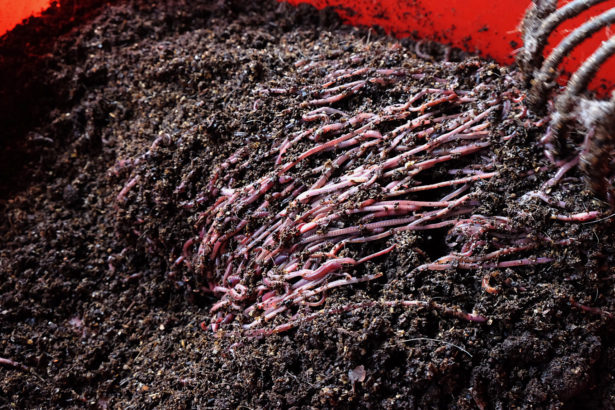
Understanding earthworm blood is also practically helpful for breeding and everyday observation. In vermicomposting, if the substrate is too dry or contaminated with irritating liquids, the earthworm's skin is damaged, which directly affects respiration and blood circulation, showing up as reduced activity, attempts to escape, or death. Therefore, keeping the environment moist and avoiding direct sun exposure and contamination are basic prerequisites for raising earthworms well. In addition, earthworms are often confused with bloodworms; in fact, bloodworms are the larvae of chironomid midges and do not have a blood structure like that of earthworms. The two differ clearly in morphology and living environment, and they can be distinguished when observed.
Related Reads