Are Earthworms Insects? A Detailed Explanation of the Earthworm's True Identity
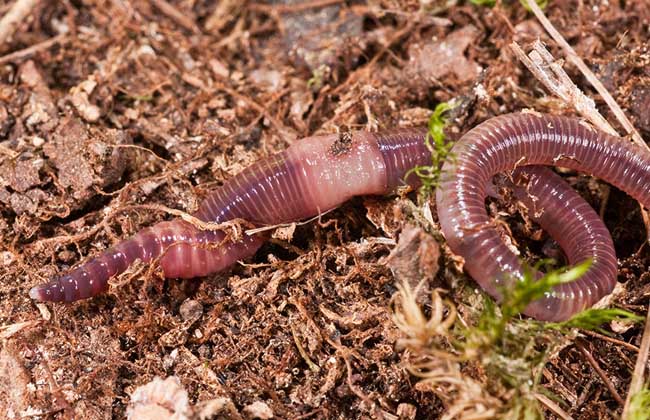
The earthworm is a common terrestrial annelid that lives in the soil, hiding by day and emerging at night. It feeds on livestock and poultry manure and organic waste, swallowing soil along with its food, and also consumes fragments of plant stems and leaves. It can loosen the soil, improve the soil, raise fertility, and boost agricultural yields. Let's take a look below at whether the earthworm is an insect!
Is the Earthworm an Insect?
The earthworm is not an insect. Earthworm is a general term for animals of the class Oligochaeta in the phylum Annelida. In scientific classification it belongs to the phylum Annelida, class Oligochaeta, order Haplotaxida (opisthoporous oligochaetes), suborder Moniligastrina, invertebrates. More than 2,500 species of earthworms are currently known. In 1837, the biologist Darwin called it the most valuable animal on Earth. It is found in almost all soils worldwide with suitable moisture and sufficient organic matter.
The Farming Value of Earthworms
1. As a Chinese medicinal material: The Chinese medicinal earthworm is commonly known as "dilong" (earth dragon). Its nature is cold and its taste is salty. It has the effects of clearing heat, calming the liver, relieving asthma, and dredging collaterals. It mainly treats high fever and mania, convulsions and spasms, wind-heat headache, red eyes, and hemiplegia. Its extract has a good effect of suppressing cough and calming asthma, and its ash mixed with rose oil can treat baldness.
2. Biological fertilizer: Vermicompost is an excellent biological fertilizer, rich in nitrogen, phosphorus, potassium, humus, organic matter, and trace elements needed by crops such as magnesium, boron, nickel, and manganese. It is a cheap and efficient fertilizer for fruits, flowers, vegetables, and nurseries.
3. Aquatic bait: Earthworms are rich in protein, fat, and carbohydrates. Their crude protein content is as high as 72%, and they contain amino acids, vitamins, and trace elements needed by the human body. They can not only be used as animal feed and for producing medicines and cosmetics, but can also be eaten by humans.
The Living Habits of Earthworms
1. Nocturnal animal: The earthworm is a nocturnal animal, hiding in soil burrows by day and coming out at night to activity. It generally comes out to activity around 8 pm to 4 am the next day in summer and autumn. Its feeding and mating are both carried out in dark conditions, and it likes a quiet surrounding environment. Earthworms living around industrial and mining areas mostly grow poorly or escape. Although earthworms are distributed worldwide, they prefer relatively high temperatures. Below 8°C they stop growing and developing, and the optimum temperature for reproduction is 22-26°C.
2. Omnivorous animal: The earthworm is an omnivorous animal. Except for glass, plastic, and rubber, it eats everything else, such as humus, animal manure, soil bacteria, fungi, and the decomposition products of these substances. It has a sensitive sense of taste, likes sweet foods and sour flavors, and dislikes bitter flavors. It likes softened, fine, and tender feed, and is especially greedy for animal food, eating an amount each month equivalent to its own body weight. About half of the food is excreted as feces after passing through the digestive tract. It has the habit of not wanting two generations, mother and offspring, to live together. Especially under high-density conditions, when the young ones multiply more, the old ones will run away and move.
3. Negative phototaxis: The earthworm has negative phototaxis, especially avoiding strong sunlight, blue light, and ultraviolet radiation, but it is not afraid of red light and tends toward weak light. For example, the reason earthworms come out of their burrows on damp, cloudy mornings is exactly this. The toxic effect of sunlight on earthworms is mainly due to the ultraviolet rays contained in sunlight. Earthworms liking a quiet environment means not only requiring low noise, but also no vibration. Earthworm farms should not be built near bridges, highways, or airports.
4. Cold-blooded animal: The earthworm is a cold-blooded animal, and its body temperature changes with changes in the external environment temperature. Therefore, the earthworm's dependence on the environment is generally more pronounced than that of warm-blooded animals. Environmental temperature not only affects the earthworm's body temperature and activity, but also affects the earthworm's metabolism, growth, development, and reproduction. Moreover, temperature also has a relatively large impact on other living conditions, thereby indirectly affecting the earthworm. Therefore, temperature is one of the most important living conditions for earthworms.