Cultivation Techniques and Management Points for Producing Yellow Garlic Chives by Clump Planting Garlic
Clump-planting garlic to produce yellow garlic chives is a cultivation method in which garlic chives are grown by the clump-planting method. So-called clump planting means that after the garlic bulbs are treated, they are arranged one by one tightly in a growing bed or growing trough, and relying on the nutrients stored in the garlic bulbs themselves, they sprout and grow in a shaded or low-light environment; because the leaves that grow do not see sunlight, they take on a pale yellow color, which is the yellow garlic chives commonly seen on the market. This method is mostly carried out in protective facilities such as greenhouses, plastic tunnels, cellars or heated brick beds, and is suitable for production scheduling in winter and spring.
The yellow garlic chives produced by clump-planting garlic have tender leaves, a bright yellow color, a relatively mild pungent taste, little fiber and a fresh, delicate flavor; they are one of the rare fresh vegetables marketed during the off-season for vegetables in winter and spring. Because they do not rely on strong light, the production cycle is short and management is relatively simple; they can usually be harvested in batches, after which new garlic bulbs are replaced to continue the next crop, making the operation fairly flexible.
For production, it is advisable to select garlic bulbs that are large, plump, free of disease spots and free of damage. Before planting, they can first be soaked to promote water uptake and sprouting, and part of the outer membrane can be peeled off to make arranging the garlic easier. When arranging the garlic in clumps, the bulbs should be placed tightly and evenly, and the gaps should be filled solid with scattered garlic cloves or fine soil to prevent lodging after watering. During the growing period, keep the facility warm and humid, spray water appropriately to replenish moisture, and at the same time provide good shading to prevent the leaves from turning green after exposure to light; when the temperature is too high, ventilate and cool down in time to prevent the garlic bulbs from rotting.
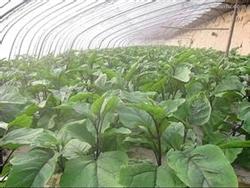
Yellow garlic chives are marketed in the off-season, so sales are relatively good. Arranged in combination with pollution-free production of greenhouse eggplants, early-spring potatoes and the like, they can improve the utilization rate of the facility and increase planting returns. In management, if rotten garlic or mold is found, it should be removed in time and the facility ventilated to reduce humidity; at harvest, cut close to the ground, taking care not to damage the garlic bulbs, so as to facilitate subsequent harvests and the next crop of production.
Related Reading