Symptom Identification and Integrated Control Methods for Cucumber Gummy Stem Blight
Cucumber gummy stem blight is a common disease caused by fungal infection. It mainly damages the stems and vines of cucumbers, but can also infect leaves and fruits, and occurs frequently in greenhouses and other protected cultivation. The stems and vines of affected plants gradually weaken, and in severe cases the entire plant dies, significantly affecting cucumber yield.
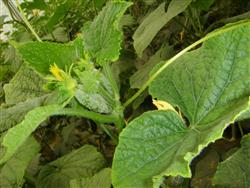
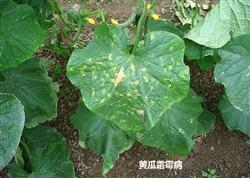
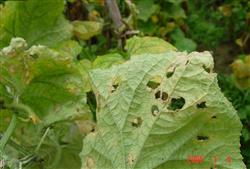
After the disease develops, the most typical symptoms appear on the stems and vines. The lesions are mostly oval or spindle-shaped, grayish white to light brown, and in the later stage many small black dots are scattered on the lesions. Some lesions also exude an amber-colored gummy substance. When leaves are infected, nearly round yellowish-brown lesions form, and the lesions tend to break apart and perforate; when fruits are affected, sunken brown round spots appear.
The disease favors warm, highly humid environments. Prolonged cloudy and rainy weather, poor ventilation in the greenhouse, excessive watering, overly dense planting, and excessive application of nitrogen fertilizer all tend to aggravate the disease. The pathogen can spread with rainwater, irrigation water, and farming operations, infecting through wounds on the stems and vines. In continuous cropping fields, more pathogen remains in the soil, and the disease tends to be more severe.
For control, agricultural measures should be the main approach: implement crop rotation, promptly remove diseased plant residues and carry them out of the field for disposal; plant at a reasonable density, control the amount of nitrogen fertilizer, and increase the application of phosphorus and potassium fertilizers and organic fertilizers; pay attention to ventilation and dehumidification in the greenhouse, and ventilate promptly after watering to reduce humidity. In the early stage of the disease, promptly remove diseased leaves and vines and apply protective sprays, and note to rotate pesticides to delay the development of resistance.
Gummy stem blight is easily confused with Fusarium wilt. The key to distinguishing them is that in gummy stem blight, small black dots and gummosis are visible on the diseased parts, and the vascular bundles are not brown when the stem is cut open, whereas Fusarium wilt is characterized by browning of the vascular bundles and wilting of the entire plant. Only by correctly identifying the type of disease can targeted control be carried out and unnecessary losses reduced.
Related Reading