Detailed Introduction to the Characteristics and Keeping Methods of Koromo Koi Varieties
Koromo is a variety of koi, generally believed to have been developed by crossbreeding Kohaku koi with Asagi-line koi. Its most distinctive feature is that, on a red-and-white base, the edges of the scales in the red patches carry blue or dark blue net-like patterns. Overall it looks as if the Kohaku koi has put on a layer of gauze clothing, which is how it got the name Koromo.
The more common types of Koromo include Ai Goromo (Blue Koromo), Sumi Goromo (Ink Koromo), and Budo Goromo (Grape Koromo). Ai Goromo has blue scales over its red patches, giving a clear and elegant tone; Sumi Goromo has black tones at the edges of its red patches, making the color appear deeper; Budo Goromo's red patches gather in clusters, resembling bunches of grapes, with strong ornamental appeal. There are also derived varieties such as Koromo Sanshoku and Koromo Showa.
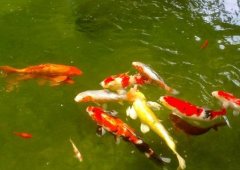
When selecting Koromo, one usually checks whether the base color is pure white, whether the outlines of the red patches are distinct, and whether the net pattern on the scales is even and clear. Individuals with neat markings and obvious color contrast have higher ornamental value, and are suitable for keeping in courtyard fish ponds or larger aquariums, where the layering of colors is especially striking when they swim in groups.
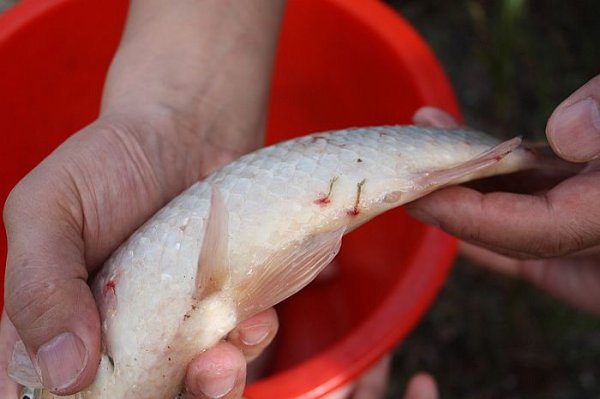
The keeping methods for Koromo are similar to those for ordinary koi: the water quality must be kept clean with sufficient dissolved oxygen, feeding should be done at fixed times and in fixed amounts, and the stocking density should be reasonably arranged according to the size of the water body. When changing water, take care that the temperature difference is not too large, and pay even more attention to the condition of the fish during seasonal transitions. If the fish body shows white spots, rubbing against the tank or pond, or a decline in appetite, the cause should be investigated and dealt with promptly to prevent disease from spreading and affecting the whole pond of fish.
Related Reading